Bulk book printing is easier to manage when the brief describes the finished book rather than only the artwork file. A clear specification helps a printer check feasibility, compare production routes, and quote freight without filling gaps with assumptions. The decisions below apply whether you are a publisher, educator, brand team, or organization ordering books for sale, learning, or outreach.
Start by defining the reader, the use case, and the destination. Then turn those goals into practical choices about format, materials, approval stages, and delivery. The result is a quote request that can be compared on like-for-like terms.
Choose a format and binding that suit the job
Format affects how a book is read, displayed, packed, and shipped. Record the trim size, orientation, page count, color treatment, and whether the book needs to open flat, travel well, or feel like a premium gift. A portrait text book, a landscape photo book, and a workbook may share pages but need different production decisions.
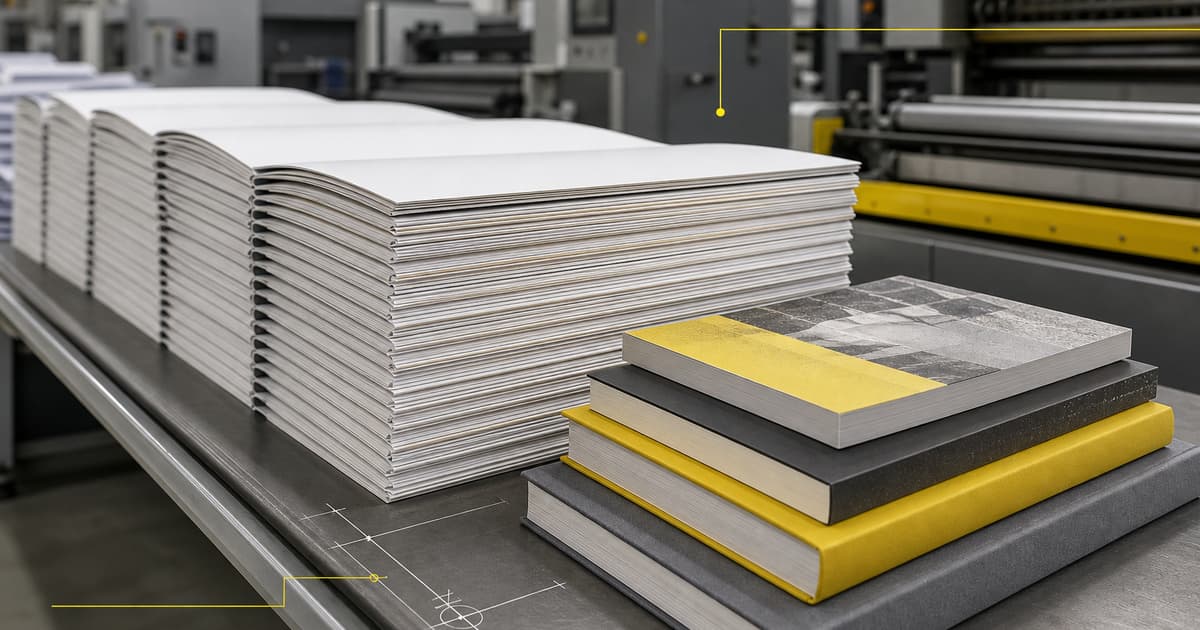
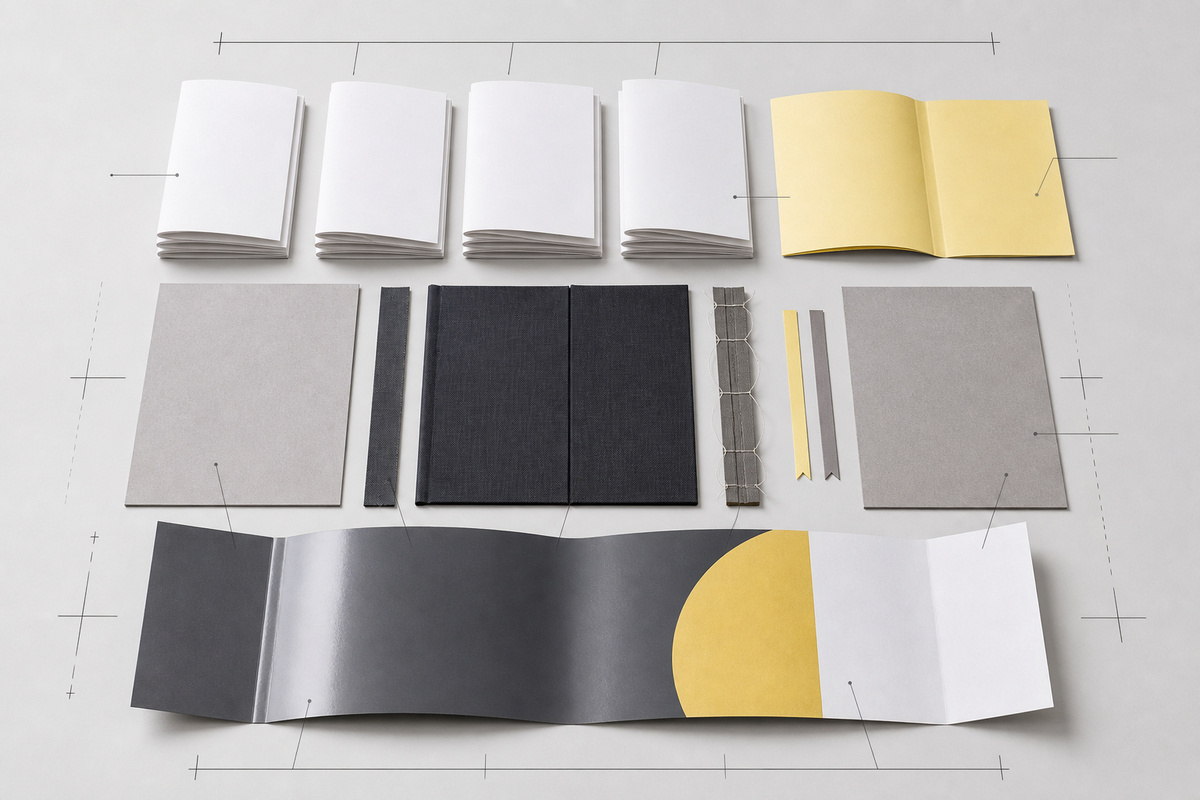
Binding is part of that decision. Paperback book printing options commonly use perfect binding when a clean spine and efficient pack-out matter. Case binding can support a more substantial cover construction; explore hardcover book printing when the brief calls for a durable presentation or a reference-style title. Saddle stitching can be appropriate for a slimmer publication, while a lay-flat requirement may change the construction entirely.
Ask early about cover details: flaps, jackets, endpapers, spine text, rounded corners, or special inserts all need to be included before a proof is approved. Confirm that the spine width is calculated from the selected paper and final page count, not guessed from an early layout.
Check pagination before choosing a construction
Pagination, format, paper and binding work as a system. A change to page count can alter how pages are folded into signatures, the thickness of the book block, and the space available on a spine. A change from portrait to landscape can affect imposition and carton dimensions. Before approving a cover, compare the final interior PDF, the selected stock and the proposed binding together. This is especially important when a title has foldouts, tip-ins, different paper sections, or a cover design that depends on a precise spine width.
Keep a simple version record for the files sent for proof: interior revision, cover revision, page count, trim size and any inserted components. If one item changes, ask whether it affects the other items. That small discipline prevents an approved cover from being paired with an older interior, and it gives reviewers a clear way to compare what they are seeing.
Match paper to reading, images, and shipment
Paper changes how a book feels and performs. Uncoated interiors often support long-form reading and note taking, while coated sheets can give image-led pages a smoother printed surface. Weight, opacity, bulk, shade, and grain direction each matter. A heavier sheet may improve perceived substance, but it also changes spine width, carton weight, and freight planning.
Describe the content mix instead of requesting a stock by name alone. State whether pages are mostly text, photographs, solid color, maps, handwriting space, or mixed spreads. The book printing service overview is a useful starting point for connecting format, paper, and binding. If color-critical imagery is involved, provide a representative spread so production can discuss the intended result before files are final.
Build proofing into the approval plan
A proof is an approval tool, not merely a file transfer. Decide who checks editorial content, page order, image placement, color intent, binding details, and finishing. Give those reviewers enough time to compare the proof with the approved specification. Late changes are easier to assess when the team knows whether they affect only artwork or also pagination, plates, cover dimensions, or packing.
Digital proofs are useful for checking copy, layout, and placement. A physical sample may be appropriate when paper feel, binding construction, cover treatment, or color appearance are central to the decision. State what the sample must prove, and note which details remain subject to the final agreed production method. The printing process page can help frame the hand-off from files to approval.
Agree quality checks before production begins
Quality control is most useful when it is specific. List the defects that matter to the project, such as incorrect pagination, damaged corners, marking, color inconsistency, binding issues, missing inserts, or unsuitable cartons. For image-heavy titles, identify the critical pages. For instructional books, identify the areas where legibility matters most. This gives everyone a shared basis for inspection rather than a vague expectation of “high quality.”
Ask how files are reviewed, how approved samples are referenced, how finished books are checked, and how packing is verified. The quality approach page provides useful context for questions to include in a production brief. Keep the approved PDF, written specifications, and any signed-off sample notes together so the reference does not change during the run.
Coordinate a China production handoff
For a book produced in China and managed by teams elsewhere, make the handoff usable across time zones. Send one controlled specification package: final PDF and cover files, revision number, trim and page count, stock and binding choices, proof approver, packing instructions, and a written list of open questions. Name one person who can consolidate feedback and one channel for approval decisions. This avoids parallel comments on different file versions and gives the production team a release instruction after the proof is approved.
Ask the quote to separate export packing, dispatch point, freight booking, customs paperwork, duties or taxes, insurance, and delivery responsibilities. An Incoterm-style allocation can help the parties describe who arranges and pays for each stage, but the agreed contract and freight adviser should settle the terms. Build the schedule from proof approval through production, packing, dispatch, freight, clearance where applicable, and receiving. State the assumptions behind each step so an approval delay or document question can be assessed before it affects the required arrival date.
Plan shipping from the finished product backwards
Shipping is a production decision because books are dense, cartonised products. Give the destination, delivery constraints, and required arrival date at quote stage. A delivery to one warehouse is different from distribution to several locations, and a book going into retail may need a different carton label or pallet plan from an event handout.
Build time for proof approval, production, packing, freight movement, customs requirements where applicable, and receiving. Avoid treating the desired arrival date as the start of the schedule. Instead, ask what information is needed to confirm a realistic sequence and which approval date protects the delivery plan.
Confirm pack-out before freight is booked
Before freight is confirmed, ask how many books are expected per carton, whether cartons will be palletised, what protection is used for corners and covers, and how cartons will be labelled. Confirm any warehouse rules, liftgate or appointment needs, delivery contact, and whether copies need to be split by edition or destination. If the recipient needs retail-ready packs, inserts or a particular inventory count, include that instruction in the approval package rather than adding it after production.
A practical timeline names the decision gates: artwork complete, proof issued, proof approved, production released, packing confirmed and goods received. Leave room for questions at each gate. This does not promise a particular turnaround; it makes dependencies visible so a late editorial correction can be evaluated against the delivery plan rather than discovered after cartons are moving.
Send a quote request that can be compared
A useful request removes avoidable back-and-forth. Include the product description, quantity, trim size, page count, binding, paper preference or content description, color requirements, finishing, proofing needs, packaging, delivery destination, and target date. Attach a PDF or sample pages if they explain the project better than a short description.
Where a choice is still open, ask for it as a named option rather than leaving it implied. For example, request separate comments on two binding constructions or two paper approaches, while keeping the same format, pages, packing and delivery basis. That makes the trade-off legible and avoids comparing unlike products. Ask the quotation to state the assumptions used for proofing, inspection and freight so the team can resolve a difference before release.
- State the final trim size, orientation, page count, and quantity.
- Describe cover and interior stocks, colors, binding, and finishing.
- Identify a proof approver and the details they must review.
- Specify packing, delivery address, and any receiving constraints.
- Share the preferred arrival date and questions that affect the decision.
Use the quote request contact page to send that information in one place. A complete brief helps the production conversation focus on trade-offs—reading experience, durability, approval confidence, and delivery—rather than on missing basics.