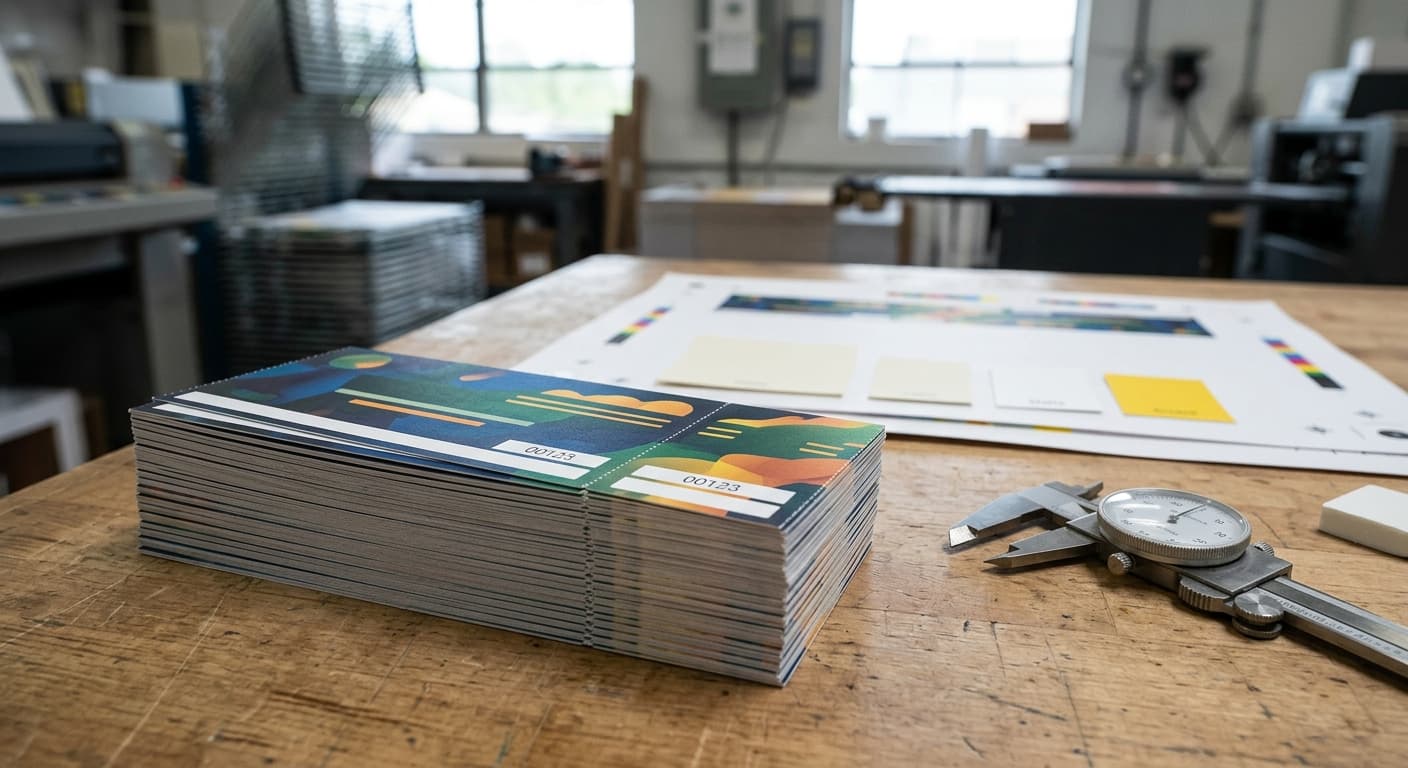
Table of Contents
- What Information Does a Printer Need for Custom Event Tickets?
- Define the ticket use case, quantity, and finished size
- Build a production specification sheet
- Which Ticket Materials and Construction Options Should You Choose?
- Compare paper stock, print coverage, and protective finishes
- Plan the ticket face, stub, and perforation position
- How Do Numbering and Security Features Work?
- Choose sequential numbering, variable data, or both
- Evaluate optional security features for your event
- How to Prepare Artwork and Numbering Data
- Set up trim, bleed, safe areas, and numbering zones
- How to Approve a Ticket Proof and Control Quality
- Check numbering sequence, perforation, color, and finishing
- What Should a Custom Ticket Printing Quote Include?
- FAQ: Custom Event Ticket Printing
- Can custom tickets be numbered and perforated?
- What affects the final MOQ, production time, and shipping cost?
Ordering numbered and perforated event tickets requires more than submitting artwork. This guide explains the ticket printing specifications a commercial printer needs, including stock, size, stub layout, numbering data, perforation, proofing, packing, and delivery requirements.
What Information Does a Printer Need for Custom Event Tickets?
Short answer: A printer needs the ticket quantity, finished size, paper, print coverage, stub and perforation layout, numbering method, finishing, packing, destination, and target date.
These details turn a general request into measurable ticket printing specifications. They also help the printer identify production risks before artwork is approved. A ticket for a seated concert may need a different layout from a raffle ticket, meal voucher, parking pass, or donation event admission ticket.
Send a simple specification sheet with your artwork or request for quotation. If any item is undecided, label it as an option rather than leaving it unstated.
Define the ticket use case, quantity, and finished size
Start by explaining how the ticket will be issued, checked, and retained. The use case determines whether you need a detachable stub, duplicate number, writable area, barcode, or stronger card stock.
- Use: State whether the ticket is for admission, a raffle, a meal, a voucher, parking, or another controlled entry purpose.
- Quantity: Give the number of complete ticket sets, not only the number of stubs. State whether numbering includes leading zeros, prefixes, or multiple ranges.
- Size: Specify the finished size after trimming. Also state the orientation and whether the ticket is one piece or has a detachable stub.
- Destination: Include the delivery country or city and the required in-hand date.
For custom raffle tickets, clarify whether the buyer keeps the stub, whether the stub carries the same number, and whether prize or drawing information must appear on both parts.
Build a production specification sheet
A production sheet should remove ambiguity from every physical and variable element. Include the following fields:
- Finished width and height, plus the preferred orientation.
- Paper type, approximate GSM, print sides, and color requirement.
- Perforation count, direction, and position measured from a trim edge.
- Numbering range, digit count, prefix or suffix, color, font size, and placement.
- Whether the face and stub share the same number or use separate data.
- Protective finish, writable areas, packing format, carton labeling, and shipping destination.
Ask the printer to confirm the flat layout before production. A written diagram showing the trim line, perforation line, stub width, and numbering zone is often more useful than a verbal description.
Which Ticket Materials and Construction Options Should You Choose?
Short answer: Choose the material and construction according to how the ticket will be handled, whether it must be written on, how long it will be retained, and how strongly you need to control unauthorized reuse.
Paper, ink coverage, lamination, numbering, and perforation work as one system. A finish that protects a ticket may make handwriting difficult. A small stub may be efficient at the door but hard to read during reconciliation. Confirm the complete construction rather than selecting each feature independently.
Compare paper stock, print coverage, and protective finishes
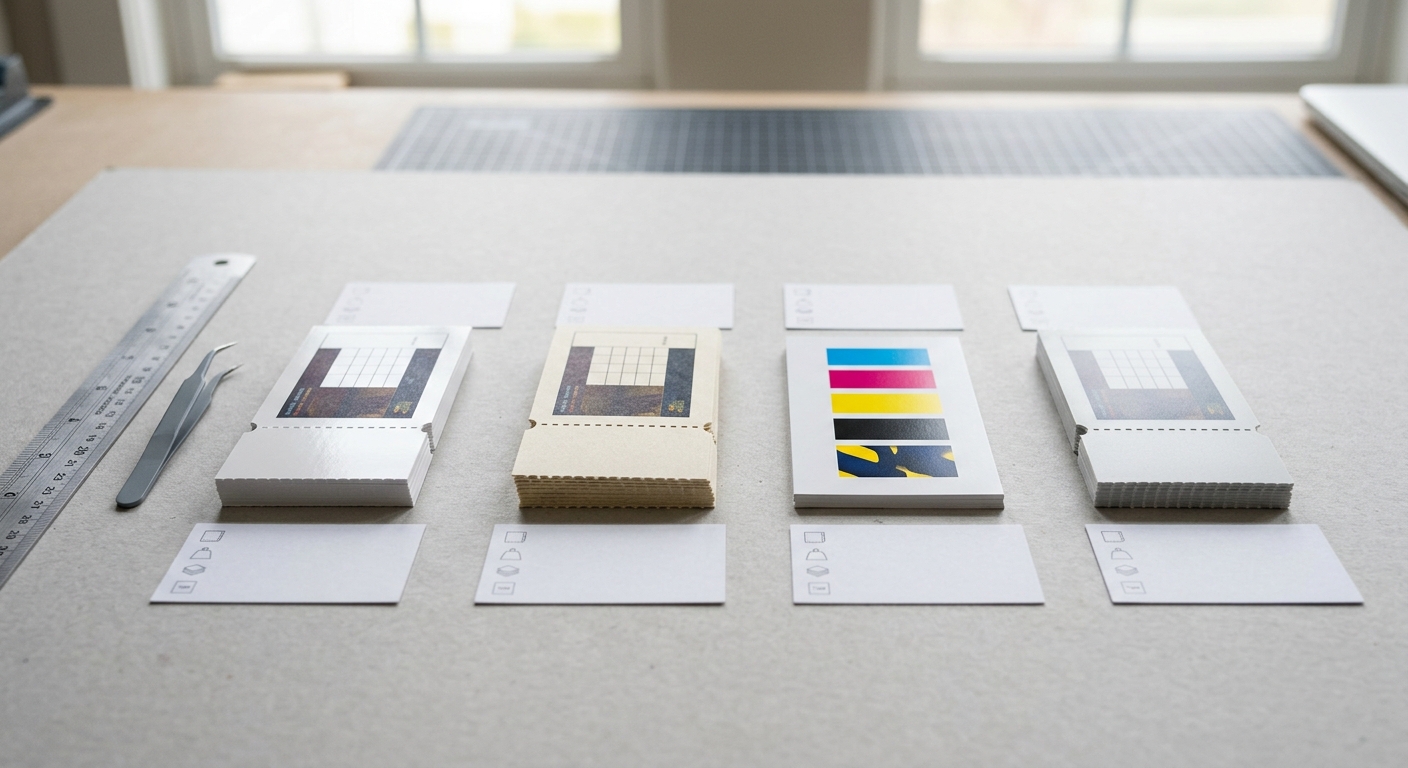
GSM means grams per square metre and is a paper weight measure, not a complete description of stiffness or durability. A printer can compare lighter ticket stock with heavier card stock based on the ticket size, number of handling cycles, and required finish.
Coated stock has a smoother surface that can support sharp images and strong color appearance. Uncoated stock generally has a more natural feel and may be easier to write on. Review the practical differences in our guide to coated versus uncoated paper for printing.
Also specify whether the design is printed on one or both sides and whether it uses light coverage, photographs, or full-bleed color. Matte or gloss lamination can add protection, but it may affect writing, folding, recyclability considerations, and the appearance of the numbered area. The printing method also matters: compare offset and digital printing when deciding between a conventional repeat run and a project with variable data or a different quantity profile.
Plan the ticket face, stub, and perforation position
A perforation is a line of small cuts that lets the user separate the stub from the main ticket. The line must be placed where it supports the checking process without removing important text, numbers, or codes.
- Decide which part stays with the attendee and which part stays with the organizer.
- Give the stub a measured width rather than describing it only as small or large.
- Repeat the ticket number, event name, date, or other control information on the stub when reconciliation requires it.
- Keep critical artwork, barcodes, signatures, and numbering away from the perforation and trim areas.
- Specify whether the ticket should separate from the left, right, top, or bottom edge.
For perforated admission tickets, request a sample or physical proof if the tear feel, alignment, or stub strength is important. Perforation performance depends on stock, cut pattern, position, and finishing.
How Do Numbering and Security Features Work?
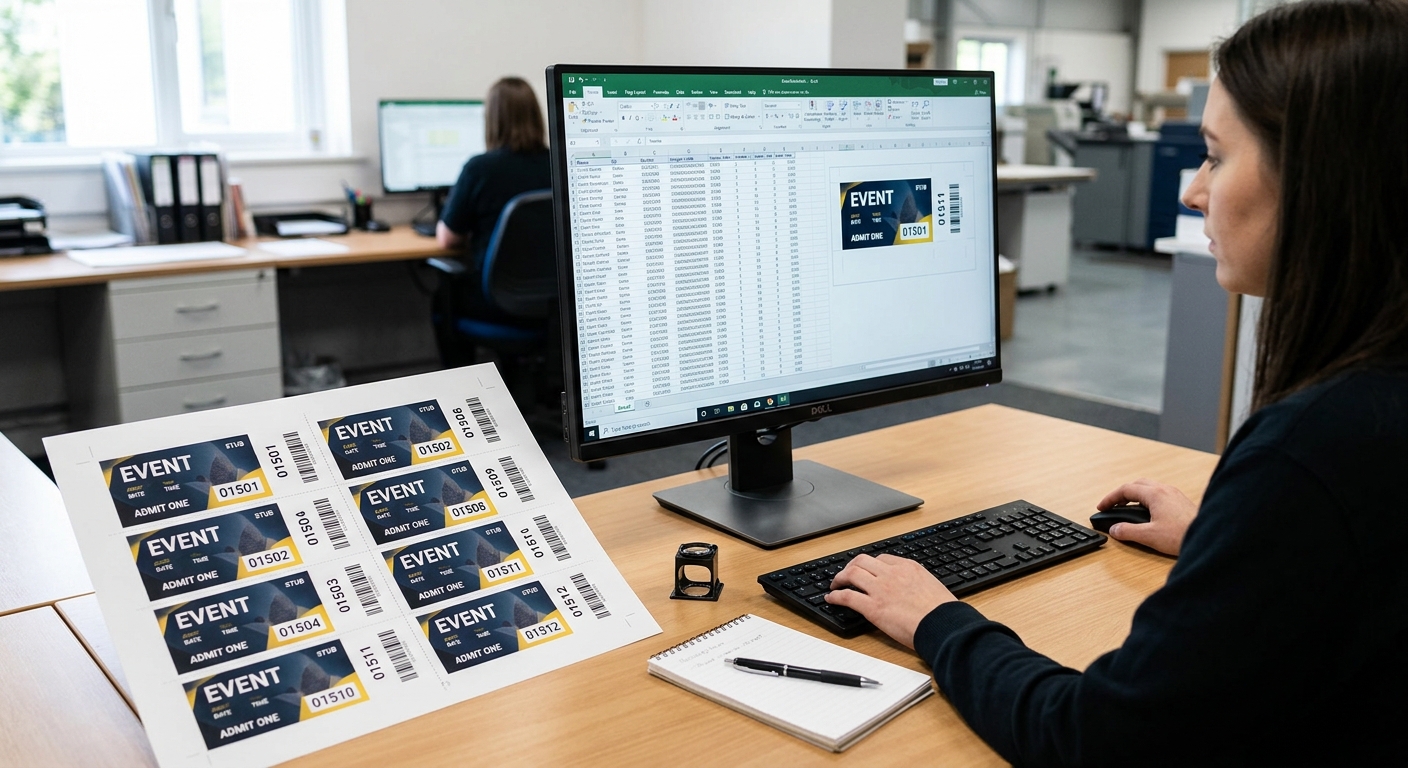
Short answer: Sequential numbering identifies tickets in order, while variable data assigns different information to individual tickets. Numbering improves control, but it should be combined with suitable distribution and checking procedures when event risk is high.
Before ordering, decide whether the number is only an operational reference or part of a broader ticket security printing plan. The answer affects the data file, artwork, proof, production sequence, and event-day reconciliation process.
Choose sequential numbering, variable data, or both
Sequential numbering uses an ordered range such as 000001 through 002500. It is suitable when every ticket follows the same design and the main requirement is counting, issuing, and checking stock.
Variable data means that selected text, codes, or numbers change from one ticket to the next. It is useful when each ticket needs a unique identifier, a matching stub, a batch code, or a different access reference. Tell the printer whether the same value must appear on both the face and stub.
Specify the following before submitting data:
- Starting and ending number or the complete data range.
- Number of digits and whether leading zeros are required.
- Prefix, suffix, batch, or section identifiers.
- Number color, approximate size, typeface preference, and exact placement.
- Whether the data is supplied as a spreadsheet or another agreed file format.
Ask for the first, last, and several middle records in the proof. This helps identify skipped numbers, duplicates, incorrect padding, or a mismatch between the ticket and stub.
Evaluate optional security features for your event
Use security features in proportion to the event’s risk, ticket value, and distribution method. A sequential number alone does not make a ticket impossible to copy.
Options to discuss with a qualified printer may include matching face-and-stub numbers, unique barcodes or QR codes, controlled numbering ranges, distinctive background artwork, fine detail or microtext, specialty inks, or other authentication elements. Availability depends on the printer, quantity, artwork, stock, and production method, so each option should be confirmed in the quotation.
Consider the full control process as well as the printed feature:
- Who receives each numbering range?
- How are unused, damaged, or voided tickets recorded?
- Will staff scan, visually inspect, or collect the stub?
- Does the ticket need to resist substitution, duplication, or tampering?
Choose features that staff can actually verify at the venue. A complex feature that cannot be checked consistently may add cost without improving practical control.
How to Prepare Artwork and Numbering Data
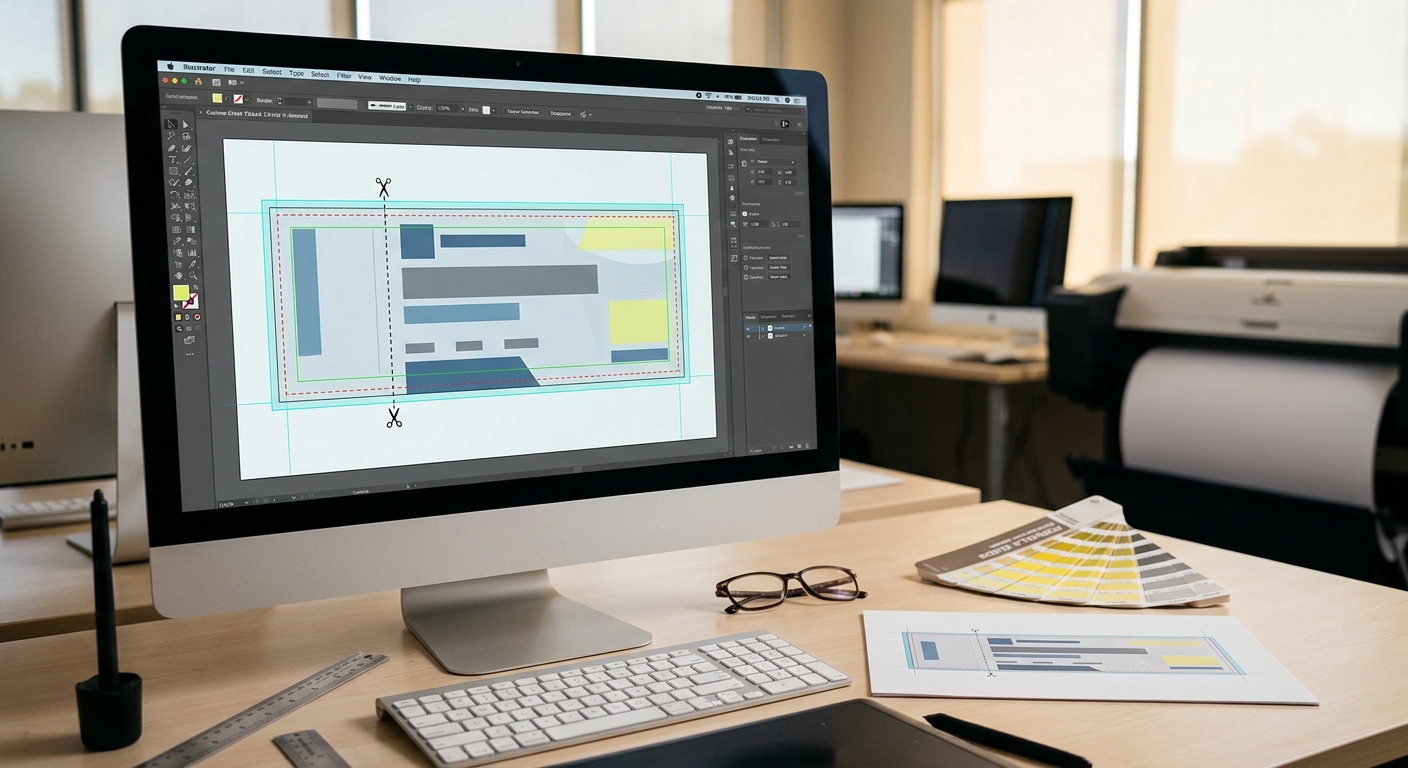
Short answer: Provide a press-ready artwork file and a separate, clearly labeled numbering or variable-data file when individual ticket information changes. Request the printer’s template before final design so trim and perforation positions are based on the actual production layout.
Artwork and data should be treated as two connected files. The artwork shows where the number will appear; the data file defines what is printed in that location and in what order.
Set up trim, bleed, safe areas, and numbering zones
Use the printer’s dieline or template as the controlling document. If no different instruction is supplied, commercial files commonly use a bleed beyond the trim edge, often 3 mm, but the required value must be confirmed for the ticket format and finishing.
- Trim: The final cut size. Do not place essential text directly on the trim line.
- Bleed: Extra image or background area beyond the trim so small cutting variation does not create a white edge.
- Safe area: The internal space where important text, logos, and numbers should remain clear of trim and perforation.
- Numbering zone: A reserved area with enough contrast and clearance for the number or variable code.
Prepare images at suitable resolution at their final size, use the requested color mode, and embed or outline fonts according to the printer’s instructions. Mark perforation lines on an annotated proof or separate technical layer rather than leaving their location to interpretation. For a broader prepress checklist, see our guide to preparing artwork for commercial printing.
How to Approve a Ticket Proof and Control Quality
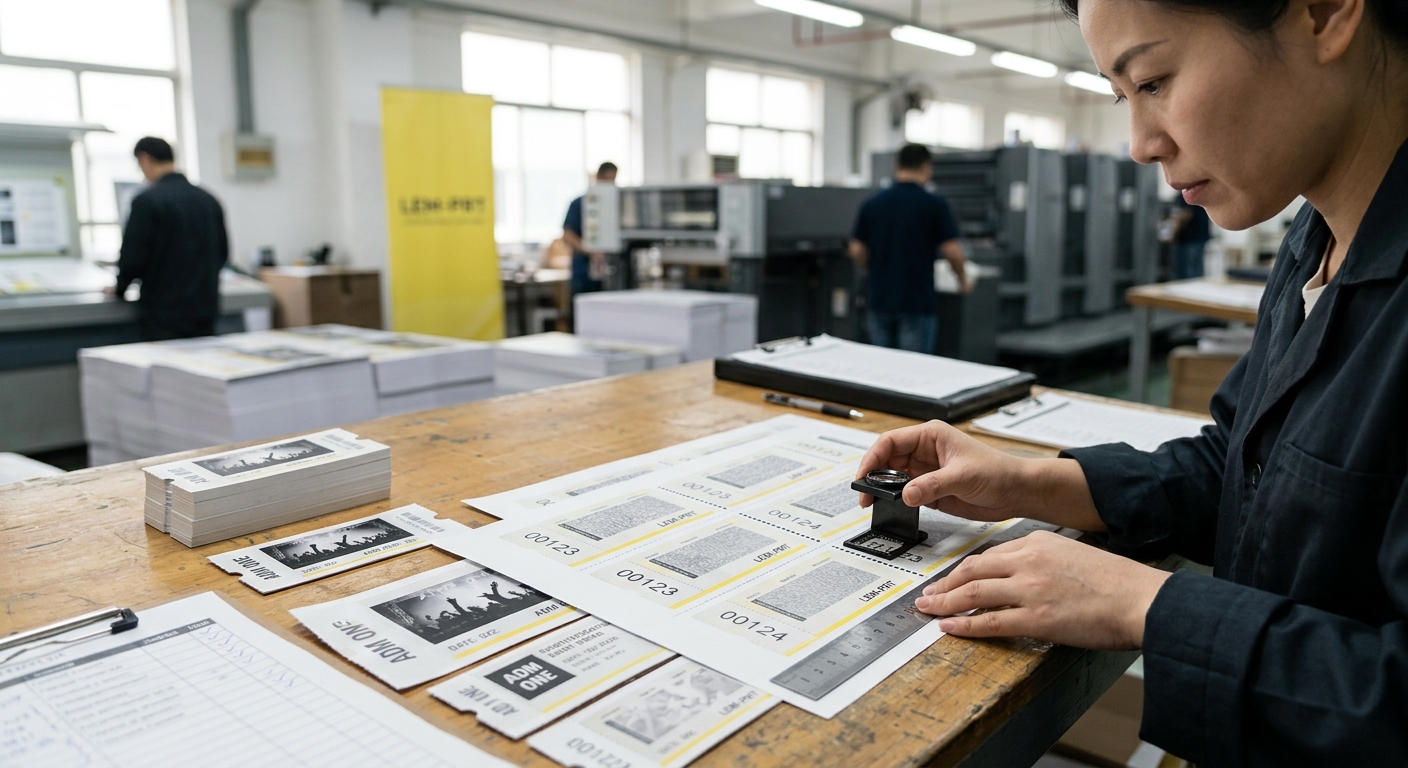
Short answer: Approve the proof only after checking both the visual design and the production controls. A proof confirms the intended layout, but it may not fully represent the final paper feel, perforation behavior, or color appearance under production conditions.
Ask whether the proof is digital or physical and what it is intended to verify. If the stock, finish, tear behavior, or color match is critical, request the appropriate sample or written confirmation before approving the full run.
Check numbering sequence, perforation, color, and finishing
Use a written approval checklist so the event team and printer are reviewing the same details:
- Numbering: Check the first, last, and sample middle numbers; digit count; leading zeros; prefixes; placement; and face-to-stub matching.
- Perforation: Confirm line position, stub width, orientation, tear direction, and whether the perforation passes through any important content.
- Trim and registration: Inspect finished size, bleed, alignment, image crop, and the position of small text near the cut or perforation.
- Color and legibility: Review logos, fine text, barcodes, contrast, and the effect of the stock and finish on readability.
- Finishing and packing: Confirm lamination or other finish, ticket bundling, numbering order, carton quantities, labels, and protection during export shipping.
At Lemon Printing, the company reports that prepress, printing, finishing, quality inspection, packing, and export preparation are handled in-house. Buyers should still request the agreed inspection points and approval records for each project.
What Should a Custom Ticket Printing Quote Include?
Short answer: A useful quote should describe the complete ticket construction, not just the paper size and quantity. It should make numbering, perforation, finishing, packing, and delivery assumptions visible.
Include these items in your request:
- Ticket type and use case, such as admission, raffle, voucher, or controlled-entry ticket.
- Quantity of complete tickets and requested numbering range.
- Finished size, orientation, single- or double-sided printing, and color coverage.
- Paper stock, GSM range, coating preference, and writable areas.
- Perforation count, position, direction, and stub dimensions.
- Numbering or variable-data rules, including duplicate stub numbers and data-file requirements.
- Optional security features, protective finish, bundling, carton labeling, and packing instructions.
- Artwork status, proof type, delivery destination, and target in-hand date.
For factory sourcing, Lemon Printing is a commercial printing manufacturer established in 2015 in the Guangzhou–Shenzhen manufacturing corridor. The company operates a self-owned facility with more than 130 skilled workers and 8+ offset and digital presses, with prepress through export preparation handled in-house. Final MOQ, production time, pricing, and shipping depend on the product specifications, quantity, finishing, and destination.
FAQ: Custom Event Ticket Printing
The following answers address two decisions that commonly affect custom event ticket printing requests: whether numbering and perforation can be combined, and which project details affect the final quotation and schedule.
Can custom tickets be numbered and perforated?
Yes. Custom tickets can be specified with sequential or variable numbering and one or more perforation lines. The quotation should state the numbering range, digit format, placement, whether the stub repeats the number, perforation position, stub size, stock, and finish. Request a proof that shows the number on both ticket parts and confirms that the perforation does not interfere with essential content. The exact production method and available options should be confirmed for the chosen specifications.
What affects the final MOQ, production time, and shipping cost?
Final MOQ, production time, pricing, and shipping cost depend on the ticket specifications, quantity, printing method, variable-data requirements, paper, perforation, finishing, packing, and destination. Artwork readiness and proof approvals can also affect the production schedule. Share the complete specification sheet and required delivery location so the printer can evaluate the project accurately. No single MOQ, turnaround estimate, or freight figure applies to every custom ticket order.
FAQ
Can custom tickets be numbered and perforated?
Yes. Custom tickets can be specified with sequential or variable numbering and one or more perforation lines. Confirm the numbering range, digit format, placement, matching stub number, perforation position, stub size, stock, and finish in the quotation. A proof should show the number on both ticket parts and confirm that the perforation does not interfere with essential content.
What affects the final MOQ, production time, and shipping cost?
Final MOQ, production time, pricing, and shipping cost depend on the ticket specifications, quantity, printing method, variable-data requirements, paper, perforation, finishing, packing, and destination. Artwork readiness and proof approvals can also affect the schedule. Share the complete specification sheet and delivery location so the printer can evaluate the project accurately.
Request a Custom Ticket Printing Quote
Send your product type, quantity, finished size, paper or GSM preference, print sides, numbering range, perforation position, finishing, packing requirements, delivery destination, and target date. Lemon Printing can review the specification and clarify the production details needed for a formal quotation.