Table of Contents
- What determines custom sound book cost?
- Custom sound book cost breakdown
- Printed pages, cover, and board thickness
- Sound module, buttons, batteries, and programming
- Assembly, testing, packaging, and freight
- Quote comparison table: which line items must be separated?
- Why quantity changes the unit cost
- Tooling, setup, and fixed project costs
- Short runs versus repeat bulk production
- The specification mistakes that create surprise charges
- How to request comparable sound book quotes
- Information to send every supplier
- Questions to ask about samples and functional approval
- FAQ: custom sound book pricing
- Get a specification-based sound book quote
A sound book quote needs to account for the printed book, electronics, assembly, functional checks, packaging, and freight. Here is how to specify each part and compare supplier prices.
What determines custom sound book cost?
Custom sound book cost cannot be confirmed from page count alone. The printed structure matters, but so do the audio design, batteries, assembly method, testing plan, packaging, order quantity, and delivery destination. Two books with the same number of pages can require substantially different work if one has a single sound trigger and the other has several page-specific buttons.
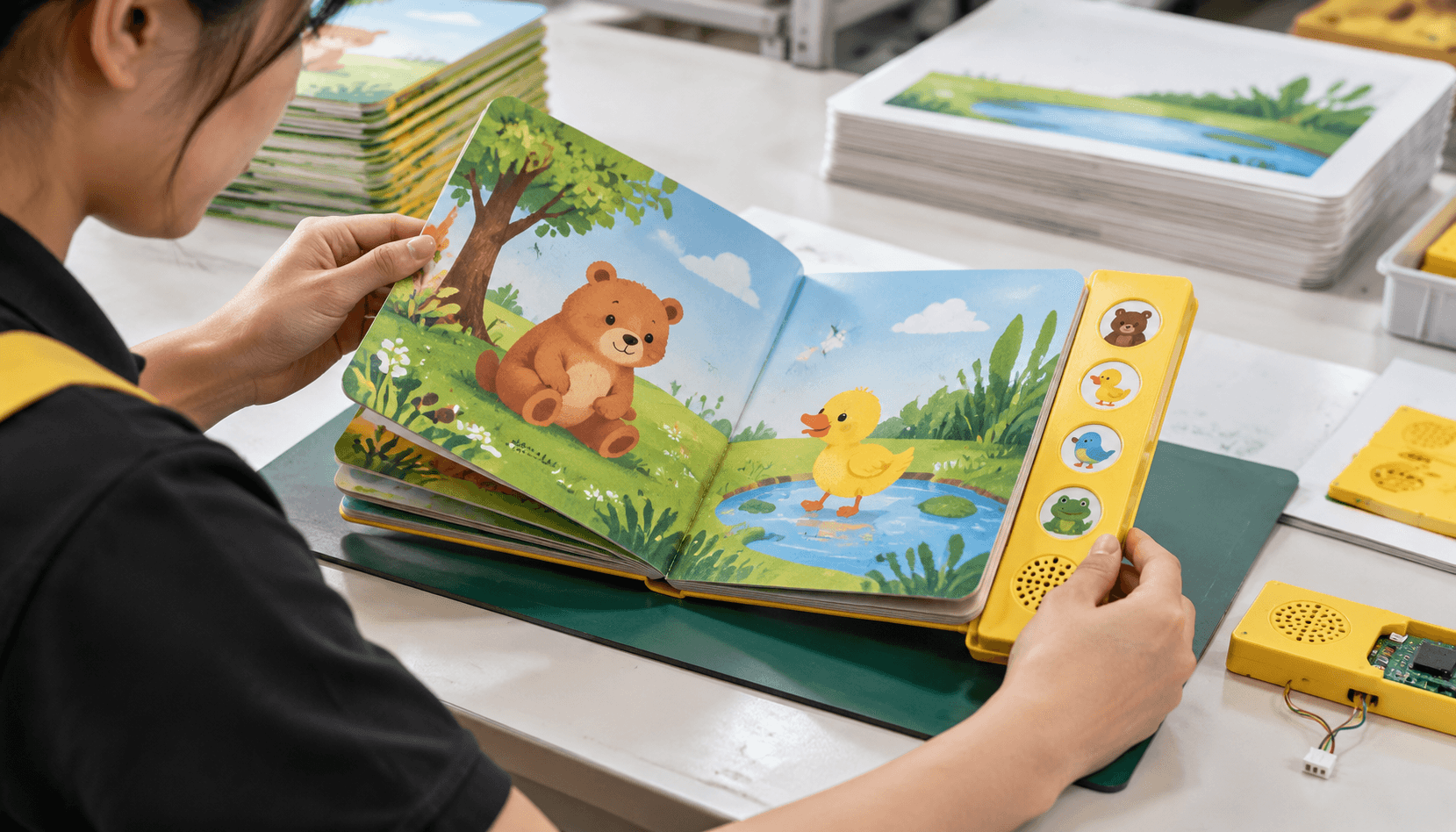
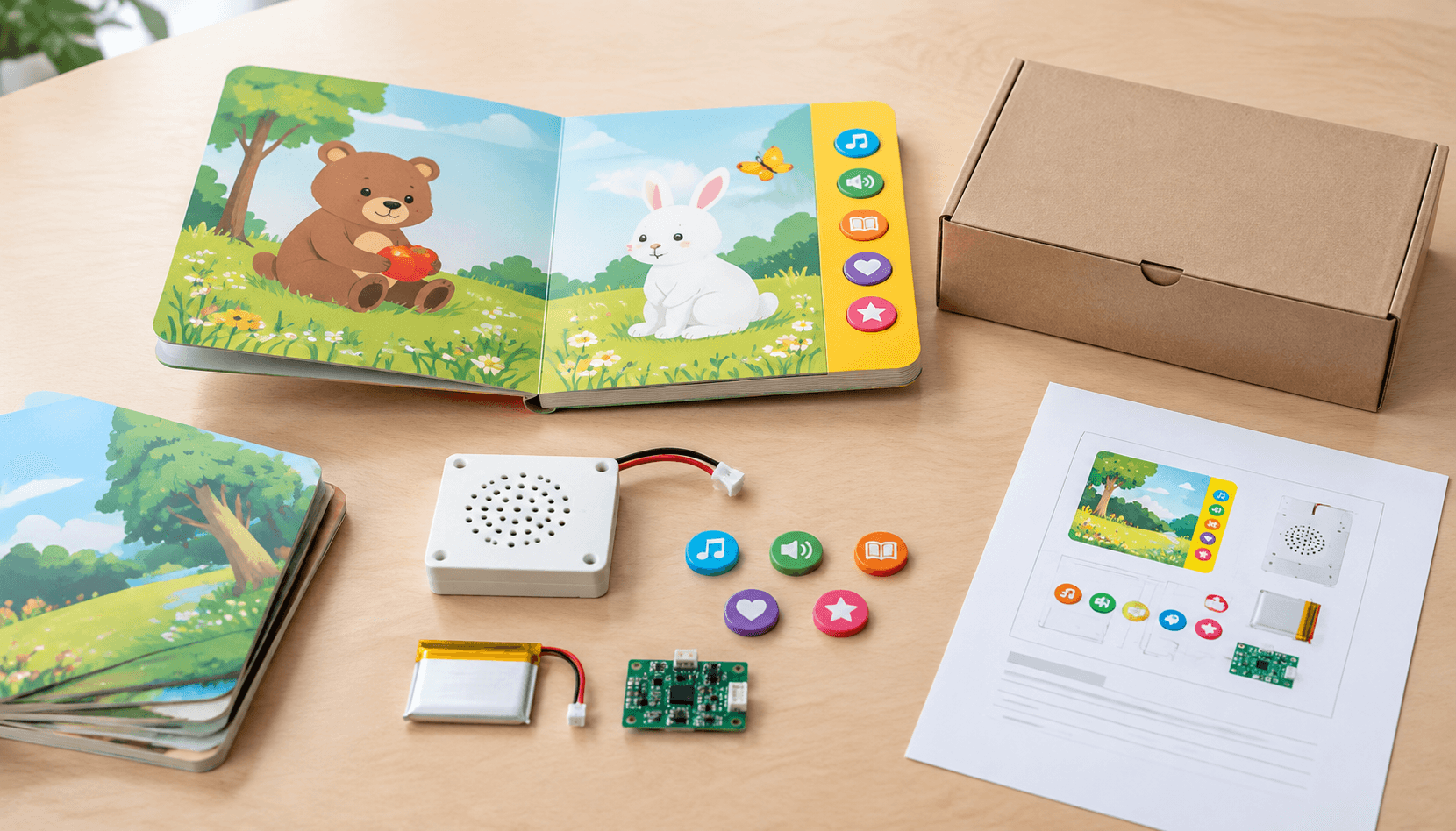
Definition: A sound book is a printed book with an electronic assembly that plays recorded audio when a reader activates a button or other trigger. A sound module is the electronic assembly that stores or plays audio; one module may serve several buttons, depending on its design. Do not use “number of sounds,” “number of buttons,” and “number of modules” interchangeably in a quote request.
Key takeaways: Ask for separate printed-book, electronic, assembly, sample, packing, and freight figures. Specify who supplies the audio files and components. Compare quotes at the same quantity and delivery terms. Lemon Printing can review the printed construction and project specifications, but the scope and cost of electronic integration must be confirmed for the proposed design.
Custom sound book cost breakdown
A useful sound book printing quote separates costs that change with each copy from costs incurred once for the project. Printed materials and electronic components generally scale with quantity; artwork preparation, programming setup, prototypes, and tooling may be quoted separately. Assembly, testing, packing, and freight need their own assumptions.
Start with the book’s physical construction, then define the electronic system and how it will be fitted. Finally, decide what a finished, accepted unit includes: installed batteries, a working demonstration, individual packaging, and any destination-specific documents or checks. A low unit price is not comparable with an all-in proposal if those items have been left out.
Printed pages, cover, and board thickness
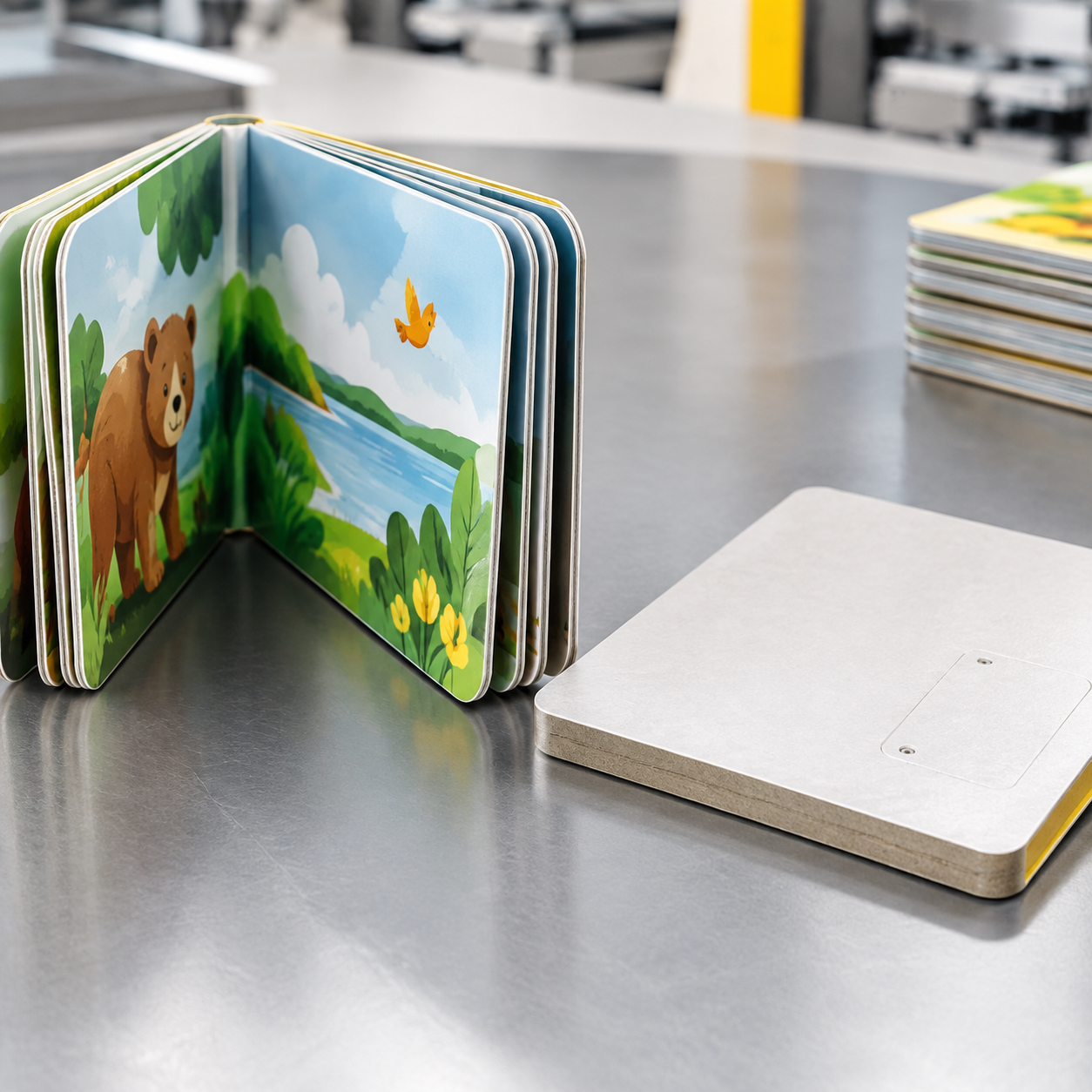
The printed portion depends on finished size, page count, material, print coverage, edge treatment, and binding or board-book construction. For a board book, confirm whether the quoted page count means individual printed faces or physical leaves. Thicker board and larger formats use more material and can change the space available for an electronic recess.
Choose construction to fit the use, not just the lowest printed-unit cost:
| Construction | Cost-relevant question | Practical fit |
|---|---|---|
| Board-book pages | What are the board caliper, leaf count, corner treatment, and module recess design? | Rigid pages for frequent handling; electronic placement needs a confirmed structural layout. |
| Paper pages with a rigid cover | How is the module housed without interfering with page movement? | More flexible interior pages when the electronics can be accommodated in the cover. |
| Separate printed sleeve or package | Is the retail enclosure included, and does it need a window or insert? | Additional presentation or protection, with more packing material and shipment volume. |
Share a dimensioned sketch showing the speaker, buttons, battery access, and page opening. Lemon Printing’s custom book printing options provide a starting point for discussing the printed structure; a sound-book construction still needs project-specific review.
Sound module, buttons, batteries, and programming
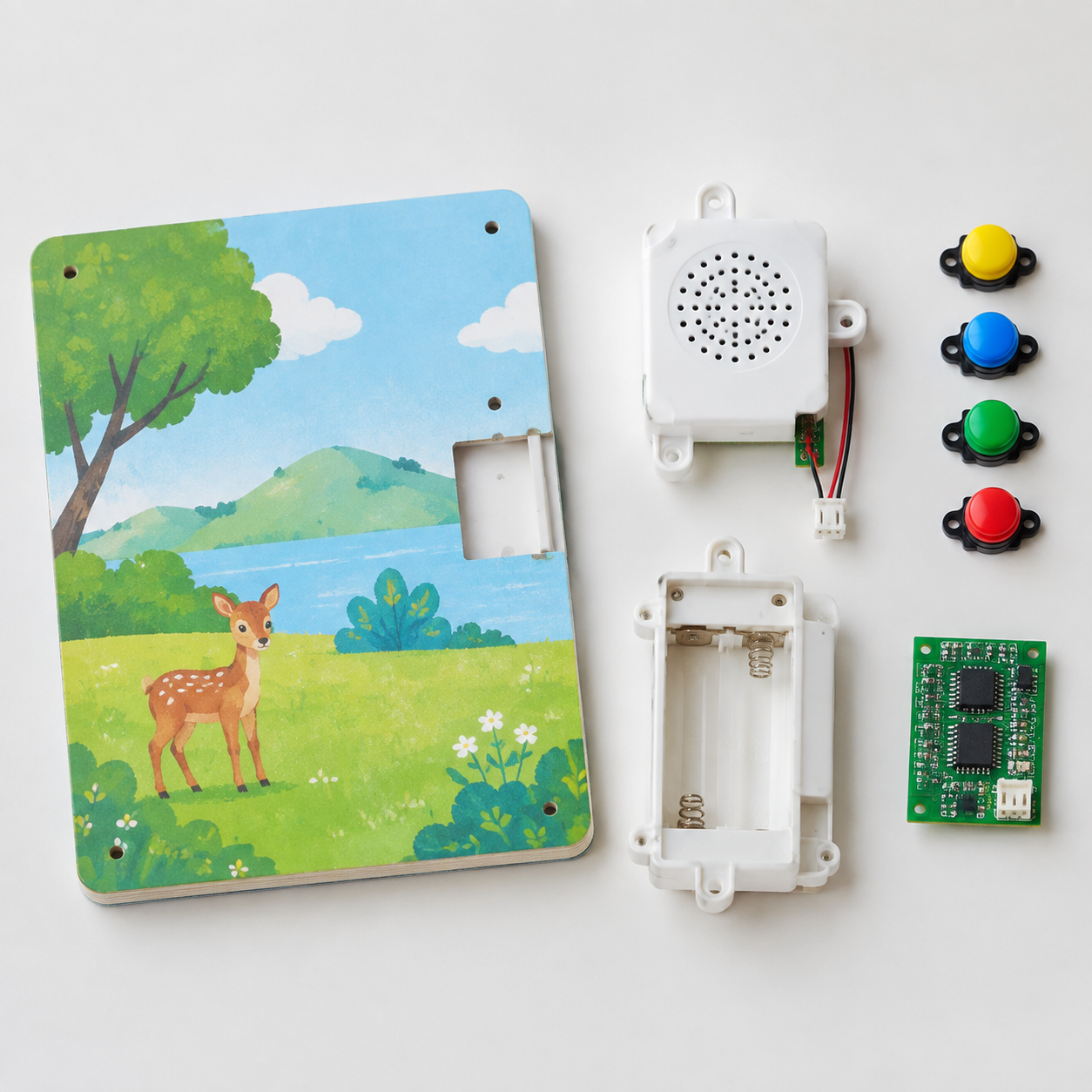
Sound module cost depends on the specified hardware and audio behavior, not simply the number of printed pages. State the number of tracks and triggers, playback length, speaker position, activation method, volume expectations, and whether audio must be programmed onto each unit. Ask whether quoted hardware includes the speaker, wiring, buttons, battery compartment, and batteries.
Battery choice also affects more than the parts list. Specify whether batteries are supplied and installed, supplied separately, or excluded; ask how the unit can be switched off during storage and how the compartment will be accessed. If the artwork covers a battery housing, provide a drawing of the opening and any required printed instructions. “Battery compartment printing” should identify the actual printed panel or label and its dimensions, rather than assume a standard layout.
For products intended for children, agree who is responsible for determining applicable destination-market requirements and arranging any required testing and documentation. A functional playback check does not establish regulatory compliance. Confirm electronic sourcing and integration responsibilities before treating either as included in a printing quote.
Assembly, testing, packaging, and freight
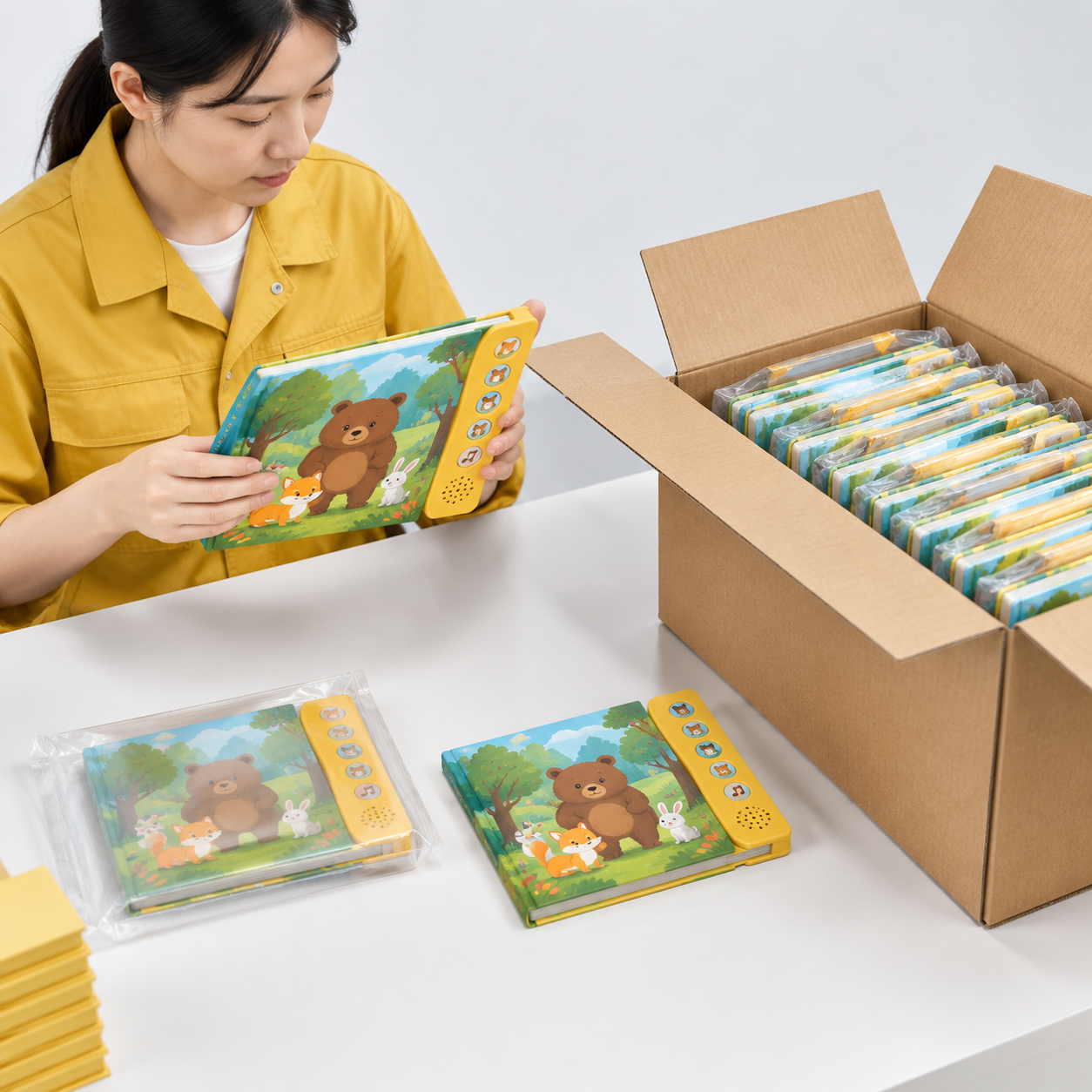
Custom book assembly can include positioning the module, routing wiring, securing buttons, closing the cover or board layers, inserting batteries, and checking playback. Each operation should be defined in the production scope. A test of one approved sample is different from testing every finished copy; ask suppliers to state their proposed inspection method and how failed units will be handled.
Packaging and destination affect landed printing cost. An individual box, protective insert, or retail display pack may increase both material use and carton dimensions. Ask for packed unit dimensions, gross carton weight, units per carton, and carton count before comparing freight. Separately identify the shipping method and delivery term, which states where the seller’s responsibility ends. Import duties, taxes, customs services, and local delivery may remain outside a quoted freight figure.
Battery type and installation status can affect carrier acceptance and documentation. Confirm shipping feasibility for the chosen configuration before approving the sample, particularly if batteries will be installed in each book.
Quote comparison table: which line items must be separated?
Separate the printed product, electronics, one-time work, assembly, checks, packing, and shipping in every supplier quote. A single unit price can still be useful, but only after the inclusions and exclusions are written down.
| Line item | Ask the supplier to specify | Common comparison gap |
|---|---|---|
| Printed book | Size, faces or leaves, material, print, finish, binding, die cuts | Different page-count conventions or board thicknesses |
| Electronics | Modules, buttons, tracks, speaker, batteries, programming | Buttons counted as modules, or batteries excluded |
| Setup and prototype | Tooling, audio setup, sample quantity, revisions, sample freight | One-time charges omitted from the unit price |
| Assembly and inspection | Integration scope, test frequency, acceptance criteria | Functional checks assumed but not priced |
| Packaging | Unit pack, carton, dimensions, units per carton | Retail packaging or protective inserts excluded |
| Freight and import scope | Destination, shipping method, delivery term, exclusions | Factory price compared with a delivered price |
Request a total project figure as well as the unit figure at each quantity. The total should show which one-time charges recur if artwork, audio, hardware, or packaging changes on a reorder.
Why quantity changes the unit cost
Quantity changes unit pricing because fixed project costs are spread across more copies, while materials and assembly still have per-unit costs. A board book MOQ, or minimum order quantity, is the smallest run a supplier will accept for a defined specification. A sound-book MOQ may differ from a plain printed-book MOQ because electronic components and assembly have their own purchasing and production constraints.
Ask for prices at two or three realistic volumes with identical specifications. The comparison should show the total payable amount, not just a declining unit price. Ordering more copies is not automatically economical if inventory, storage, batteries, or distribution costs outweigh the unit saving. Lemon Printing must confirm the final MOQ, production time, pricing, and shipping from the complete product specification, quantity, finishing and assembly scope, and destination.
Tooling, setup, and fixed project costs
Tooling and setup should be identified before comparing the price per book. Depending on the design, one-time work may include a cutting die, a shaped cavity for a module, artwork preparation, audio-file processing, programming setup, and a functional prototype. These are possibilities to confirm in the quote, not charges that apply to every sound book.
Ask whether a prototype uses production-intent materials and hardware or is only a layout demonstration. Confirm how many revision rounds are included, what changes trigger new tooling or programming charges, and whether a later reorder can reuse approved components. If tooling can be reused, clarify who owns it and how long it will be retained. Keep sample production and sample shipping visible as separate entries where applicable; neither should be assumed to be included in the final unit price.
Short runs versus repeat bulk production
A short run may be useful for a controlled launch, but it carries a larger share of setup and sampling work per copy. For a repeat bulk sound book order, previously approved artwork and audio may reduce preparation work if the components and specifications remain available and unchanged. Confirm this rather than assuming a reorder will match the first price.
Compare run sizes against the actual release plan. For example, if a publisher expects two language editions, quote each edition’s quantity and identify what changes: printed pages, audio tracks, labels, packaging, or all four. Shared construction does not necessarily mean shared audio setup. Ask for separate totals by edition and a combined-shipment option if both will travel to the same destination. This makes a quantity break useful without hiding edition-specific charges.
The specification mistakes that create surprise charges
Most quote revisions come from an undefined requirement becoming a production requirement after pricing. Sound books are particularly sensitive to changes in trigger layout, audio duration, battery handling, and the amount of manual assembly.
- Ambiguous page count: State printed faces, physical leaves, cover construction, and finished size.
- Unclear electronic count: Give separate numbers for modules, buttons, tracks, and books. A six-button book does not necessarily contain six modules.
- Late audio changes: Supply the proposed files and track-to-button map; confirm format and approval responsibilities.
- Missing battery decision: Specify chemistry, installation status, access requirements, and any buyer-provided instructions for the destination market.
- Undefined quality check: Agree on which functions are checked, when, and by whom. Printed-color approval and audio-function approval are different decisions.
- Packaging added after sampling: Set the unit pack and carton plan early so freight can be assessed against packed dimensions.
Lemon Printing describes its broader commercial printing process and print quality checkpoints separately. For a sound book, request an explicit project-specific plan for electronic integration and functional checks rather than assuming standard print inspection covers them.
How to request comparable sound book quotes
Send every supplier the same version of a written specification and ask them to list assumptions and exclusions. If the electronics are still under development, request a provisional estimate clearly marked as such, followed by a revised quote after the module layout and prototype are approved.
- Define one reference design with dimensions, construction, audio behavior, battery plan, and packaging.
- Request the same quantity options and the same delivery destination from each supplier.
- Ask for the separated line items in the comparison table above, including samples and freight assumptions.
- Record any proposed substitutions, such as different board thickness or a different module configuration, as alternative quotes.
- Confirm the approval points and who pays if a change is made after approval.
Compare alternatives on the finished product you can accept, not merely on a similar-looking sample. Lemon Printing’s printing and finishing capabilities can help frame the print-side discussion; confirm all sound-book-specific work in the project proposal.
Information to send every supplier
A complete brief lets a supplier price the same finished unit you intend to buy. Send a drawing even if the artwork is not final; mark any undecided dimension or component as provisional.
- Product use and intended market; quantities by edition and any forecast reorder quantity.
- Closed and open size, page faces and leaves, board or paper specification, cover, corners, binding, and print finish.
- Button locations, module and speaker positions, track count, audio duration, file status, and the track-to-button map.
- Battery type if selected, installation status, compartment access, and responsibility for any required safety or transport review.
- Assembly and functional-test expectations, including the proposed acceptance criteria.
- Individual pack, inserts, carton requirements, delivery address or port, target date, and requested delivery term.
Include reference photos only to illustrate the intended construction; label them as references, not approved specifications. If a key decision remains open, request separately priced options so a later choice does not silently alter the comparison.
Questions to ask about samples and functional approval
Lemon Printing offers free samples, with preparation completed within 15 days. Confirm whether the proposed sample covers the sound module and functional checks your project needs; courier arrangements and transit time are separate. When comparing other suppliers, record their sample scope and any charges separately. A printed mockup can confirm size and page sequence without proving sound performance; a working prototype should allow you to evaluate the actual trigger layout and audio response.
Before approving production, ask: Is the sample made with the proposed board, module, buttons, batteries, and packaging? Are all audio tracks loaded in the intended order? Can pages turn freely without unintended activation? Is the speaker unobstructed, and can the battery compartment be accessed as designed? What changes will require another functional sample?
Record approval of print appearance and electronic function separately, with the approved files and sample version identified. Then agree on the production inspection method and the process for dealing with failed units. This makes approval a useful manufacturing reference rather than an informal sign-off on a demonstration piece.
FAQ: custom sound book pricing
These answers cover the scope questions that most often prevent a sound book price from being comparable. Use the supplier’s written quotation to confirm how each answer applies to your design.
Get a specification-based sound book quote
A defensible quote describes one finished, packed, functioning book and makes its assumptions visible. Final MOQ, production time, pricing, and shipping depend on the product specifications, quantity, finishing, assembly requirements, and destination. Send the same brief to each supplier, resolve electronic and battery responsibilities, and approve a representative functional sample before treating the quoted total as a production baseline.
FAQ
How much does a custom sound book cost?
There is no reliable price from page count alone. A supplier needs the finished size and construction, quantity, module and button design, audio files, batteries, assembly and test scope, packaging, and destination to quote the finished product.
Why do sound modules change custom sound book pricing?
The specified module affects component purchasing, audio programming, placement, wiring or button integration, assembly, and functional checks. One module may support multiple buttons, so give suppliers the numbers of modules, triggers, and tracks separately.
Are prototypes and functional samples included in the final unit price?
Lemon Printing offers free samples, with preparation completed within 15 days. Confirm what materials, electronics and functional checks will be represented. Courier arrangements and transit time are confirmed separately. Other suppliers may use different sample terms; compare the same scope.
Does the board book MOQ determine the sound book MOQ?
Not necessarily. Electronic component sourcing and assembly may impose different minimums from printing. Request the minimum quantity for the complete sound-book specification and compare total project costs at practical order volumes.
How do packaging and destination affect landed printing cost?
Unit packaging changes material use and packed carton dimensions, which can affect freight. Destination, transport method, battery configuration, and delivery terms determine what the freight quotation covers. Ask which duties, taxes, customs services, and local delivery charges are excluded.
Get a Clear Quote for Your Printing Project
Send Lemon Printing your sound book’s quantity, finished size, page count, paper or board specification, binding and finishing requirements, audio and battery plan, packaging, delivery destination, and target date. The team can review the specification and confirm practical production options, scope, pricing, and a project timeline.