Finishing and conversion
Specify the effect and the surface together.
Metallic reflection, gloss, texture and protection are different effects. Select the process for the material and handling conditions, then check the finished feature on a representative sample.
Compare finishes under the same light.
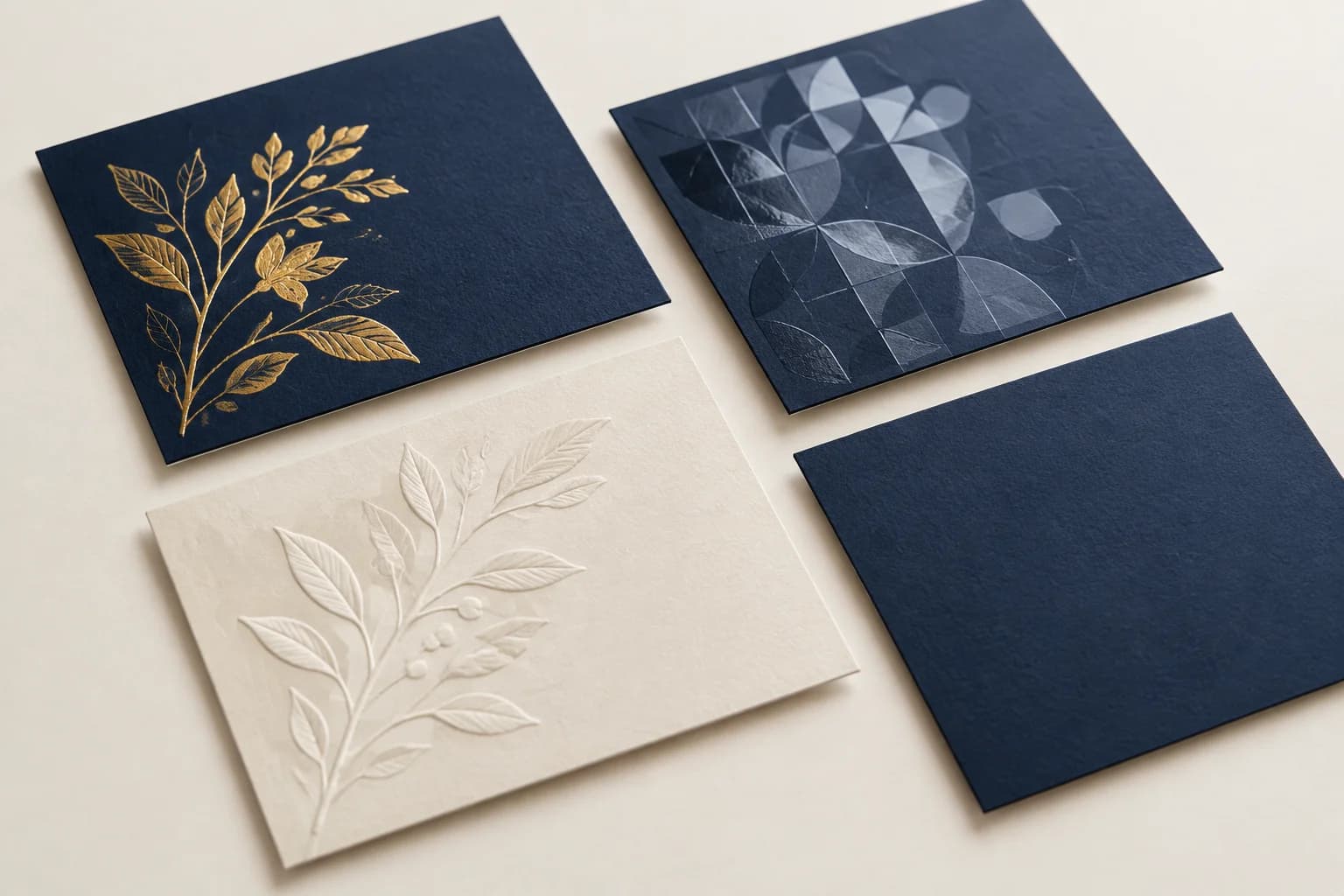
A metallic foil reflects light, a spot varnish changes local sheen, and embossing changes surface relief. Their appearance shifts with viewing angle. A digital mockup can show placement, but cannot approve the actual reflection or feel.
A soft-touch film can change handling and color perception. A textured paper changes how a fine stamped line contacts the surface. Review the complete ink, substrate and finish combination.
Choose the effect for its job.
| Finish | Result | Compatibility / check |
|---|---|---|
| Gloss / matte film | A laminated surface with different reflection | Film adhesion and scoring matter at folds. Matte reduces glare but can make rubbing visible on dark artwork. |
| Soft-touch film | A tactile laminated surface | Test the actual handled sample and later foil or adhesive interaction; soft feel alone is not a scuff rating. |
| Hot foil stamping | Decorative transfer with a heated die | Foil, substrate contact and artwork detail affect coverage. Confirm line detail on the actual stock. |
| Spot UV varnish | Gloss contrast in selected areas | Separate vector effect artwork and review registration to the printed design. Avoid assuming it behaves like foil. |
| Emboss / deboss | Raised or recessed surface relief | Board construction and relief depth affect reverse impressions, folds and fine detail. Blind relief has no added ink. |
| Overall varnish / UV coating | A coating across a print surface | Gloss and protection depend on the coating; a coating is not the same construction as film lamination. |
| Die cutting / round corners | Shaped outlines or selected corner radii | Use the approved cut path and clearance; a diagram does not establish die-cut precision. |
| Perforation | A controlled tear line | Balance retention and removal on the finished stock. Test tear behavior near printed and folded areas. |
Give each effect its own identifiable artwork.
Use separate named vector layers or separate files for foil, spot UV, relief and cut instructions. Define which face the effect belongs to and show how it aligns with the printed design. Do not rely on a flattened JPG to identify a stamping die.
Book-edge decoration, a linen-like texture, a thumb index and a tipped-in image are specialist construction choices. Edge finishing works on the assembled block; an index cut interrupts page edges; a tipped-in leaf adds an attached component. Discuss these features with the product construction rather than treating them as interchangeable coatings.
- Keep a sample of the approved finish and record any omitted effect.
- Inspect dark folds after scoring and folding, not only as a flat sheet.
- Compare rubbing, edge adhesion and reflection under the intended handling conditions.
Common questions
Can a finish fix an unsuitable base material?
A finish changes the surface; it does not replace a suitable stock or structure. Compare the actual substrate, ink and conversion sequence before approving the effect.
Is a printed metallic color the same as foil?
No. Metallic ink and a transferred foil have different surface appearance and production requirements. State the intended effect and compare physical references under the same light.
Sources and scope of this guide
Reviewed October 8, 2026. Industry examples explain selection; the quotation defines the actual Lemon product and service. Supplier data does not certify Lemon or establish our inventory.
- KURZ: hot-stamping finishes
Foil and embossing effects; actual substrate and design require a sample.
- Holmen: Graphics Handbook
Substrate and conversion principles; no claim of equipment ownership or a universal tolerance.
Build a specification we can quote.
Tell us the product, finished size, quantity and destination. Include the feature you need the sample to check.