Book Printing · Formats & construction
Family History Book Printing
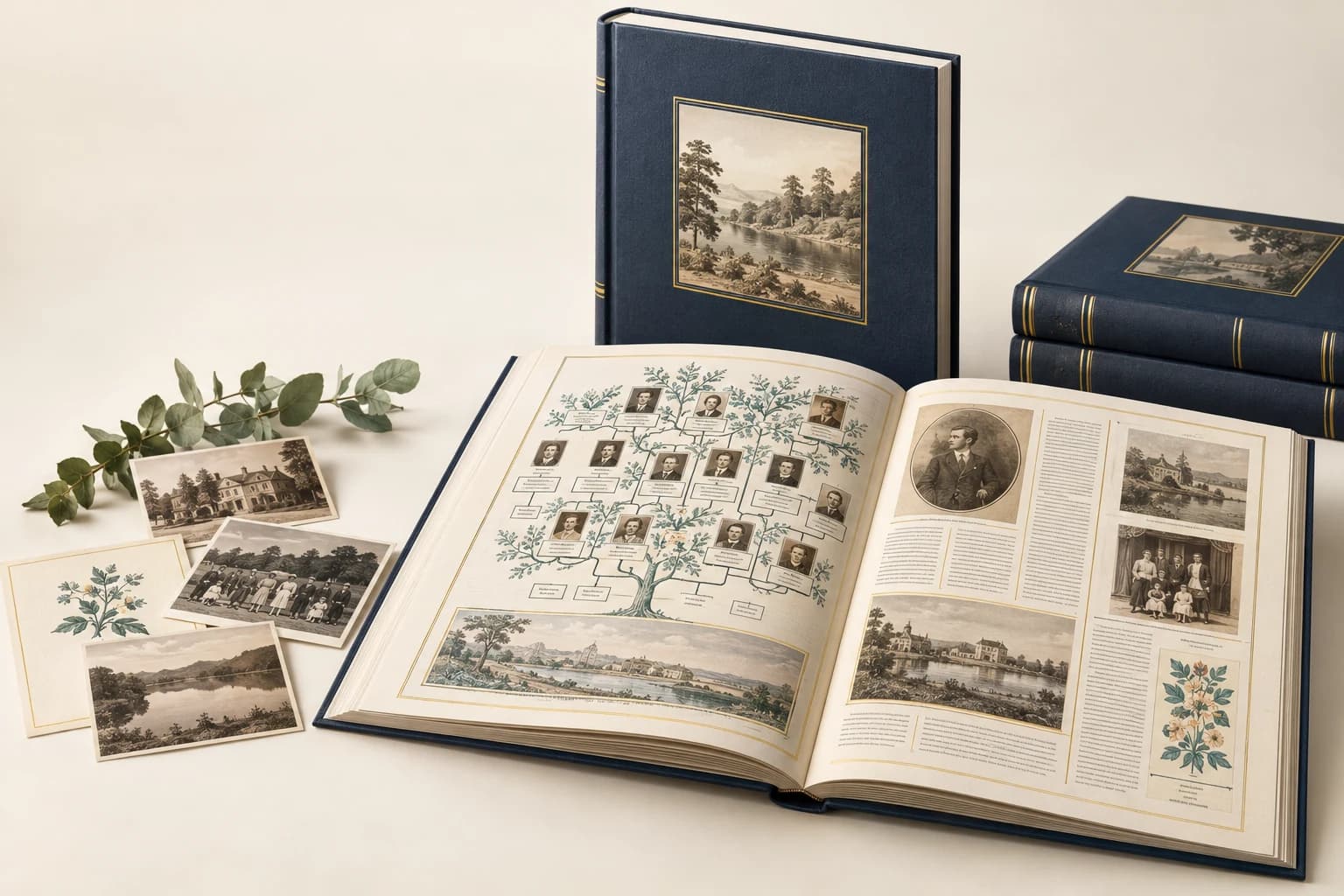
Family histories combine scanned photographs, narratives and genealogical diagrams.
- In-page diagrams or separately planned foldouts
- Coated image paper
- Family archive
Start with the intended use, finished size and quantity. The material and construction can follow.
The product in use
Photographs, family trees and narratives together
A family history combines narrative, scanned photographs, records and genealogical diagrams. Small names and branching trees need more space than ordinary running text. A keepsake case, a reading paperback and separately folded diagrams offer different ways to organize a growing archive.
What makes up the finished product?
- Illustration layout
- A foldout can keep a large tree readable without enlarging every page.
- Coated image paper
- A smooth coated surface supports fine image detail. Higher sheet mass increases the weight of the complete edition.
- Cover and additions
- A casebound edition suits repeated reference; a foldout tree needs its own fold and insertion plan.
Specifications and materials
Family History Book Printing specifications
Use these reference options to build the project brief. Dimensions are design examples; material availability, tooling and production timing depend on the confirmed specification.
| Parameter | Reference or option | Why it matters |
|---|---|---|
| Finished dimensions | 210 × 297 mm | An A4 example gives branching family trees more space than a compact text-book trim. Design reference, not a factory limit. |
| Illustration layout | In-page diagrams or separately planned foldouts | A foldout can keep a large tree readable without enlarging every page. |
| Interior page count | Final reading-order PDF, including intentional blanks; covers stated separately | Page count, actual paper caliper and binding determine the page block and cover spine. |
| Binding and cover | Sewn hardcover or perfect-bound paperback; foldouts planned separately | A bound sample checks page turning, the gutter, the spine and any inserted sections. |
| Material construction | Coated image paper or Uncoated image paper | Compare the actual grade and construction. Compare the lightest image, deepest shadow and neutral gray on the chosen grade. |
| Format and order unit | complete books per language, artwork version and binding | List components and versions separately so quantities refer to the same finished unit. |
| Finishing choice | A casebound edition suits repeated reference; a foldout tree needs its own fold and insertion plan. | Approve the proposed material and process combination on an appropriate sample. |
Compare the material and its effect.
Choose the surface and construction for the way the finished product will be used. The options below are selection references, not a guaranteed inventory list.
Coated image paper
115, 150 or 170 g/m² supplier reference grades
A smooth coated surface supports fine image detail. Higher sheet mass increases the weight of the complete edition.
Sample check: Compare the lightest image, deepest shadow and neutral gray on the chosen grade.
Uncoated image paper
Woodfree uncoated; grade selected by opacity and surface
A visible paper texture changes the reproduction and reduces surface glare. The printed appearance will differ from a coated proof.
Sample check: Use the actual artwork on this surface before adopting a coated-paper color reference.
Selected sample focus — Coated image paper: Compare the lightest image, deepest shadow and neutral gray on the chosen grade.
Format & usable space
Family Tree Layouts, Trim Size & Foldouts
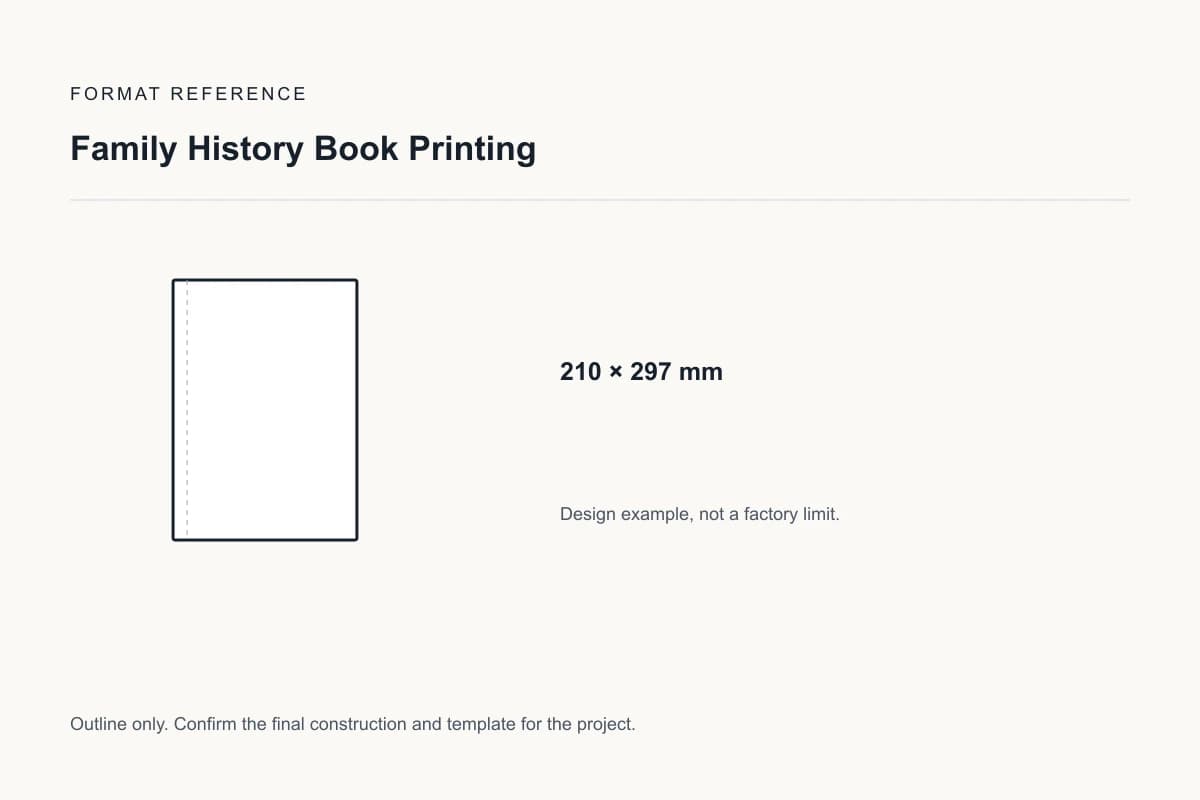
210 × 297 mm
An A4 example gives branching family trees more space than a compact text-book trim.
This is a design reference, not a required size or a manufacturing limit.
Illustration layout
In-page diagrams or separately planned foldouts
A foldout can keep a large tree readable without enlarging every page.
See the trim proportions.
These are publishing references, not required sizes. Compare the usable page shape before adapting an existing layout.
Selected: Archive portrait. Proportions only; not actual size.
Trim dimensions describe the cut page. Artwork bleed, cover overhang, tabs and modules are separate allowances.
View the original format reference
Surface finish options
Printed covers and jackets
Choose the finish for the printed cover or jacket, not automatically for the interior. Check color, rub marks, hinges and compatibility with the cover stock. Cloth and synthetic wraps need a separate material trial.
 Matte lamination View effect & artwork guidance
 Gloss lamination View effect & artwork guidance
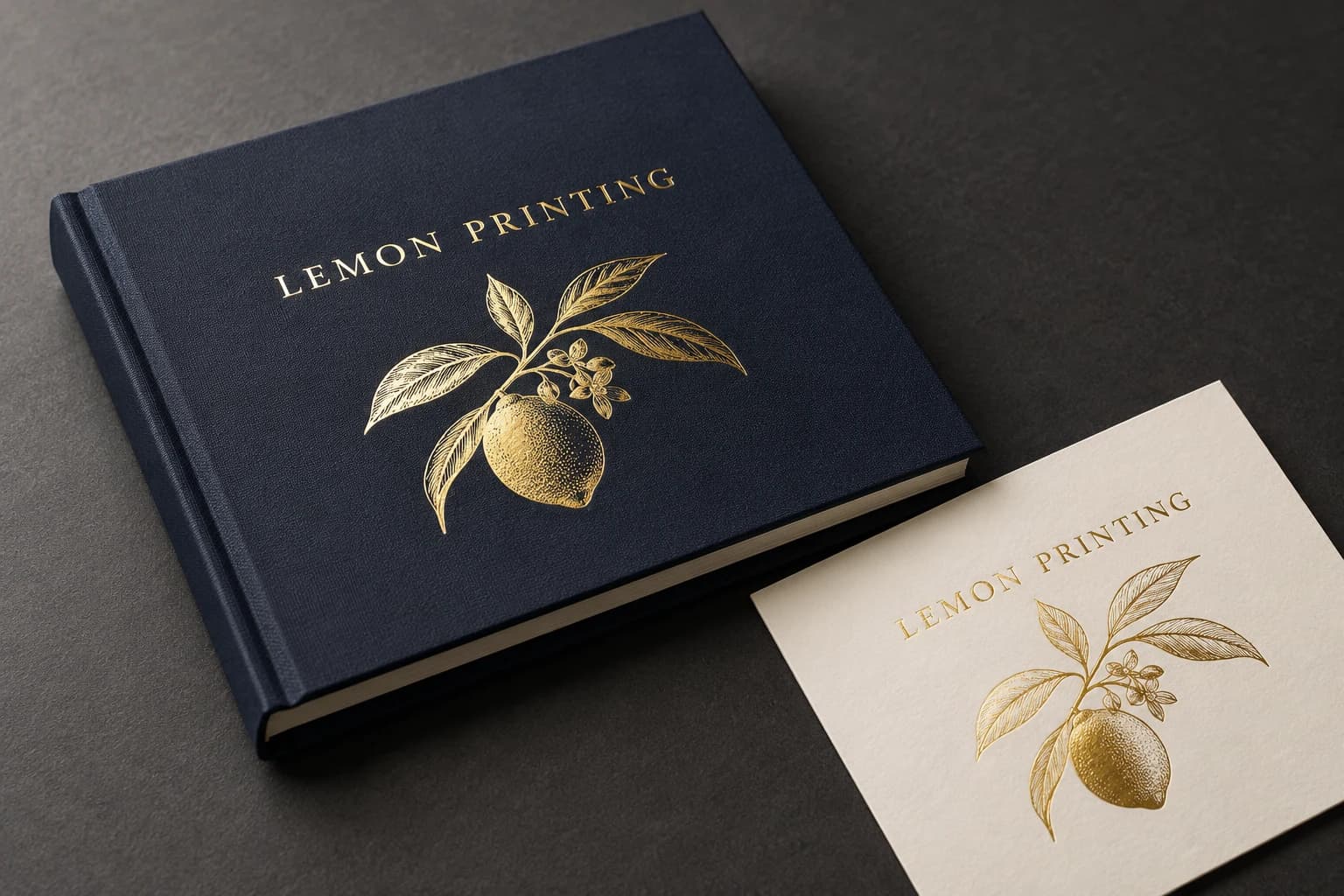 Gold foil stamping View effect & artwork guidance
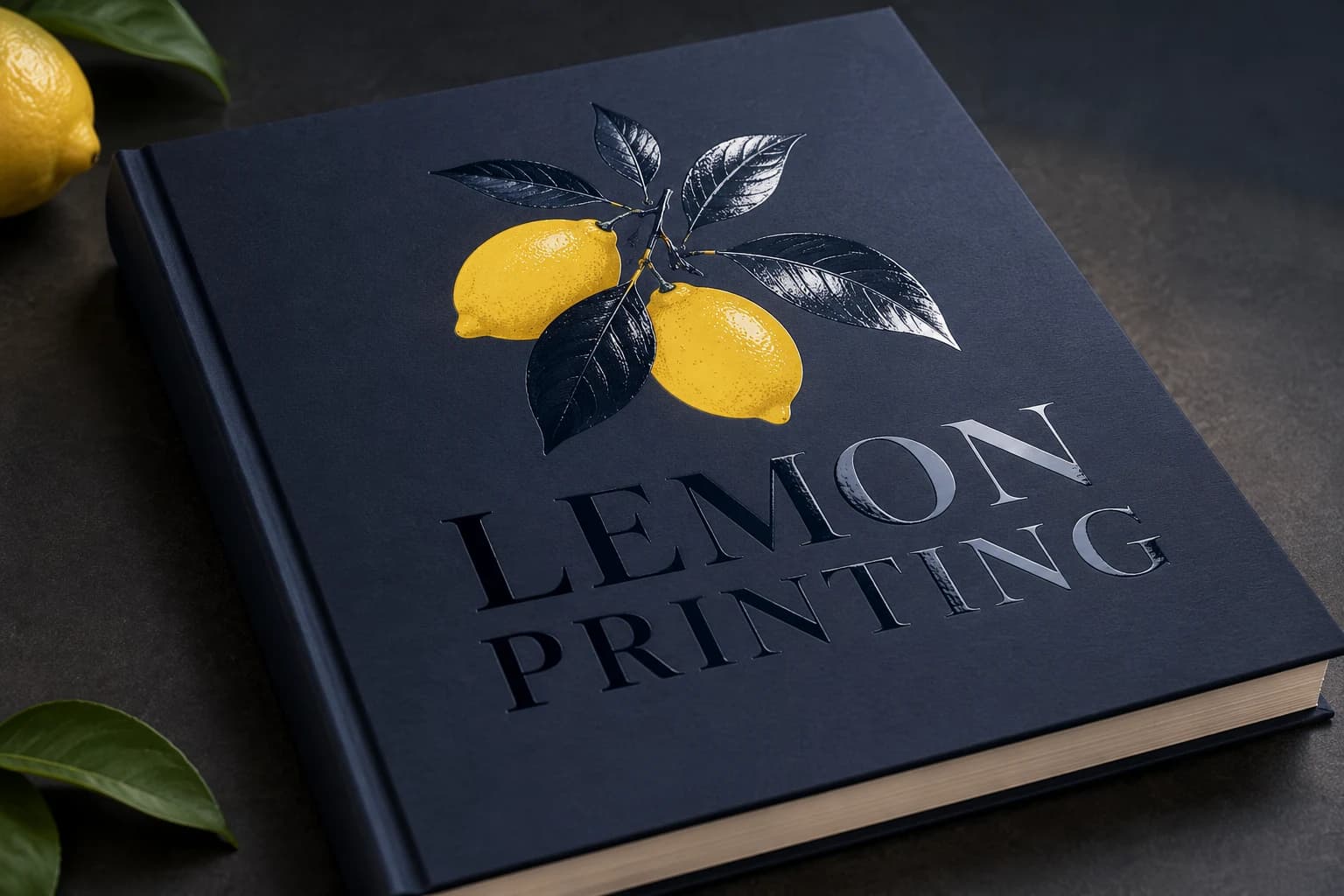 Spot UV View effect & artwork guidance
Illustrative finish samples, not photographs of this product. Final suitability follows the confirmed stock, construction and approved sample.
Compare all surface finishes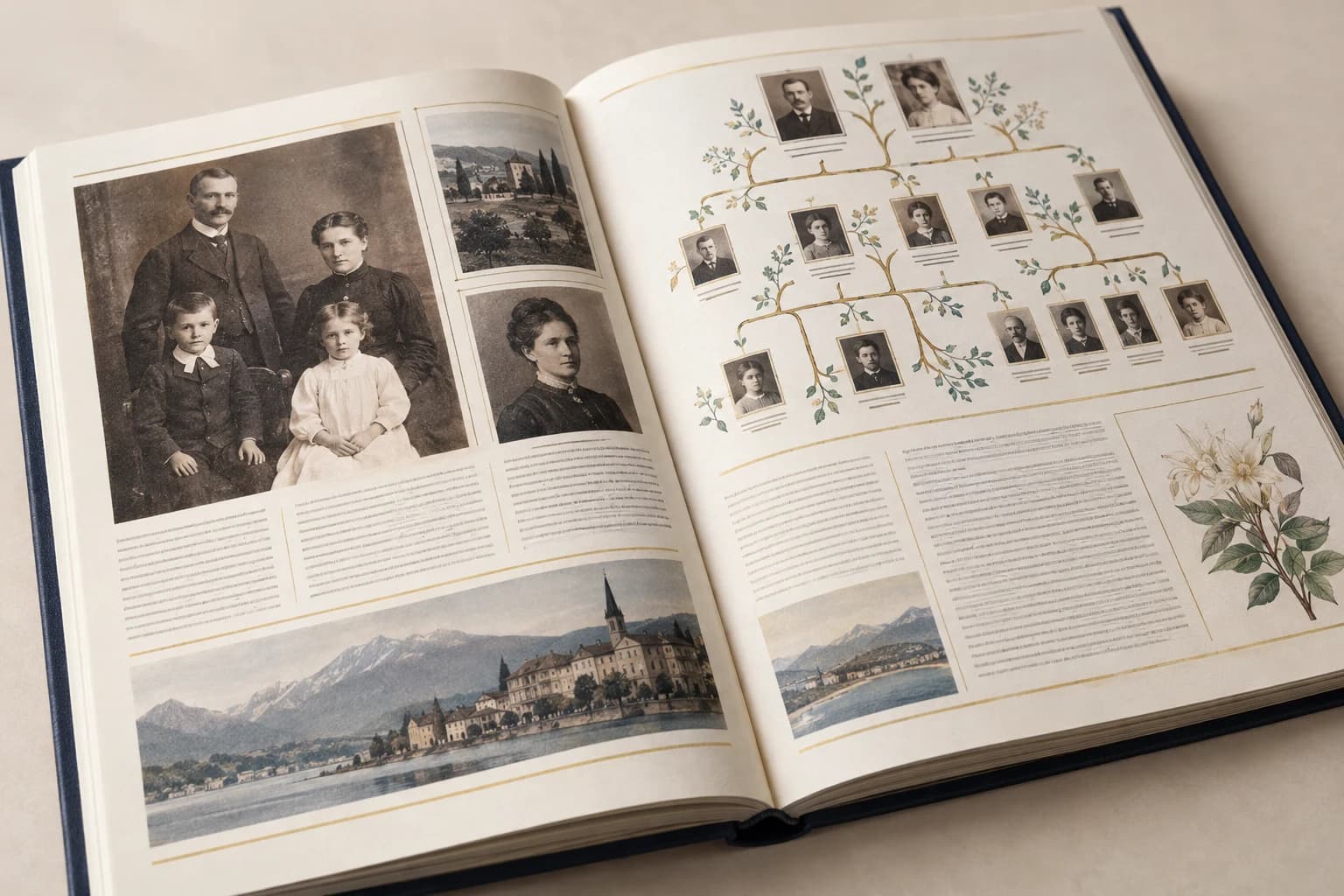
Details that change the finished product
Inspect the paper, print and bound opening
Make photographs and family trees readable
Prepare separate tests for a small historic portrait and the finest lines in the family tree. Increasing file resolution cannot restore detail that was absent in the original scan.
Illustration layout
A foldout can keep a large tree readable without enlarging every page. A bound sample checks page turning, the gutter, the spine and any inserted sections.
Surface and finishing compatibility
A casebound edition suits repeated reference; a foldout tree needs its own fold and insertion plan. A smooth coated surface supports fine image detail. Higher sheet mass increases the weight of the complete edition. Compare the lightest image, deepest shadow and neutral gray on the chosen grade.
Family Archives & Reunion Editions
Family archive
Combine indexed names and captioned scans in a durable reference edition.
Reunion distribution
Choose a lighter softcover version; reserve foldouts for trees that cannot be read at page size.
Solve the risk before production
Keep Family Trees, Names & Scans Legible
The critical finished-product check
Fine tree lines and small names can become unreadable after reduction. Print the densest diagram at final size and simplify the layout or use a foldout if it cannot be read comfortably.
Foldout does not close cleanly
Why it happens: The panel sequence or fold allowance conflicts with the binding and trimmed pages.
Fix and check: Build an actual-size folded diagram and verify its insertion position in a bound dummy.
When to choose another format
Family Histories, Photo Books & Hardcover Keepsakes
| Alternative | Use and trade-off |
|---|---|
| Photo Book Printing | An image-led archive suits photographs, while long narratives and trees need more text planning. |
| Hardcover Book Printing | A rigid case suits a keepsake; the family tree still needs its own final-size readability check. |
Sample and approval
Proof the Densest Family Tree at Finished Size
Free samples are available, with preparation completed within 15 days. Confirm the sample scope; courier arrangements and transit time are separate.
Structural sample
Checks dimensions, fit and assembly using unprinted or representative materials. It does not establish final color.
Printed proof
Checks text, image reproduction and artwork on the agreed proof medium. It may not reproduce final assembly or every finish.
Complete finished sample
A bound sample checks page turning, the gutter, the spine and any inserted sections.
From brief to delivery
Order Details for Family History Book Printing
Build and approve the order in five steps
Send the project brief
Send scan quality, largest family tree, index and any foldout dimensions. Include finished dimensions, quantity by version, destination and required arrival date. If a configuration is undecided, describe the intended use.
Compare the quoted configuration
Compare the same quantity basis: complete books per language, artwork version and binding. Check that the quote identifies materials, finishing, included components, sample scope, packing and freight.
Approve the appropriate sample
A bound sample checks page turning, the gutter, the spine and any inserted sections. A print proof checks artwork and color; a complete finished sample also checks assembly. Record what the selected sample does and does not reproduce.
Confirm files and release production
Approve the final artwork revision and the illustration layout specification. Record the agreed quantity, payment conditions, packing and production schedule in the order.
Confirm packing and dispatch
State books per carton, edition labels and any slipcases or individual wrapping. Confirm production completion and transit as separate dates, using the delivery destination and required arrival date.
- Supply the complete reading-order interior PDF, including intentional blank pages. Supply a separate cover file built from the approved spine, hinge or punched-edge template. Case-wrap turn-ins, hinge areas and binding clearance are separate from trim bleed; keep essential content outside all of them. Supply finish masks as named separations.
- Extend edge-to-edge trim artwork by 3 mm unless the approved template specifies a different bleed. Use approximately 300 effective ppi for continuous-tone images at their placed size; keep fine linework as vectors where possible.
Project questions
Planning Family History Book Printing
Can low-quality historical photographs be included?
They can be placed in the layout, but printing cannot restore detail absent from the source. Supply the best available scans and identify images that need special review. A proof at finished size helps decide whether to reduce the image size or retain it as an archival record.
How should I specify quantities and versions?
Count complete books per language, artwork version and binding. State scan quality, largest family tree, index and any foldout dimensions; components, language versions and different structures must be listed separately.
What determines the minimum quantity and delivery schedule?
The selected stock, construction, finishing, version count and sample scope determine production planning. Request quantity breaks for the same configuration and an arrival-date plan that separates sampling, manufacturing and transit. No minimum or lead time is implied by the design examples above.
Specify the finished product.
Send scan quality, largest family tree, index and any foldout dimensions. Include finished dimensions, quantity by version, destination and required arrival date.