
Book Printing · Formats & construction
Prayer Book Printing
Prayer books combine short readings with a format that can be carried and opened repeatedly.
- Pocket or desk format; optional ribbons and index
- Thinprint publishing paper
- Personal pocket edition
Start with the intended use, finished size and quantity. The material and construction can follow.
The product in use
Portable readings with practical navigation
A prayer book organizes short readings for repeated personal or shared reference. A pocket edition emphasizes portability; a desk edition leaves more room for larger type and commentary. Ribbon markers and an accessible gutter support navigation without continually searching the contents.
What makes up the finished product?
- Reading aids
- Markers help readers return to repeated passages without adding loose inserts.
- Thinprint publishing paper
- Thinprint paper reduces a long text block while retaining readable text. Opacity and caliper need separate assessment; GSM alone cannot describe either.
- Cover and additions
- Ribbon markers and section tabs need explicit positions; adhesive tabs must not conceal the text.
Specifications and materials
Prayer Book Printing specifications
Use these reference options to build the project brief. Dimensions are design examples; material availability, tooling and production timing depend on the confirmed specification.
| Parameter | Reference or option | Why it matters |
|---|---|---|
| Finished dimensions | 105 × 148 mm | An A6 pocket example favors portability; large-print editions need a larger trim. Design reference, not a factory limit. |
| Reading aids | Pocket or desk format; optional ribbons and index | Markers help readers return to repeated passages without adding loose inserts. |
| Interior page count | Final reading-order PDF, including intentional blanks; covers stated separately | Page count, actual paper caliper and binding determine the page block and cover spine. |
| Binding and cover | Compact sewn or adhesive-bound edition; markers specified separately | A bound sample checks page turning, the gutter, the spine and any inserted sections. |
| Material construction | Thinprint publishing paper or Conventional uncoated book paper | Compare the actual grade and construction. Read densely printed pages from both sides under normal lighting. |
| Format and order unit | complete books per language, artwork version and binding | List components and versions separately so quantities refer to the same finished unit. |
| Finishing choice | Ribbon markers and section tabs need explicit positions; adhesive tabs must not conceal the text. | Approve the proposed material and process combination on an appropriate sample. |
Compare the material and its effect.
Choose the surface and construction for the way the finished product will be used. The options below are selection references, not a guaranteed inventory list.
Thinprint publishing paper
Lightweight, high-opacity thinprint grades
Thinprint paper reduces a long text block while retaining readable text. Opacity and caliper need separate assessment; GSM alone cannot describe either.
Sample check: Read densely printed pages from both sides under normal lighting.
Conventional uncoated book paper
White or cream woodfree paper
A less specialized reading stock is an alternative for shorter editions, but can make a high-page-count volume substantially thicker.
Sample check: Compare the complete bound block for weight, opening and ease of holding.
Selected sample focus — Thinprint publishing paper: Read densely printed pages from both sides under normal lighting.
Format & usable space
Prayer Book Size, Type & Reading Aids
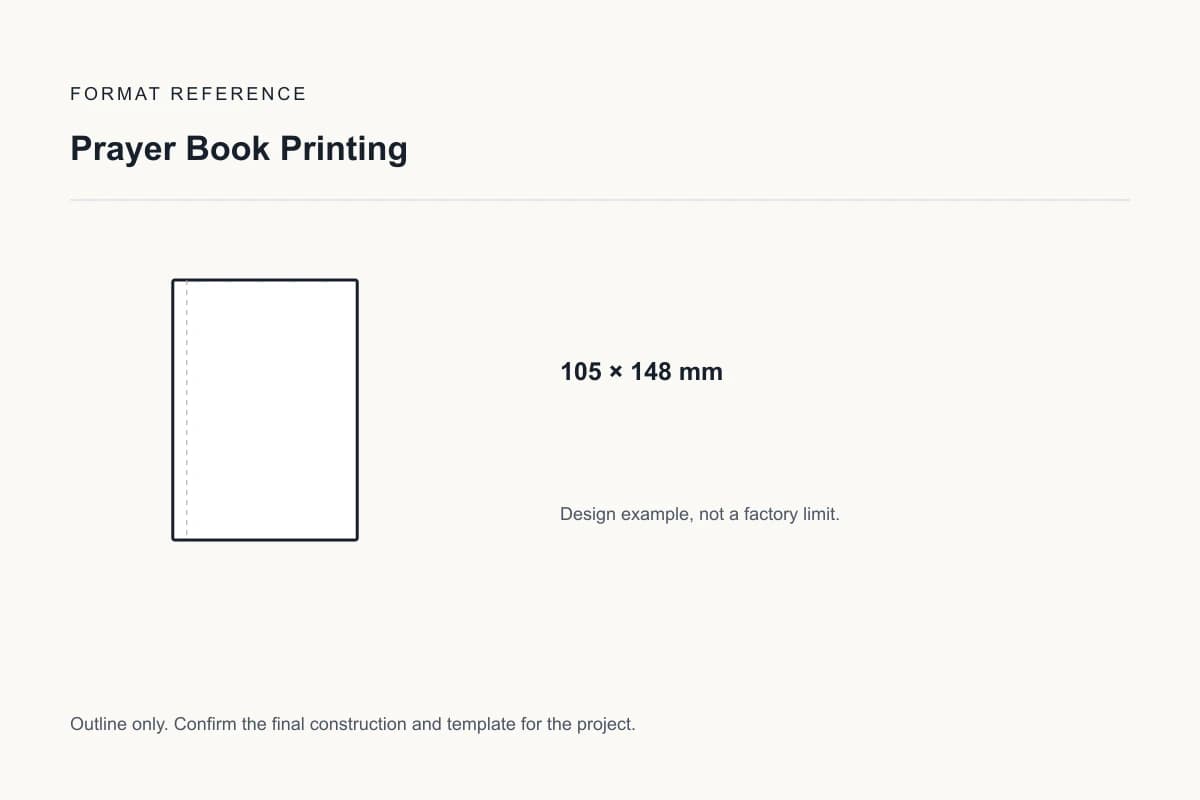
105 × 148 mm
An A6 pocket example favors portability; large-print editions need a larger trim.
This is a design reference, not a required size or a manufacturing limit.
Reading aids
Pocket or desk format; optional ribbons and index
Markers help readers return to repeated passages without adding loose inserts.
See the trim proportions.
These are publishing references, not required sizes. Compare the usable page shape before adapting an existing layout.
Selected: A6 pocket reference. Proportions only; not actual size.
Trim dimensions describe the cut page. Artwork bleed, cover overhang, tabs and modules are separate allowances.
View the original format reference
Surface finish options
Printed covers and jackets
Choose the finish for the printed cover or jacket, not automatically for the interior. Check color, rub marks, hinges and compatibility with the cover stock. Cloth and synthetic wraps need a separate material trial.
 Matte lamination View effect & artwork guidance
 Gloss lamination View effect & artwork guidance
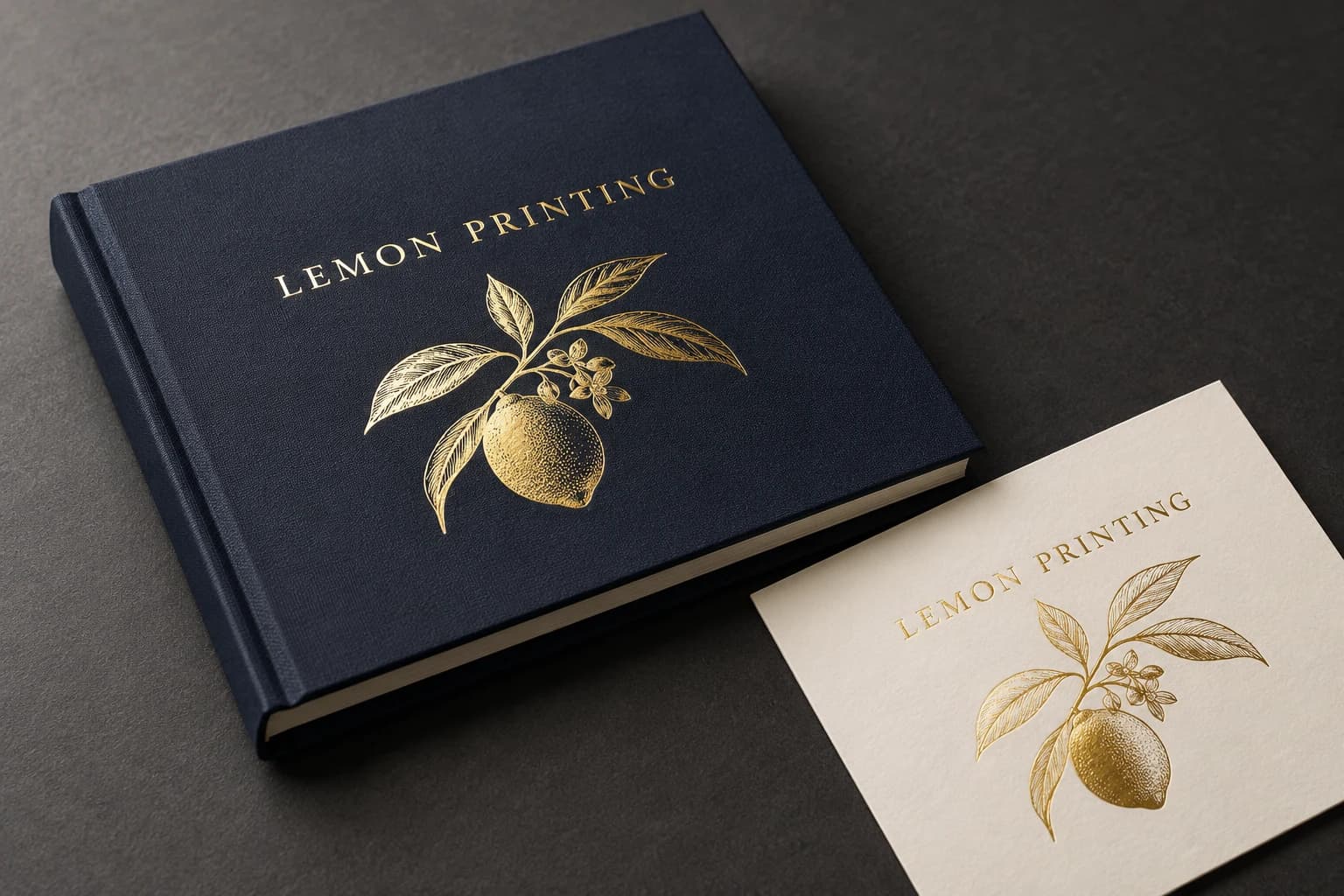 Gold foil stamping View effect & artwork guidance
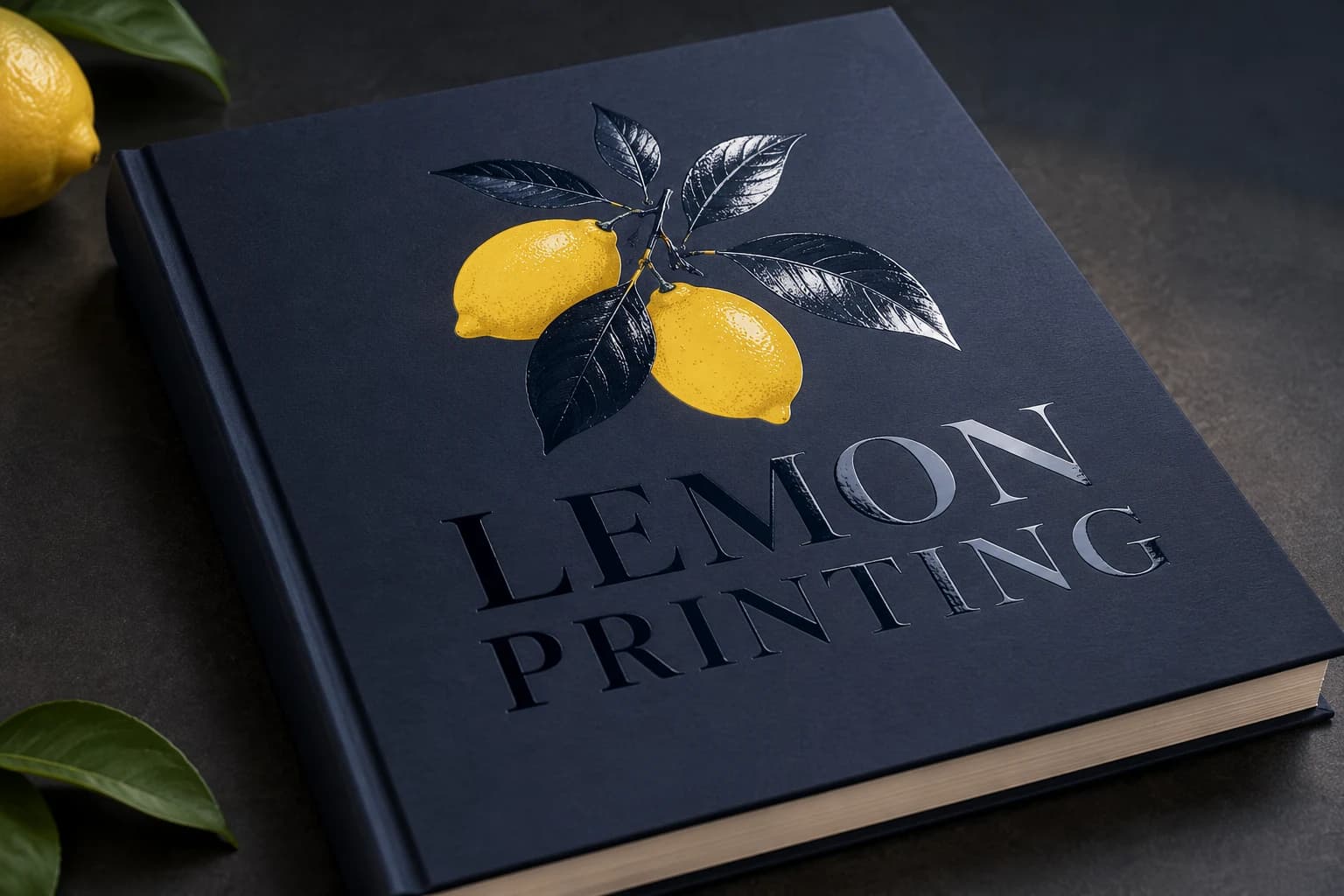 Spot UV View effect & artwork guidance
Illustrative finish samples, not photographs of this product. Final suitability follows the confirmed stock, construction and approved sample.
Compare all surface finishes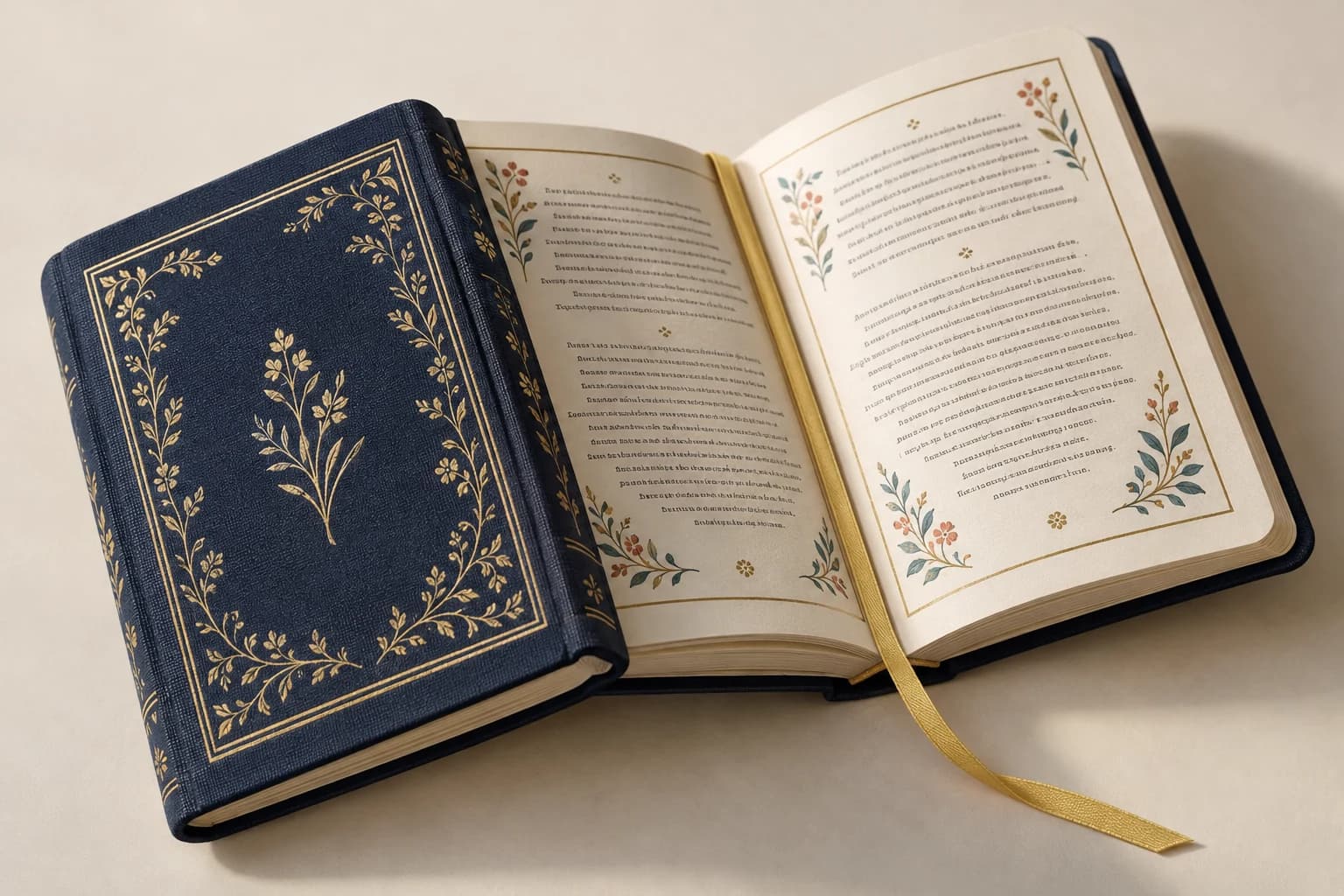
Details that change the finished product
Inspect the paper, print and bound opening
Choose a format for repeated personal reading
Plan the reading size before compressing pagination. For a long edition, compare a thin opaque paper sample with a conventional text sheet.
Reading aids
Markers help readers return to repeated passages without adding loose inserts. A bound sample checks page turning, the gutter, the spine and any inserted sections.
Surface and finishing compatibility
Ribbon markers and section tabs need explicit positions; adhesive tabs must not conceal the text. Thinprint paper reduces a long text block while retaining readable text. Opacity and caliper need separate assessment; GSM alone cannot describe either. Read densely printed pages from both sides under normal lighting.
Pocket Prayer Books & Shared-Use Editions
Personal pocket edition
Choose a portable trim and test the smallest reading at actual size.
Desk or shared-use edition
A larger type area and marked sections help repeated reading; specify markers independently.
Solve the risk before production
Keep Pocket Text Readable & Pages Accessible
The critical finished-product check
Small type can become hard to read when a pocket book is reduced from a larger layout. Recompose the text for the chosen trim and inspect it at normal reading distance.
A ribbon hides text at the spine
Why it happens: The marker and tight gutter compete with a small page area.
Fix and check: Place markers in the assembled dummy and read the innermost lines at the intended opening angle.
When to choose another format
Prayer Books, Bibles & Loose Prayer Cards
| Alternative | Use and trade-off |
|---|---|
| Bible Printing | A full scripture volume requires a much larger pagination and thin-paper evaluation. |
| Prayer Card Printing | A single prayer on a loose card is more compact, with less room for extended readings. |
Sample and approval
Check Prayer Text & Opening at the Actual Trim
Free samples are available, with preparation completed within 15 days. Confirm the sample scope; courier arrangements and transit time are separate.
Structural sample
Checks dimensions, fit and assembly using unprinted or representative materials. It does not establish final color.
Printed proof
Checks text, image reproduction and artwork on the agreed proof medium. It may not reproduce final assembly or every finish.
Complete finished sample
A bound sample checks page turning, the gutter, the spine and any inserted sections.
From brief to delivery
Order Details for Prayer Book Printing
Build and approve the order in five steps
Send the project brief
Send reading size, total pages, section markers and the intended daily handling. Include finished dimensions, quantity by version, destination and required arrival date. If a configuration is undecided, describe the intended use.
Compare the quoted configuration
Compare the same quantity basis: complete books per language, artwork version and binding. Check that the quote identifies materials, finishing, included components, sample scope, packing and freight.
Approve the appropriate sample
A bound sample checks page turning, the gutter, the spine and any inserted sections. A print proof checks artwork and color; a complete finished sample also checks assembly. Record what the selected sample does and does not reproduce.
Confirm files and release production
Approve the final artwork revision and the reading aids specification. Record the agreed quantity, payment conditions, packing and production schedule in the order.
Confirm packing and dispatch
State books per carton, edition labels and any slipcases or individual wrapping. Confirm production completion and transit as separate dates, using the delivery destination and required arrival date.
- Supply the complete reading-order interior PDF, including intentional blank pages. Supply a separate cover file built from the approved spine, hinge or punched-edge template. Case-wrap turn-ins, hinge areas and binding clearance are separate from trim bleed; keep essential content outside all of them. Supply finish masks as named separations.
- Extend edge-to-edge trim artwork by 3 mm unless the approved template specifies a different bleed. Use approximately 300 effective ppi for continuous-tone images at their placed size; keep fine linework as vectors where possible.
Project questions
Planning Prayer Book Printing
Can separate language editions share a cover design?
They can share a design concept, but each language needs its own approved interior and quantity. Translation length can change the page count and spine, so confirm the finished cover file for each edition.
How should I specify quantities and versions?
Count complete books per language, artwork version and binding. State reading size, total pages, section markers and the intended daily handling; components, language versions and different structures must be listed separately.
What determines the minimum quantity and delivery schedule?
The selected stock, construction, finishing, version count and sample scope determine production planning. Request quantity breaks for the same configuration and an arrival-date plan that separates sampling, manufacturing and transit. No minimum or lead time is implied by the design examples above.
Specify the finished product.
Send reading size, total pages, section markers and the intended daily handling. Include finished dimensions, quantity by version, destination and required arrival date.