Table of Contents
- Identify the job the book must do before choosing a binding
- Match the binding to reading, writing, and page-turning behavior
- Set requirements for durability, presentation, and opening angle
- Compare book binding options in a production decision table
- When hardcover, sewn, or casebound construction fits
- When paperback, saddle stitch, Wire-O, or spiral fits
- Check page count, paper, and cover construction together
- Use proofing and production checkpoints to validate the choice
- Match the project to Lemon Printing’s custom book formats
- Quote-ready specifications to send a book printer
- FAQ: Book binding options
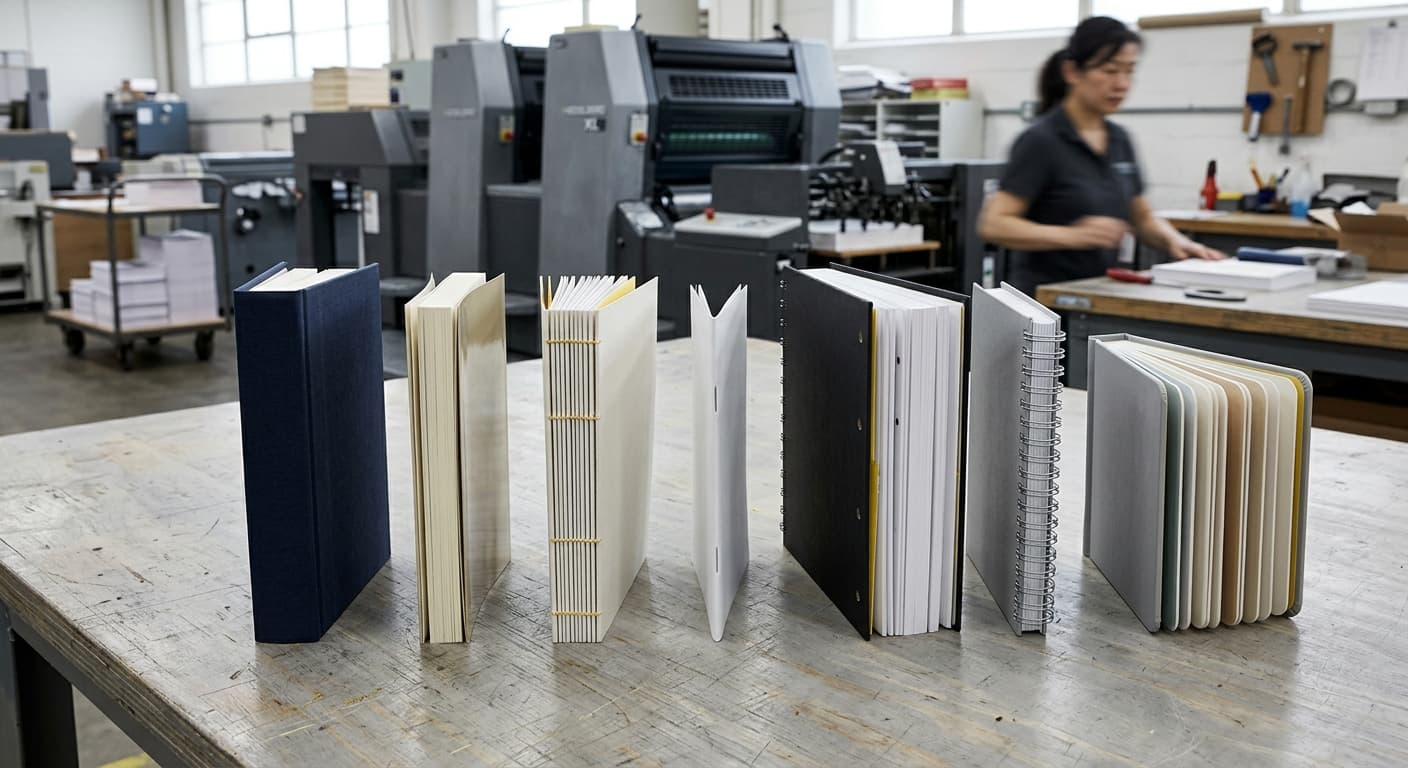
The right binding depends on how the book will be read, handled, displayed, and shipped. This guide compares common book binding options and explains how page count, paper, cover construction, proofing, and quote specifications work together.
Identify the job the book must do before choosing a binding
The right book binding options start with the job the finished book must perform. A novel, classroom workbook, product catalog, children’s board book, and event programme may all need different constructions even when their page sizes are similar.
Begin by documenting the book’s use, handling frequency, expected life, display requirements, and distribution method. A rigid casebound book can suit a presentation edition but add weight and shipping volume. A Wire-O or spiral book may be more practical when readers need to write on pages or keep the book open beside them.
- Primary use: reading, reference, writing, teaching, gifting, display, or short-term promotion.
- Handling: occasional reading, daily opening, repeated page turning, or use by children.
- Distribution: retail shelves, mail parcels, classrooms, events, or internal company use.
- Visual goal: flexible and economical, or structured and presentation-focused.
For custom book binding, treat the binding as part of the product design rather than a final decoration. It affects the cover file, inner margins, page architecture, paper selection, packing, and freight.
Match the binding to reading, writing, and page-turning behavior
Choose a binding that supports the reader’s natural movement through the book. Continuous reading generally favours a glued or sewn spine, while writing, reference work, and repeated consultation often favour a lay-flat construction.
- For continuous reading: perfect paperback, sewn paperback, or casebound construction keeps the pages in a conventional book block and provides a clean spine.
- For frequent writing: Wire-O book binding and spiral book binding can open flat, giving the user a more stable writing surface.
- For short illustrated pieces: saddle stitch binding uses folded sheets and staples, which can keep a thin book flexible and easy to handle.
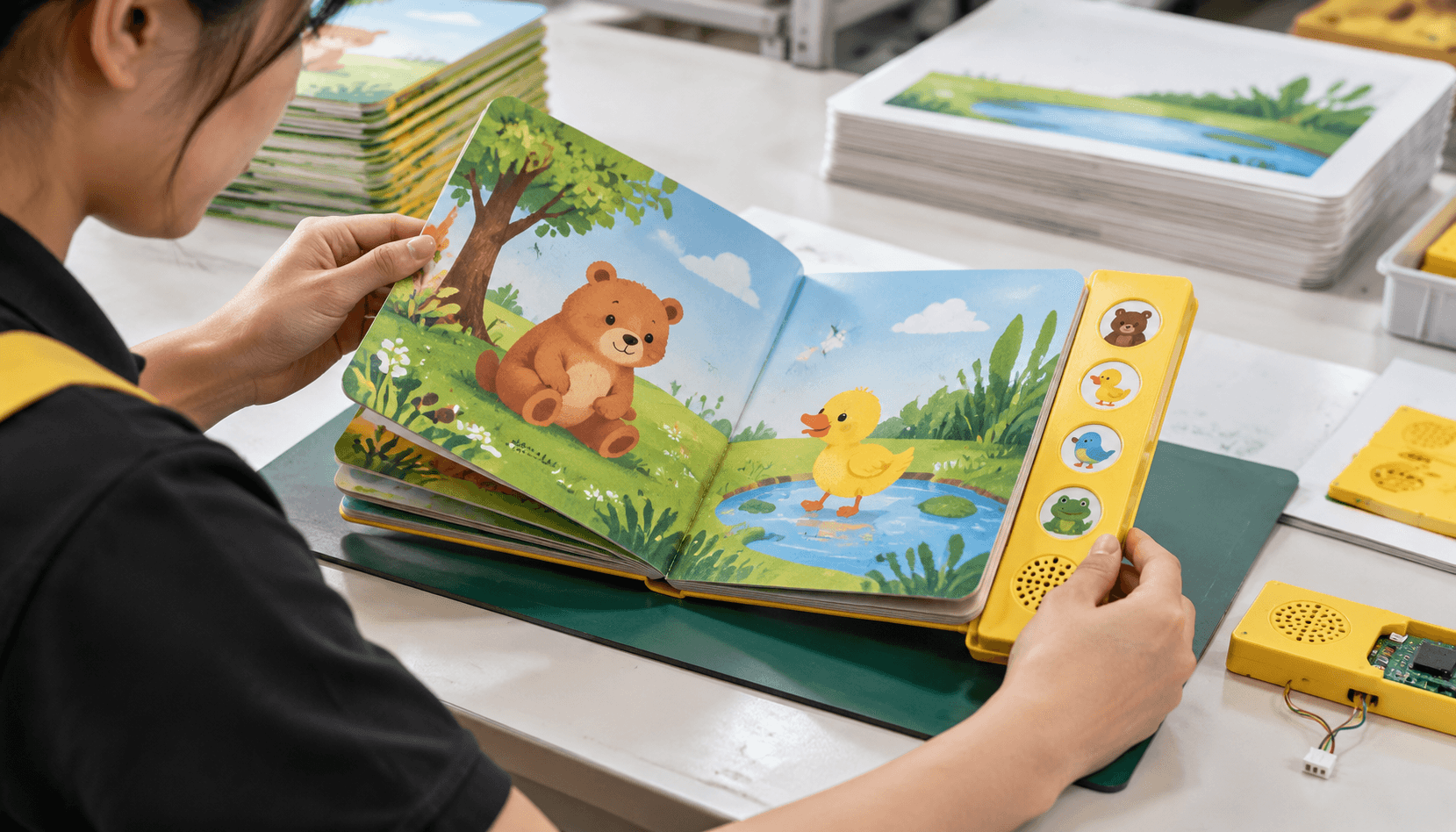
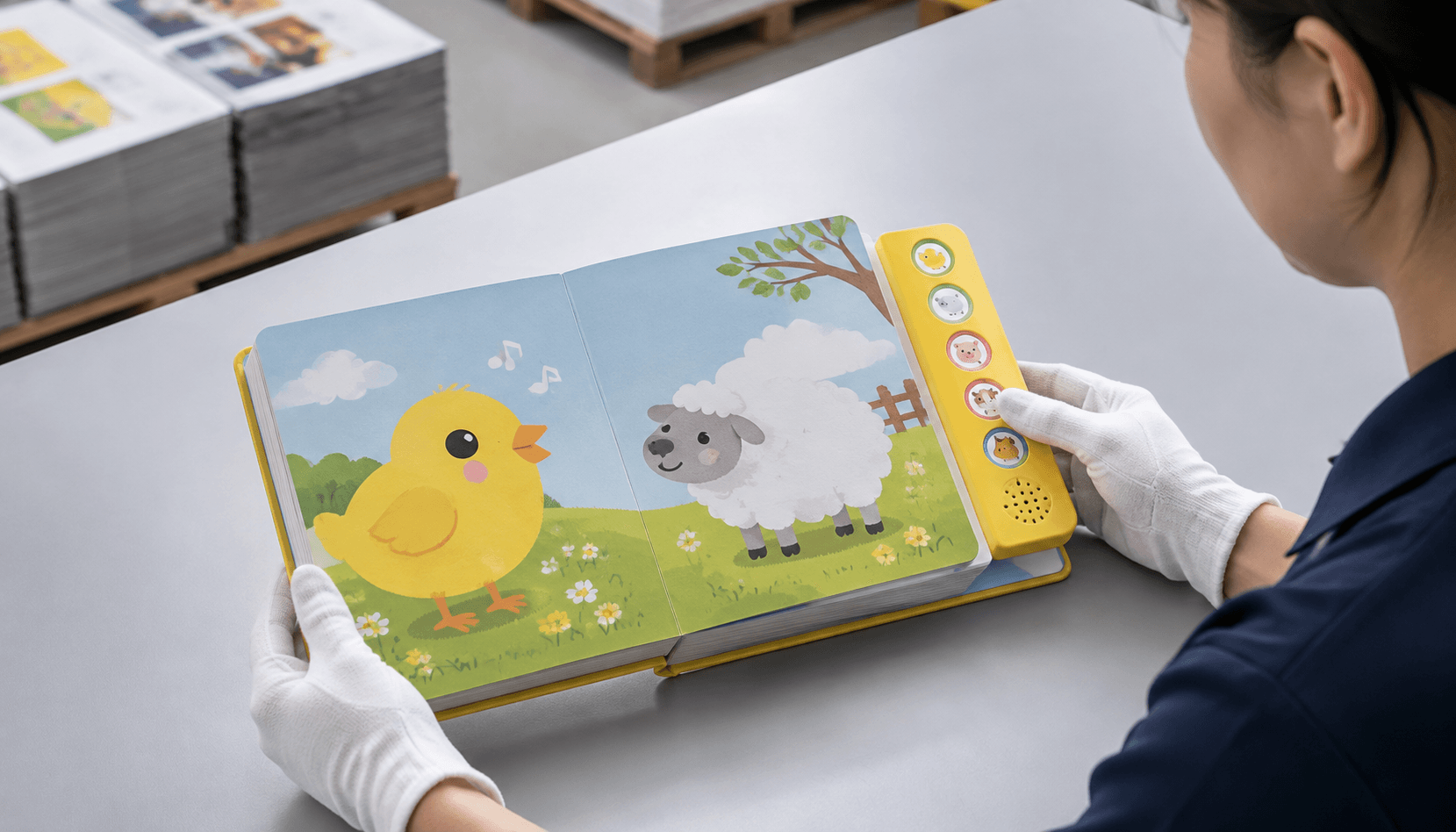
- For early-learning products: board book binding uses rigid page material and is designed around handling, thickness, and safety-related details.
Ask whether the book must open to 90 degrees, lie completely flat, fold back on itself, or simply turn pages smoothly. These are different requirements. A sample dummy is often the quickest way to test them.
Set requirements for durability, presentation, and opening angle
Durability is a combination of the page block, cover, adhesive or thread, paper, and expected handling. Binding alone cannot determine how long a book will remain in good condition.
For a presentation or reference book, consider a rigid cover, reinforced hinge area, suitable cover protection, and a page block that can support repeated turning. For a workbook or manual, opening angle and writing access may matter more than a conventional spine. For a book shipped in cartons, also consider corner protection, finished weight, and whether exposed wire or a coil could be damaged during packing.
Define the requirement in practical terms:
- Must the book lie flat without being held?
- Will users write close to the binding edge?
- Will the cover be exposed to frequent scuffing, moisture, or shelf handling?
- Is a visible spine required for retail or library storage?
- Should the book feel light enough for mailing or classroom use?
These answers create a usable specification for a printer and prevent presentation preferences from conflicting with actual use.
Compare book binding options in a production decision table
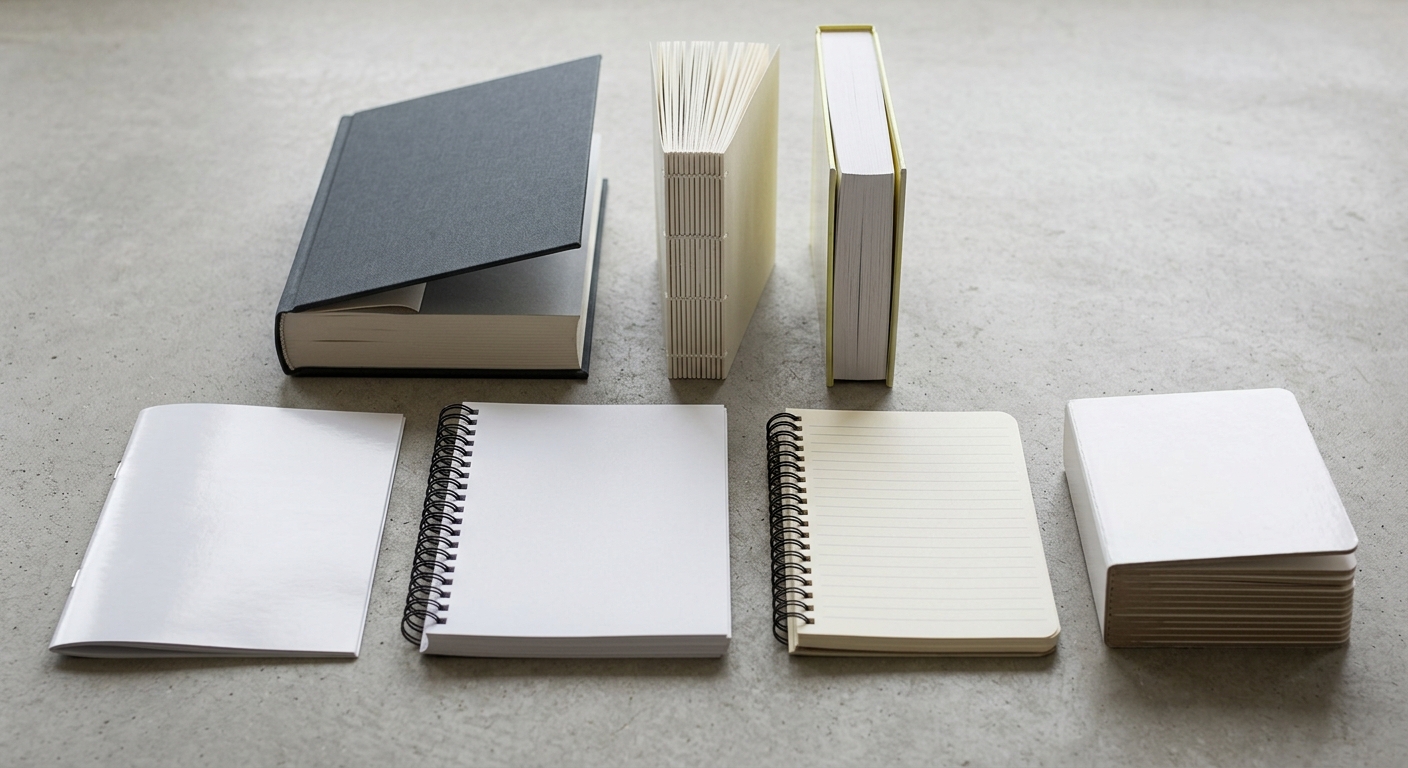
No single binding is best for every project. Use the table below to narrow the choice, then confirm the construction against the actual page count, paper, finished size, cover treatment, and opening requirement.
| Binding | Suitable applications | Opening behaviour | Main strengths | Production considerations |
|---|---|---|---|---|
| Casebound hardcover | Gift books, premium editions, reference titles | Conventional opening; varies by construction | Rigid cover, strong presentation, visible spine | Heavier and bulkier; requires board, hinge, and cover-wrap planning |
| Sewn binding | Books opened frequently or intended for extended use | Usually opens more comfortably than a comparable glued block | Thread joins folded sections and supports repeated handling | Requires suitable signatures and adds binding operations |
| Perfect paperback | Novels, catalogs, reports, general books | Conventional opening | Flexible cover and clean printed spine | Spine width depends on page block; glue and paper must be compatible |
| Saddle stitch | Short booklets, programmes, thin illustrated publications | Opens across the centre fold | Low bulk and straightforward folded-sheet format | Page architecture commonly works in multiples of four; no full spine |
| Wire-O | Manuals, planners, workbooks, presentations | Lay-flat and may fold back, subject to specification | Stable writing surface and useful page access | Punched holes consume inner margin; wire remains visible |
| Spiral | Workbooks, notebooks, training materials | Lay-flat and may fold back, subject to coil design | Practical page turning and flexible opening | Coil diameter, hole pattern, margin, and packing need review |
| Board book | Young children’s books and rigid-page products | Page turning is structured by thick boards | Thick, firm pages suited to small hands | High bulk; board thickness, edges, corners, and artwork require dedicated planning |
Terms can overlap. For example, a book may be both sewn and hardcover, while paperback describes the cover style rather than the way the pages are joined.
When hardcover, sewn, or casebound construction fits
Hardcover or casebound construction fits projects where cover rigidity, shelf presence, and repeated handling justify extra material and production steps. Sewn book binding fits when the page block needs a stronger connection between folded sections and a more comfortable opening.
Hardcover versus paperback: a hardcover normally uses rigid boards covered with printed paper, cloth, or another specified material. A paperback uses a flexible cover, often with perfect binding, where the page block is glued into the spine. Hardcover generally creates a more structured presentation but increases finished weight and volume. Paperback is lighter and more flexible, which can simplify handling and distribution.
Casebound construction: casebound is a specific hardcover method. The cover case is made separately from the printed book block, then the block is attached through the spine and hinge area. This means the cover wrap, board dimensions, hinge gap, endpapers, and spine width must be planned together.
Sewn construction: folded sections, called signatures, are stitched before they are joined and covered. Sewing can be paired with a hardcover or a paperback cover. It is not a cover style by itself, and it is not automatically the right choice for every thick book.
When paperback, saddle stitch, Wire-O, or spiral fits
Flexible and punched bindings are often the practical choice when a project must stay light, open widely, or be produced as a short publication. The correct option depends on whether the book needs a printed spine, a flat writing surface, or a low-bulk folded format.
- Paperback: a flexible cover gives the book a familiar retail format. Perfect binding is common, but the printer must check whether the page block is thick enough for a stable glued spine and confirm the calculated spine width.
- Saddle stitch binding: folded sheets are nested and secured through the centre fold with staples. It works well for thin programmes, brochures, and short illustrated books. The page plan commonly needs to account for four-page folded units, and the finished piece does not have a conventional spine.
- Wire-O book binding: individual loops pass through punched holes along the binding edge. It can provide a clean lay-flat format for manuals, planners, and training materials, but the holes reduce the usable inner margin and the wire is visible.
- Spiral book binding: a continuous coil passes through a line of holes. It also supports flat opening, but coil diameter, material, hole pattern, cover clearance, and carton packing need to be checked together.
- Board book binding: thick board pages are assembled into a rigid-page product, often for children’s publishing. The page count, corner treatment, board thickness, coating, and color coverage should be approved with a physical sample where possible.
For any punched format, keep important text, numbering, and diagrams away from the hole area. The required margin depends on the finished size, punch pattern, and binding hardware.
Check page count, paper, and cover construction together
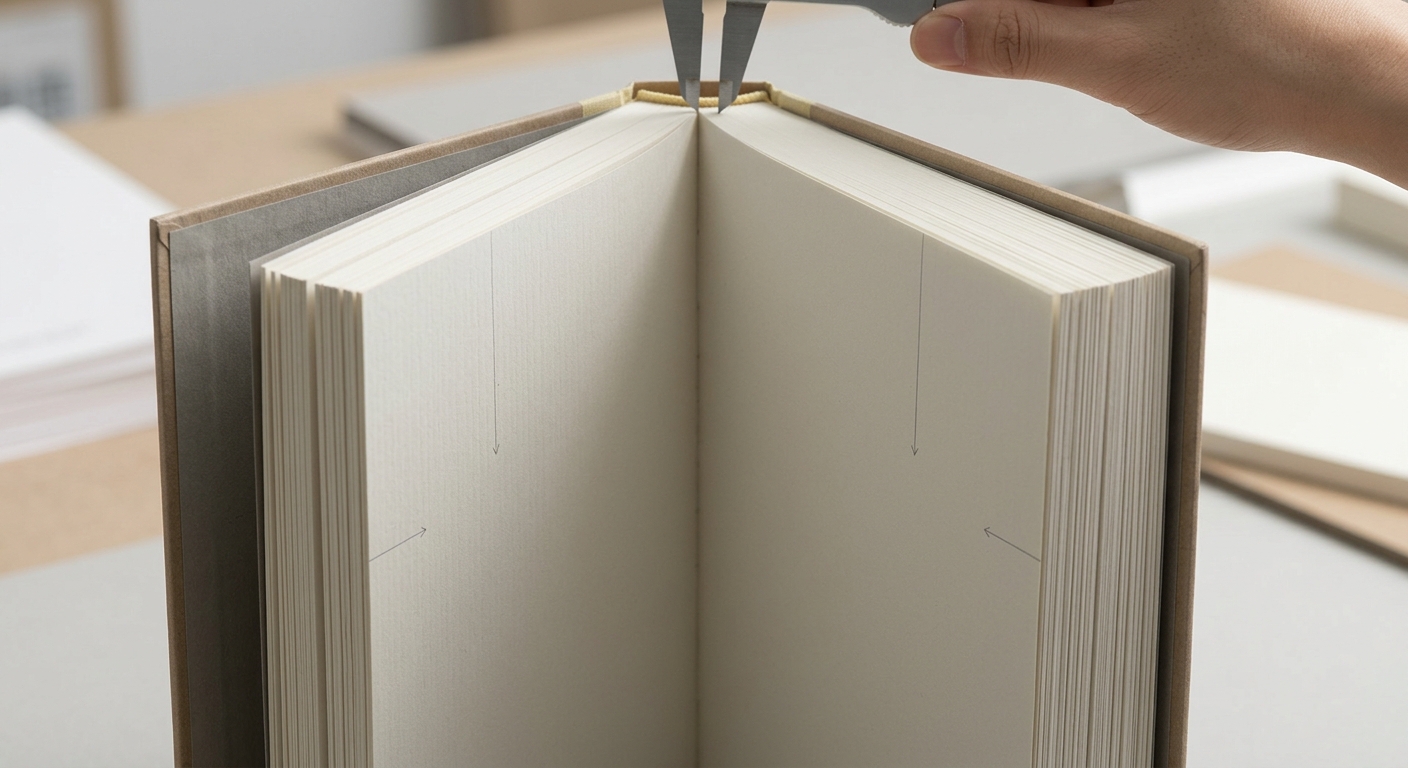
Page count, paper, and cover construction determine the physical book block together. Selecting a binding from page count alone can lead to an incorrect spine, weak opening behaviour, excessive bulk, or a cover file that does not fit the finished book.
- Confirm the page architecture. State whether the page count includes the cover, endpapers, inserts, and blank pages. Saddle stitch and folded signatures require a page plan that matches the imposition.
- Specify paper by surface and physical behaviour. Paper weight in gsm describes mass, not exact thickness. Caliper, opacity, folding response, ink coverage, and writing performance also matter. The coated versus uncoated paper guide can help when choosing between image reproduction and writeability.
- Plan the spine and grain direction. A paperback spine depends on the compressed page-block thickness. Paper grain is commonly planned parallel to the spine to help reduce unwanted curl or cracking, but the printer should confirm the best sheet direction for the finished format.
- Coordinate the cover. A paperback needs cover bleed, hinge or score information where applicable, and a calculated spine. A hardcover needs board size, hinge gap, cover wrap, endpapers, and turn-in allowance. A Wire-O or spiral book needs a punched margin and cover clearance.
- Check creep and trimming. Creep is the gradual movement of inner pages toward the outside edge when folded sections are nested and trimmed. It is managed through imposition and trimming, with the effect depending on paper, section thickness, and format.
When the specification is uncertain, request a structural dummy using the proposed size and approximate paper bulk before approving a large production run.
Use proofing and production checkpoints to validate the choice
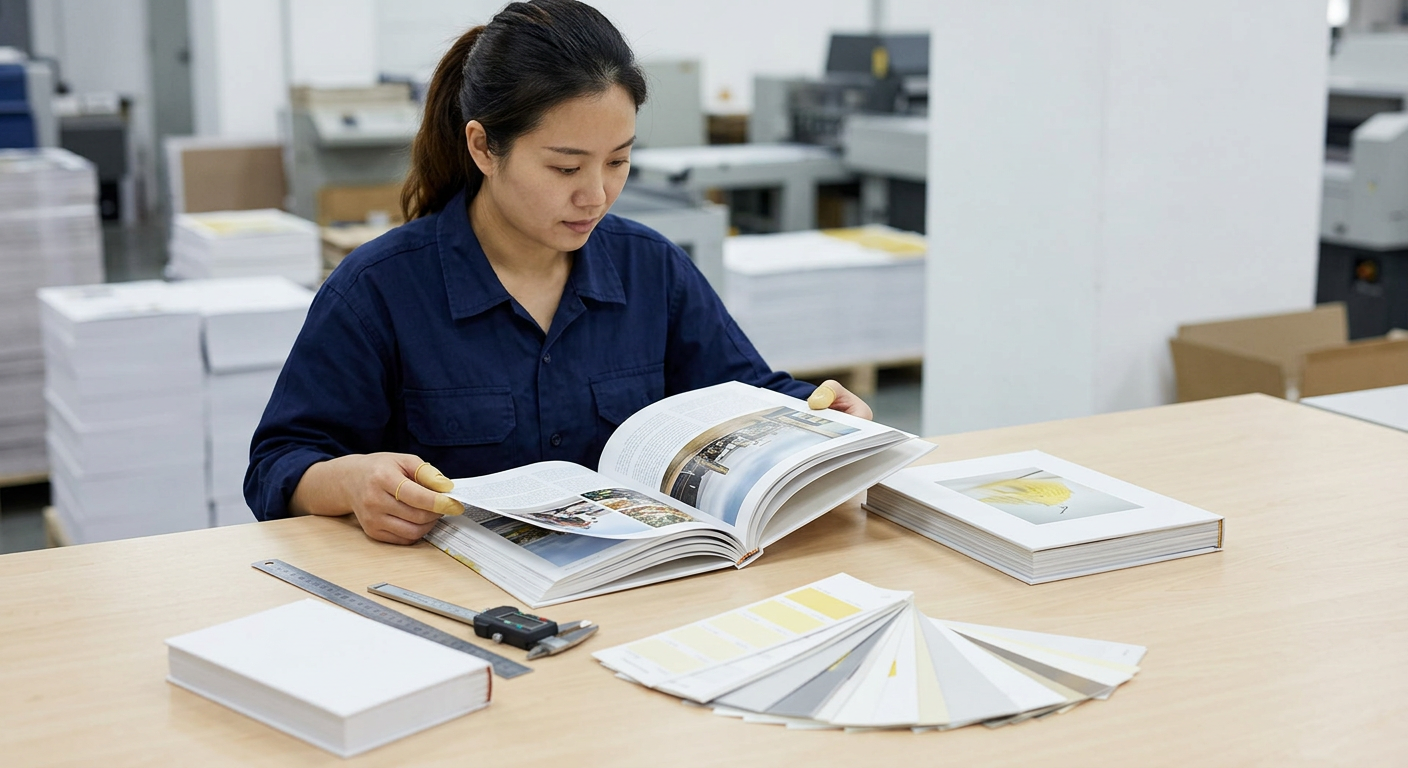
A PDF proof confirms artwork, but it cannot fully show how a binding will open, flex, stack, or fit in the hand. Use a structural dummy and defined production checkpoints when the binding affects usability or cover alignment.
- Prepress review: check page order, bleed, safe areas, fonts, image resolution, color setup, cover panels, and spine calculations. Lemon Printing’s artwork preparation guide covers the common file checks before production.
- Structural dummy: use the proposed finished size and a similar paper bulk to test page turning, writing space, opening angle, cover overhang, and overall weight.
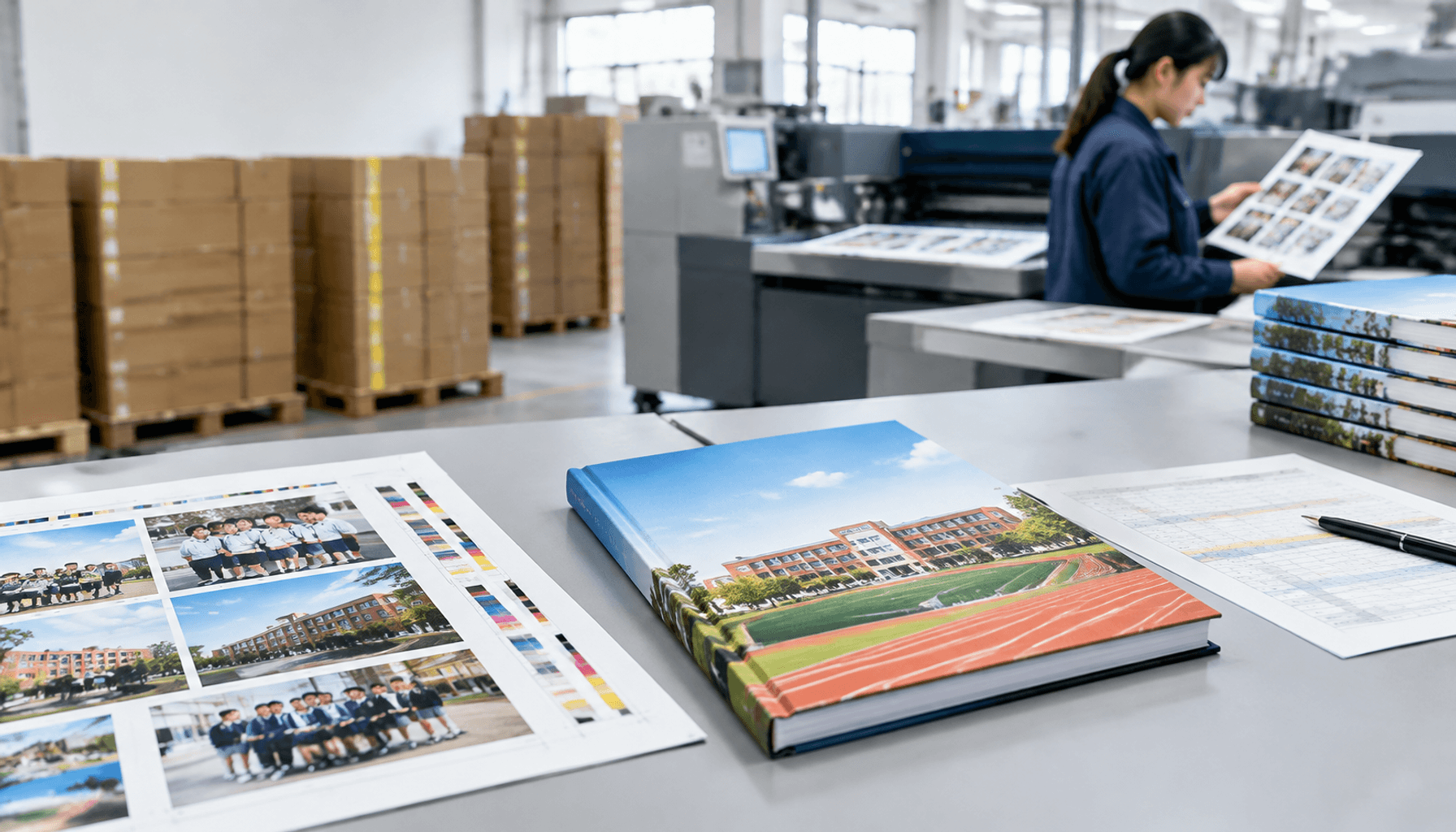
- Printed proof: review color, image detail, small type, cover finish, and the relationship between front cover, spine, and back cover. A digital proof and a physical proof answer different questions.
- First-off binding check: inspect spine alignment, glue coverage, thread or staple placement, punch alignment, hinge movement, trimming, and cover registration. Ask the printer to record any agreed production tolerances rather than assuming one universal tolerance.
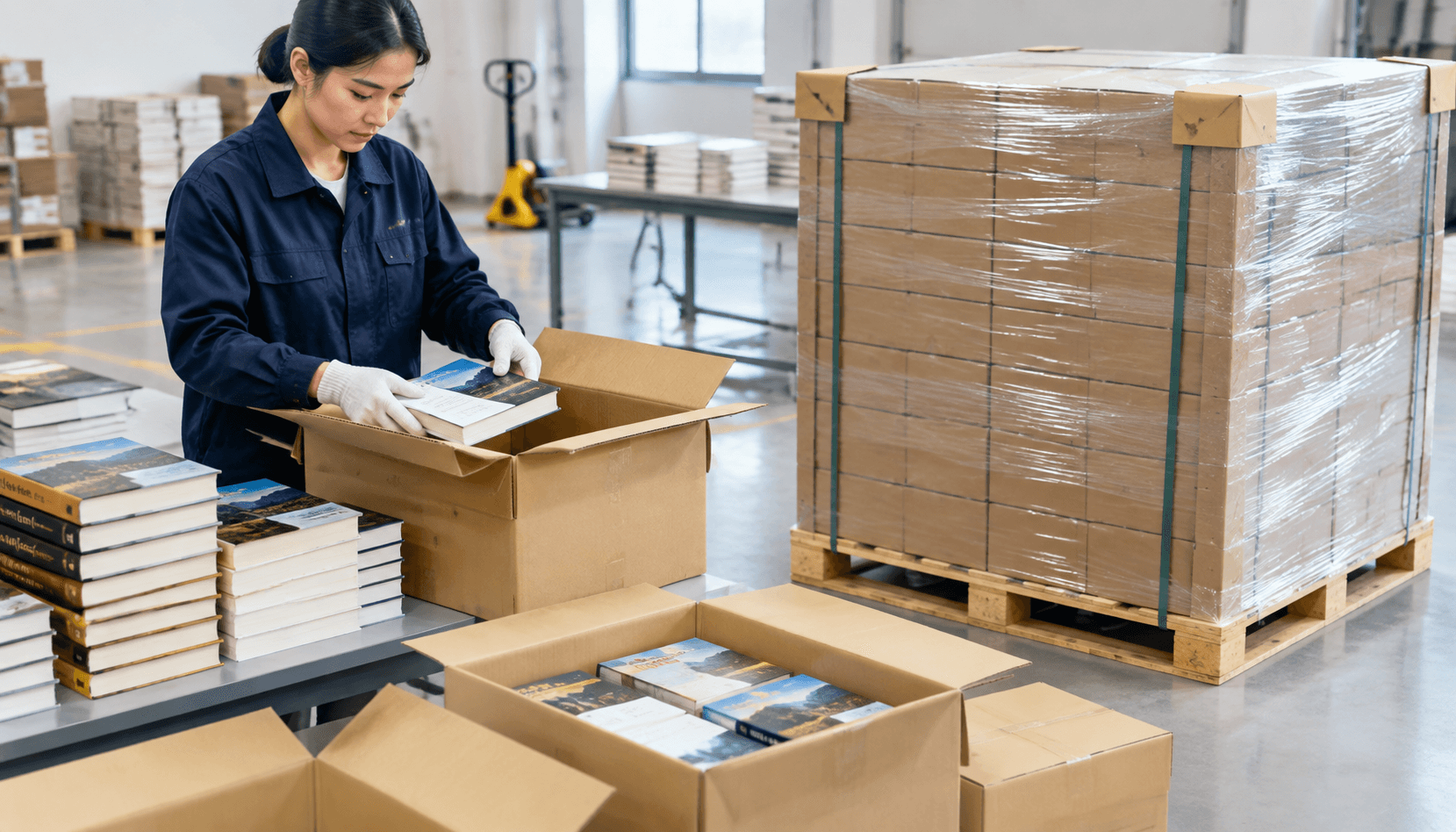
- Final inspection and packing: verify sample units for page sequence, scuffing, loose pages, corner condition, carton counts, and packing orientation. Review the printer’s quality control information and production process when comparing suppliers.
Approval should identify which sample and specifications are the production reference. Changes after approval can affect the cover, imposition, binding setup, and quote.
Match the project to Lemon Printing’s custom book formats
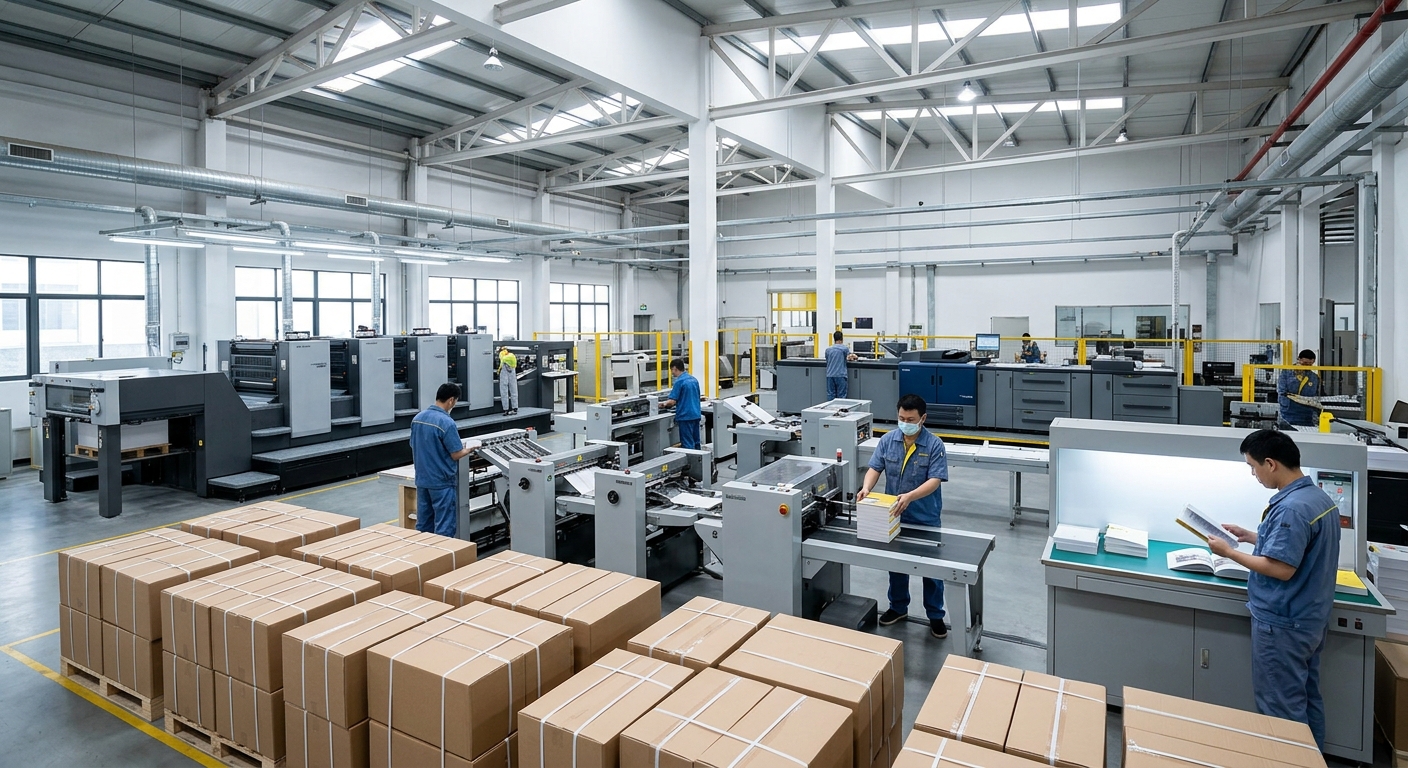
Lemon Printing reviews book format choices against the intended use, page construction, paper, cover, finishing, quantity, and destination. The closest starting point is the custom book printing service, where buyers can present the complete product requirement rather than requesting a binding in isolation.
Lemon Printing is a factory-backed commercial printing manufacturer established in 2015 in the Guangzhou–Shenzhen manufacturing corridor in China. Its self-owned facility has more than 130 skilled workers and 8+ offset and digital presses. Prepress, printing, binding, finishing, quality inspection, packing, and export preparation are handled in-house for organizations in more than 30 countries.
That production structure is useful when a project combines several decisions, such as:
- a sewn or casebound book with a calculated spine and protective cover finish;
- a paperback catalog where paper bulk and spine width must match the cover file;
- a workbook or training manual requiring Wire-O or spiral opening;
- a short event publication using saddle stitch; or
- a rigid-page children’s product requiring board book construction review.
Share the intended use and physical requirements first. Lemon Printing can then confirm the feasible construction and the relevant production inputs. Final MOQ, production time, pricing, and shipping depend on product specifications, quantity, finishing, and destination.
Quote-ready specifications to send a book printer
A book printer can compare binding choices accurately only when the physical specification is complete. Send the following information in one request:
- Product and purpose: novel, catalogue, workbook, manual, children’s book, event publication, or another format.
- Quantity: total copies, number of titles or versions, and whether quantities are split across destinations.
- Finished size and orientation: trim dimensions, portrait or landscape, and whether the book should open from the long or short edge.
- Page count: interior pages, cover pages, inserts, endpapers, blank pages, and any version-specific pagination.
- Paper: interior and cover stock, coated or uncoated surface, colour pages, and any writing requirement.
- Binding: preferred option, required opening angle, spine visibility, and whether the printer should recommend an alternative.
- Cover and finishing: board construction, lamination, varnish, foil, embossing, debossing, rounded corners, or other requested details.
- Artwork status: print-ready PDF, estimated completion date, and whether a structural or colour proof is required. Lemon Printing’s artwork preparation guidance can help organize the files.
- Logistics: delivery country and postcode or city, packing needs, target date, and whether the quote should separate production, proofing, packing, and freight.
For a clearer comparison, ask each printer to list assumptions such as paper caliper, board thickness, spine width, proof type, packing method, and the approved reference sample. The printing cost breakdown explains why these inputs affect a comparable quote.
FAQ: Book binding options
The best binding is determined by use, page count, paper, cover construction, opening behaviour, quantity, finishing, and destination. The answers below address common purchasing questions, but a final recommendation should be checked against the complete specification and, when needed, a physical sample.
FAQ
What is the best binding for a book that will be read repeatedly?
Casebound or sewn construction is often considered when a book will be opened repeatedly. The decision also depends on paper bulk, page count, cover requirements, and whether a conventional spine or lay-flat opening is needed.
What is the difference between hardcover and paperback binding?
Hardcover normally uses rigid boards, while paperback uses a flexible cover. Hardcover provides a more structured presentation but is generally heavier and bulkier; paperback is more flexible and may be easier to distribute. The page block can use different joining methods in either format.
When is saddle stitch binding suitable?
Saddle stitch binding is suitable for thin booklets, programmes, brochures, and short illustrated publications. Folded sheets are secured through the centre fold with staples, so the page plan commonly needs four-page folded units and the finished piece does not have a conventional spine.
Is sewn book binding the same as hardcover binding?
No. Sewn book binding describes how folded page sections are joined with thread. Hardcover describes the rigid cover style. A book can be sewn and hardcover, sewn and paperback, or use another cover arrangement if the construction is suitable.
What is the difference between Wire-O and spiral book binding?
Wire-O uses separate wire loops through punched holes, while spiral binding uses a continuous coil. Both can support flat opening, but they differ in appearance, hole and margin requirements, hardware selection, and packing considerations.
What information should I include when requesting a book binding quote?
Provide the product type, quantity, finished size, page count, interior and cover paper, preferred binding, opening requirement, finishing, artwork status, proof preference, delivery destination, and target date. Final MOQ, production time, pricing, and shipping depend on the complete specification.
Get a book binding recommendation and quote
Send Lemon Printing your product type, quantity, finished size, page count, interior and cover paper, preferred binding or opening requirement, finishing, delivery destination, and target date. If you are comparing options, include the intended use and whether the book must lie flat, withstand repeated handling, or present a rigid retail-style cover.
Final MOQ, production time, pricing, and shipping depend on product specifications, quantity, finishing, and destination.