
Folded and stapled programs, guides & short publications
Custom Booklet Printing
Use folded, stapled pages for event programs, short guides and compact product introductions. Plan the complete page count and paper thickness before choosing a self-cover or separate cover.
- Four-page sheet accounting
- Self-cover or heavier separate cover
- Creep and centerfold checks
The product in use
A short publication with a folded spine.
A saddle-stitched booklet nests folded sheets and staples them through the spine fold. Each sheet contributes four pages, including blanks. It has no conventional square spine, and a thick stack can push the center pages outward before trimming. A separate cover improves stiffness but changes the total thickness. This format works best when the reader can find the content without a long reference index.

Nested folded sheets create the booklet.
- 01Outer cover sheet
- In a self-cover the outer sheet is the same stock as the interior. A separate cover changes the outside stiffness and specification.
- 02Nested interior sheets
- Each sheet folds into four pages. As the nested stack grows, the innermost edges extend farther before trimming.
- 03Fold staples
- Staples secure the gathered fold. The center spread makes their position and closure easy to inspect.
Specifications & materials
Compare the options and what they change.
Numeric dimensions and paper weights are selection references, not guaranteed Lemon production limits or a stocked-material list. The quoted specification identifies the available grade and construction.
| Engineering spec | Reference or option | Selection effect |
|---|---|---|
| Finished dimensions | 6 × 9 in (152.4 × 228.6 mm); 8.5 × 11 in (215.9 × 279.4 mm) | Interior trim references, not manufacturing limits. Compact guide reference for event or introductory content. More space for diagrams and product panels. |
| Format and component count | Complete book: interior, cover and separately identified components | Send trim, complete page total, cover-counting convention, stock, quantity, finish and destination. Include intended use and any dated event deadline. |
| Pagination | 8, 12, 16 or 24 pages as four-page planning examples | Count every face, including inside covers and intentional blanks. |
| Interior | 115 or 130gsm coated; 100gsm uncoated references | Paper bulk influences folding and creep as well as page feel. |
| Cover construction | Self-cover or separate 200/250gsm coated reference | A heavier cover increases the assembly thickness; define cover counting. |
| Binding | Staples through nested center folds | No printable square spine; assess the actual stack rather than a generic page limit. |
| Pagination reference | 12 pages = 3 sheets; 20 pages = 5 sheets; 32 pages = 8 sheets | Self-cover arithmetic for saddle stitch, not a page-capacity promise or universal production minimum. |
| Cover and staple build | Same-stock self-cover or separate folded cover; staples through the fold | The actual stock thickness and size determine creep and handling; inspect an assembled dummy. |
Image-led folded sheets
115/130gsm coated references for compact product or event booklets.
Keep critical fine borders away from edges affected by creep.
Readable note-taking sheets
100/120gsm uncoated references for guides with writing space.
Check pen behavior and fold stiffness on a complete dummy.
A self-cover simplifies the stock specification. A heavier separate cover changes the outside handling and folded stack; it does not remove creep from the interior sheets.
A decision for this product
Four pages come from one folded sheet.
12 pages = 3 folded sheets
For a self-cover booklet, the outside sheet includes the front, back and inside-cover faces. A separate cover must be described using the agreed counting convention.
Selection illustration · not a production template or test result
Selected direction
One stock throughout
Self-cover · One stock throughout
Simple assembly; the outside has the same stiffness as inner pages.
Separate cover · Heavier outside sheet
Adds protection and finishing options, with more stack thickness.
See the trim proportions.
These are publishing references, not required sizes. Compare the usable page shape before adapting an existing layout.
Selected: 6 × 9 in. Proportions only; not actual size.
Trim dimensions describe the cut page. Artwork bleed, cover overhang, tabs and modules are separate allowances.
Surface finish options
Printed covers and jackets
Choose the finish for the printed cover or jacket, not automatically for the interior. Check color, rub marks, hinges and compatibility with the cover stock. Cloth and synthetic wraps need a separate material trial.
 Matte lamination View effect & artwork guidance
 Gloss lamination View effect & artwork guidance
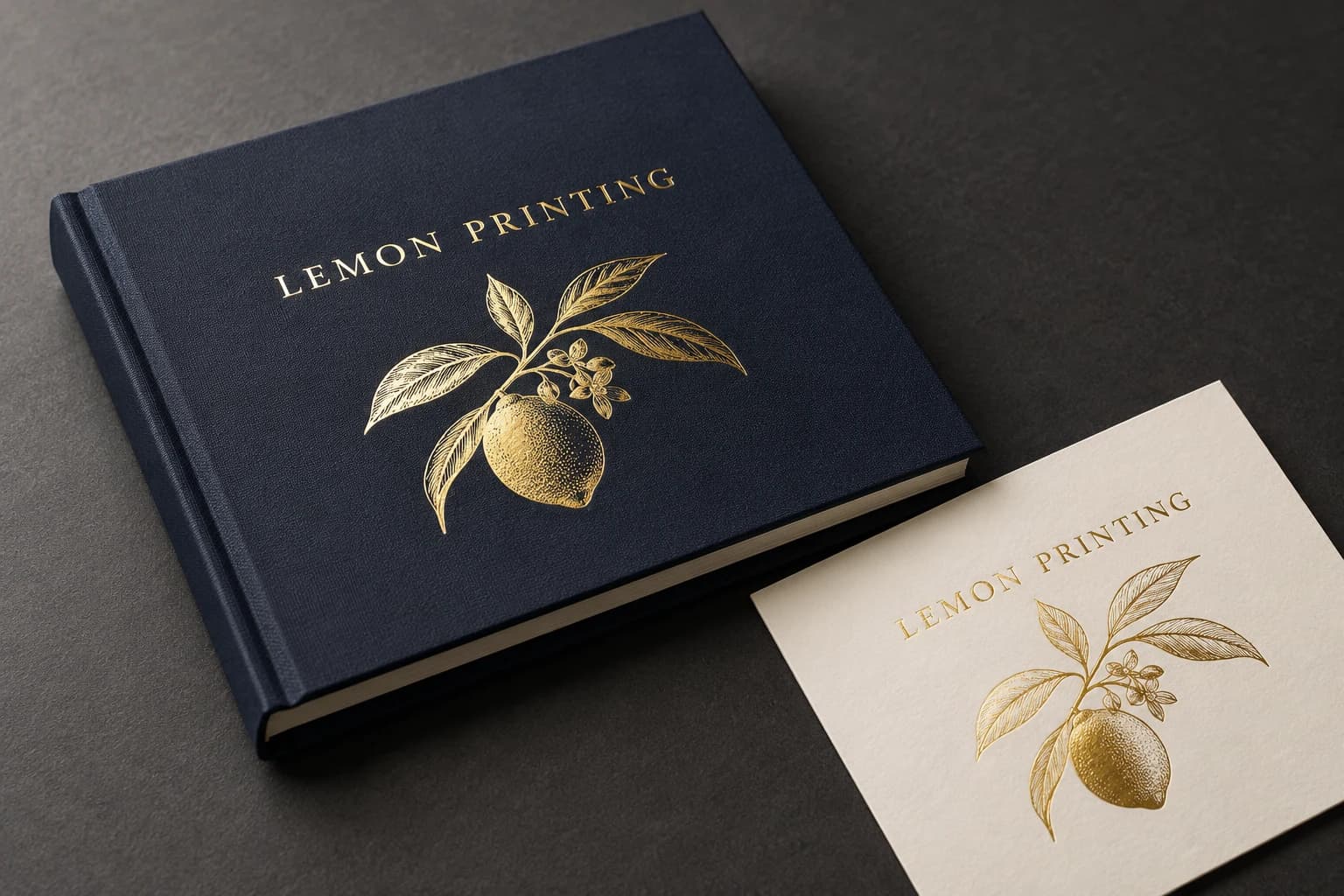 Gold foil stamping View effect & artwork guidance
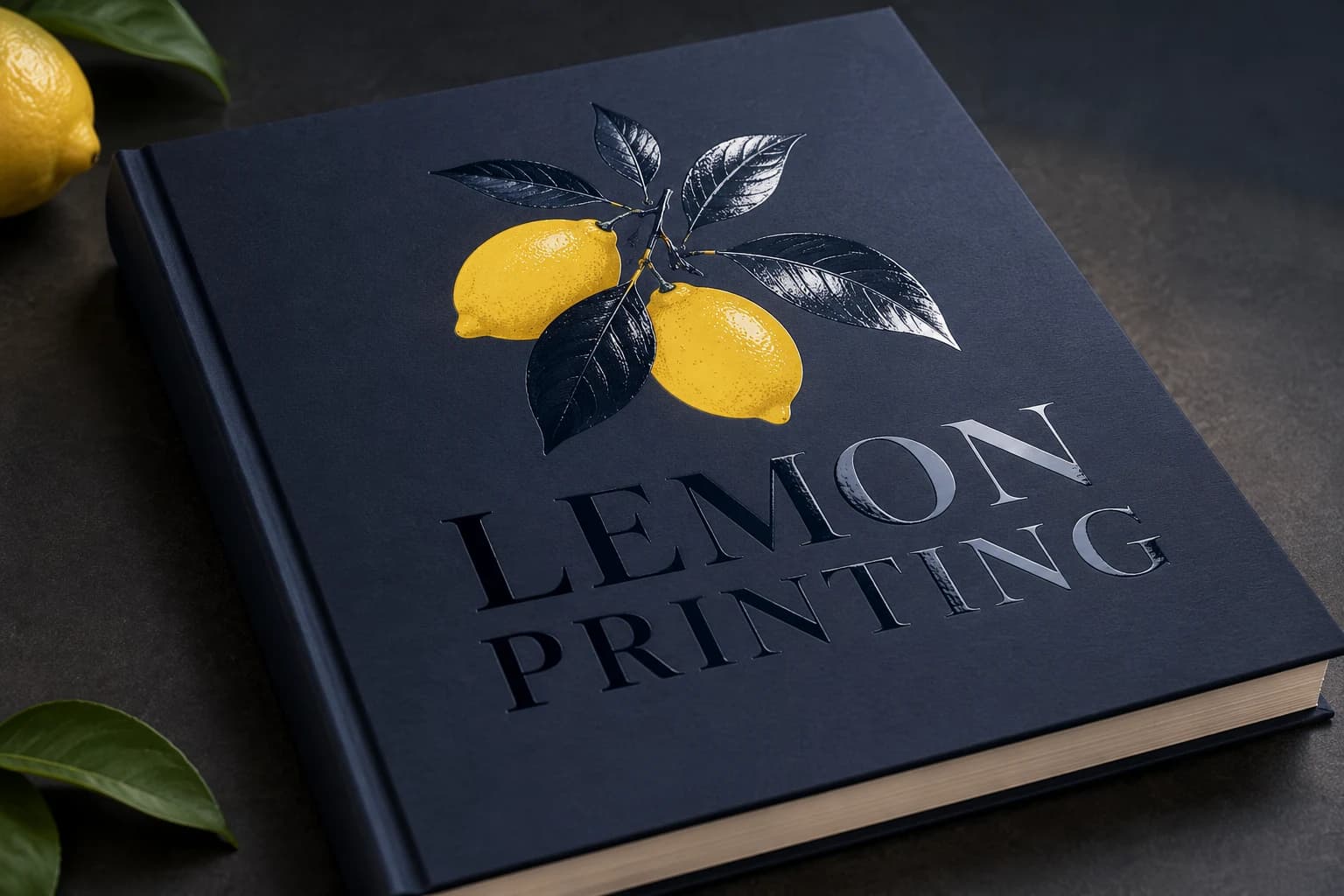 Spot UV View effect & artwork guidance
Illustrative finish samples, not photographs of this product. Final suitability follows the confirmed stock, construction and approved sample.
Compare all surface finishesHow it is made
Construction decisions with a practical effect.
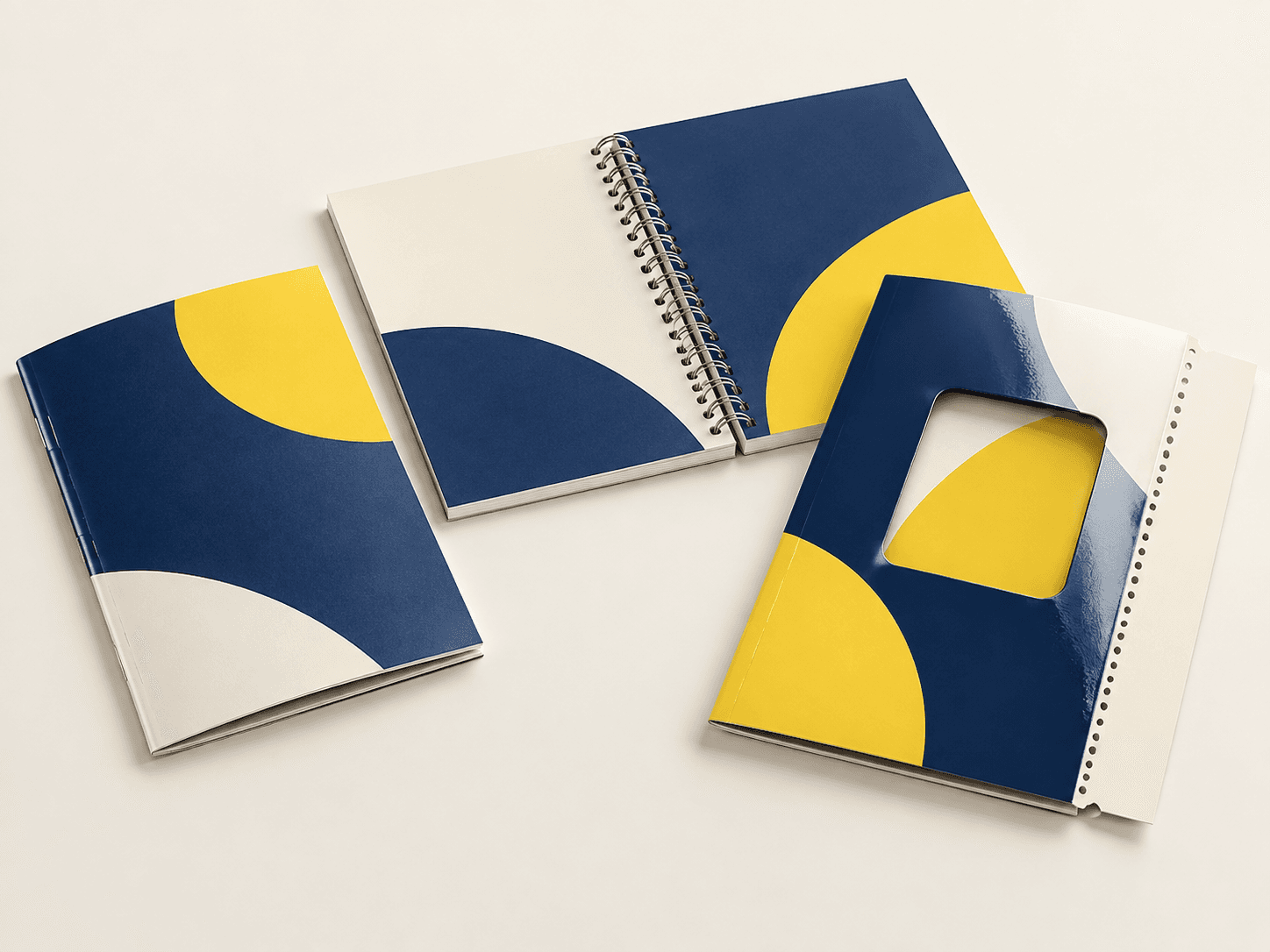
Folding, nesting and stitching
Sheets are folded, gathered inside one another and stapled through the center. Accurate reading order depends on imposition; supply sequential pages unless a printer-spread file is specifically requested.
Creep and final trim
Thicker nested sheets extend toward the fore-edge. Compensation belongs to the production imposition; generous layout margins prevent small text and borders from being sacrificed at trim.
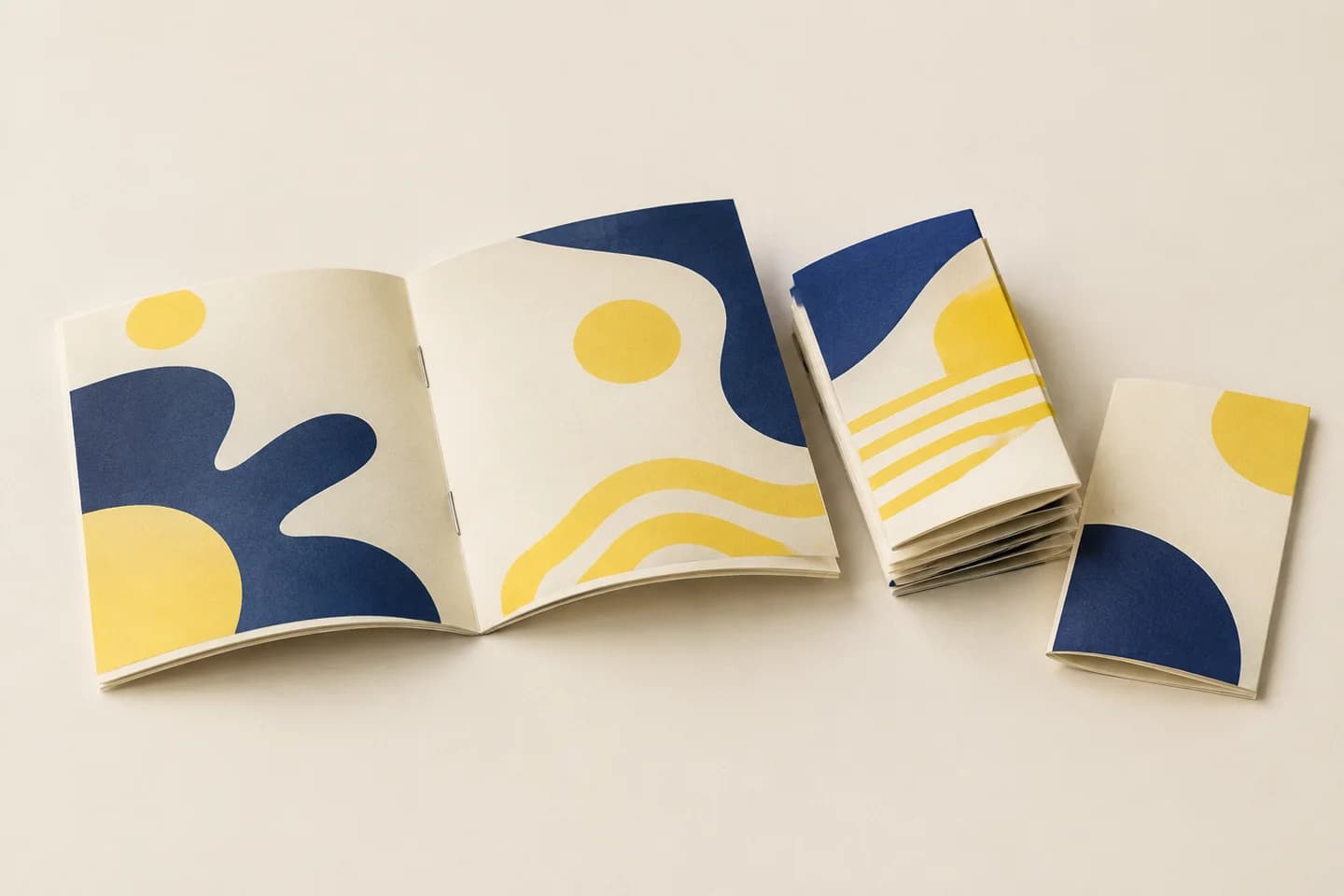
Details that change the finished book
Check page accounting before laying out the final cover.
The smallest useful booklet specification includes complete page count, cover strategy and paper thickness. A single loose page is not a substitute for a folded dummy.
Count all designed faces
Include blank pages, inside covers and outside covers using the agreed total. A 12-page self-cover example contains three folded sheets.
Plan trim-sensitive content
Keep folios, small text and border graphics clear of the final edge. The nested stock affects creep; prepress determines compensation for the actual build.
Review the center spread
Inspect staple position, closure and reading order. A centered image across the fold still needs allowance for crease and handling.
Match the specification to the project
Booklet configurations in use.
Event program
Short self-cover · compact portable trim
A light folded format is easy to distribute. Include schedule changes and intentional blanks in the final reading order.
Product introduction
Separate cover · illustrated interior
A heavier outside sheet provides a different feel while leaving the inner paper available for image or text priorities.
Instruction leaflet in booklet form
Readable diagrams · controlled fold sequence
Use enough page area for labels at actual size. A large reference manual may suit another binding.
Solve the risk before production
What can go wrong, and how to check it.
Unexpected blank pages appear
Cause: The supplied page total does not match four-page sheet construction.
Fix and check: Plan covers and intentional blanks from the outset and approve a numbered folding dummy.
Center pages lose content at the edge
Cause: Stock thickness and nesting create creep.
Fix and check: Use the selected paper for the dummy and allow working margins before imposition.
Border graphics look uneven after trimming
Cause: A uniform screen layout ignored nested-sheet creep and the final trim.
Fix and check: Proof the imposed folded build and keep sensitive borders away from the edge. Compensation follows the actual sheet count and caliper.
When to choose another format
Booklet or another format?
Samples & order planning
Test the physical question before the bulk run.
A sample for the actual product
A numbered folded dummy verifies reading order and page accounting; a printed two-sided proof verifies content and show-through.
Reading-order proof
Check every face including blanks, inside covers, folios and page-turn sequence.
Folded and stapled dummy
Assess nested thickness, crease opening, edge creep and staple closure at the intended trim.
Order Details for Booklet Printing
Quantity and quotation
Quote complete finished books per title or version. Send trim, complete page total, cover-counting convention, stock, quantity, finish and destination. Include intended use and any dated event deadline.
Sample scope and schedule
Free samples are available, with preparation completed within 15 days. Confirm which materials, finishes and construction the sample represents. Courier arrangements and transit time are separate. The quotation records bulk production timing and the minimum quantity for your configuration.
Packing and delivery
Keep booklets flat to avoid bent spines and splayed corners. Specify bundles by event or edition when distribution needs smaller packs.
- 01
Number all faces and identify covers and intentional blanks.
- 02
Export sequential single pages with embedded fonts.
- 03
Use 300ppi images and bleed to the trim template.
- 04
Keep folios and narrow borders away from creep-sensitive edges.
Configuration details
Review creep on the actual folded block.
Nested sheets do not sit at exactly the same fore-edge position. The inner leaves project farther before trimming, which can change the apparent margin of small page numbers and border rules. The effect depends on the sheet count and paper thickness, not just the outside booklet dimensions.
- Imposition
Folded-sheet sequence including blanks
Check page order and cover positions before approving the imposed proof.
- Margin risk
Page numbers, narrow borders and fore-edge artwork
Review the trimmed folded mockup and allow prepress to compensate the nesting effect.
Explore the relevant formats
Product questions
Details worth settling before ordering.
Does a separate cover add four pages?
It has four faces. Whether a quote states them within or outside the interior total must be explicit.
Can we supply a 14-page saddle-stitched booklet?
Four-page sheet accounting means the design needs a workable imposed total. Decide where required blanks or additional content belong before release; do not let automatic padding alter the intended reading sequence.
Should we send printer spreads?
Normally provide individual pages in reading order and identify the cover convention. The production workflow handles imposition unless a job-specific specification explicitly requests imposed spreads.
Your booklet project
Send a brief that can become a specification.
Send trim, complete page total, cover-counting convention, stock, quantity, finish and destination. Include intended use and any dated event deadline.
Related formats & guidance