
Flexible-cover editions for publishers & brands
Custom Paperback Book Printing
Print flexible-cover editions for novels, trade publishing and portable reference books. Choose the interior paper and adhesive route around page count, opening behavior and the finished spine.
- Plain wrap or inward French flaps
- Reading or image-led paper
- Adhesive or sewn book blocks
The product in use
A flexible cover with a usable shelf spine.
A paperback uses a printed wrap-around cover attached to a prepared book block. It has fewer case components than a hardcover and usually weighs less at the same trim and pagination. The square spine can carry a title when it is wide enough, but its width follows paper thickness rather than GSM alone. French flaps add space for biographies or edition notes without changing the interior format.
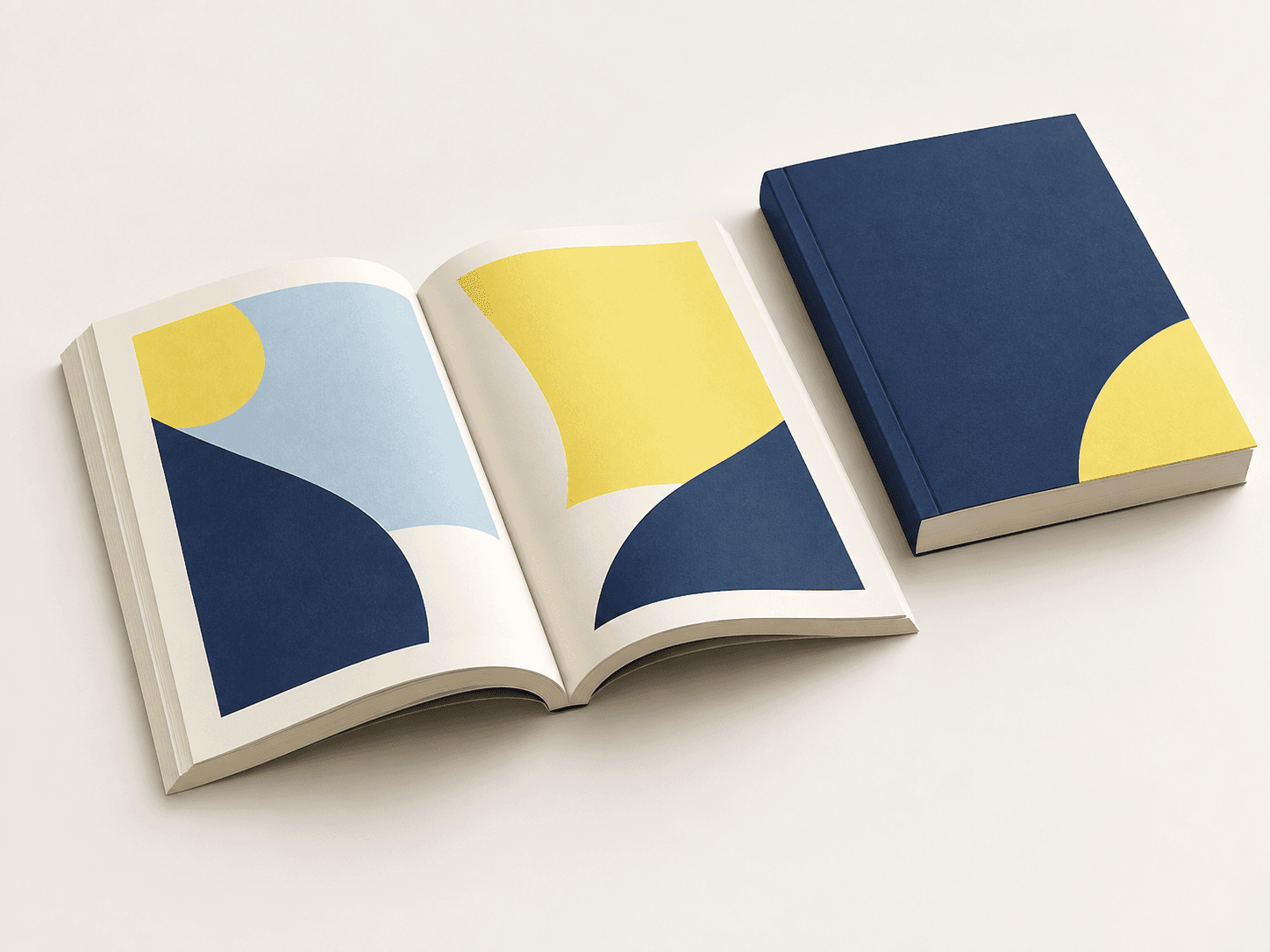
The cover, hinge and book block work together.
- 01Wrap-around cover
- One continuous printed cover surrounds the back, spine and front. Extended flaps add information panels and need their own fold positions.
- 02Opening creases
- Creases beside the spine help the cover flex. Film direction, paper grain and scoring affect whether the hinge opens cleanly.
- 03Bound page block
- The prepared spine carries the adhesive bond. Its measured thickness determines the cover layout after stock and pagination are final.
Specifications & materials
Compare the options and what they change.
Numeric dimensions and paper weights are selection references, not guaranteed Lemon production limits or a stocked-material list. The quoted specification identifies the available grade and construction.
| Engineering spec | Reference or option | Selection effect |
|---|---|---|
| Finished dimensions | 6 × 9 in (152.4 × 228.6 mm); 5.5 × 8.5 in (139.7 × 215.9 mm) | Interior trim references, not manufacturing limits. Text-led trade editions; balance readable type with a portable page. Compact fiction; the same manuscript may need more pages. |
| Format and component count | Complete book: interior, cover and separately identified components | Send trim size, interior page count, quantity per title, paper choice, adhesive or sewn preference, cover finish and any French flaps. Include destination and required arrival date. |
| Interior stock | 80, 100 or 120gsm uncoated; 115 or 130gsm coated references | Uncoated supports sustained reading; coated suits illustrations. Compare opacity and actual caliper. |
| Cover stock | 250 or 300gsm coated reference; plain wrap or French flaps | A stiffer cover changes handling. Flaps need crease and trim allowances. |
| Binding route | EVA or PUR adhesive; optional sewn-block construction | Adhesive compatibility depends on stock and spine preparation; cured samples establish page retention. |
| Grain and opening | Interior grain planned parallel to the spine; final grade caliper recorded | Affects page flexibility and spine thickness; GSM alone cannot supply the cover measurement. |
| Cover treatment | Matte/gloss film; optional foil or spot UV; plain wrap or French flaps | Finishing layers need separate artwork; use a creased cover trial to assess adhesion and fold behavior. |
Reading-led interior
Uncoated 80/100/120gsm references for novels and reference text.
Higher GSM is not automatically more opaque; check show-through with a printed reverse side.
Image-led interior
Coated 115/130gsm references for illustrated softcovers.
Assess opening and adhesive suitability using the actual surface and page count.
A cream or natural-white text stock changes contrast and the overall color cast. A coated white interior favors image detail. Compare both with representative text and artwork rather than viewing loose blank sheets alone.
A decision for this product
Page count is not a spine measurement.
200 pages = 100 leaves
With an assumed paper caliper of 0.10mm, 100 leaves contribute about 10mm of paper. Glue, finishing and construction still affect the final spine. This example is arithmetic, not a cover template.
Selection illustration · not a production template or test result
Selected direction
Uncoated interior + flexible cover
Novel · Uncoated interior + flexible cover
Less reflection for long reading; check reverse-side show-through.
Illustrated edition · Coated interior + compatible adhesive
Image detail gains priority; assess the gutter on a complete sample.
See the trim proportions.
These are publishing references, not required sizes. Compare the usable page shape before adapting an existing layout.
Selected: 6 × 9 in. Proportions only; not actual size.
Trim dimensions describe the cut page. Artwork bleed, cover overhang, tabs and modules are separate allowances.
Surface finish options
Printed covers and jackets
Choose the finish for the printed cover or jacket, not automatically for the interior. Check color, rub marks, hinges and compatibility with the cover stock. Cloth and synthetic wraps need a separate material trial.
 Matte lamination View effect & artwork guidance
 Gloss lamination View effect & artwork guidance
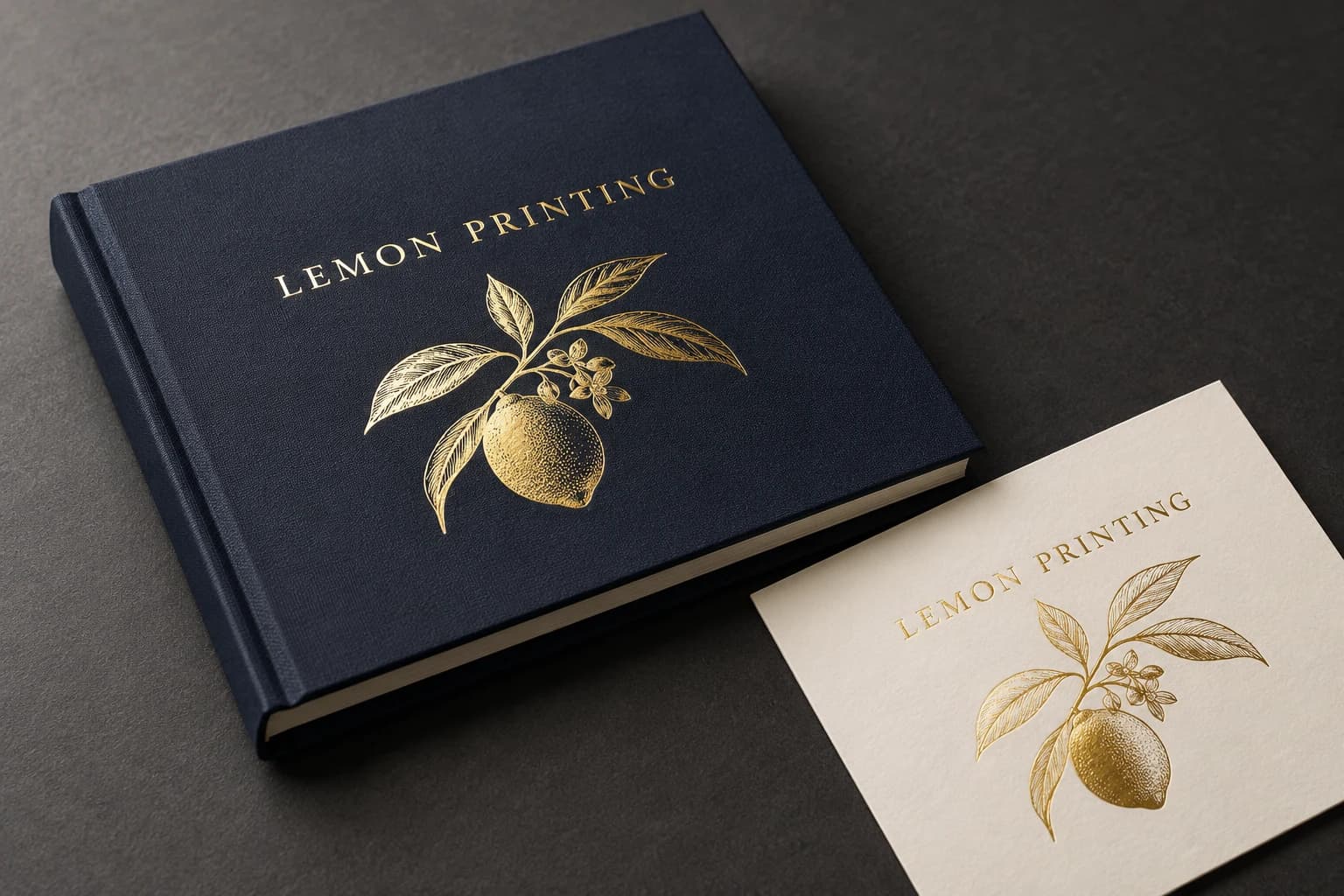 Gold foil stamping View effect & artwork guidance
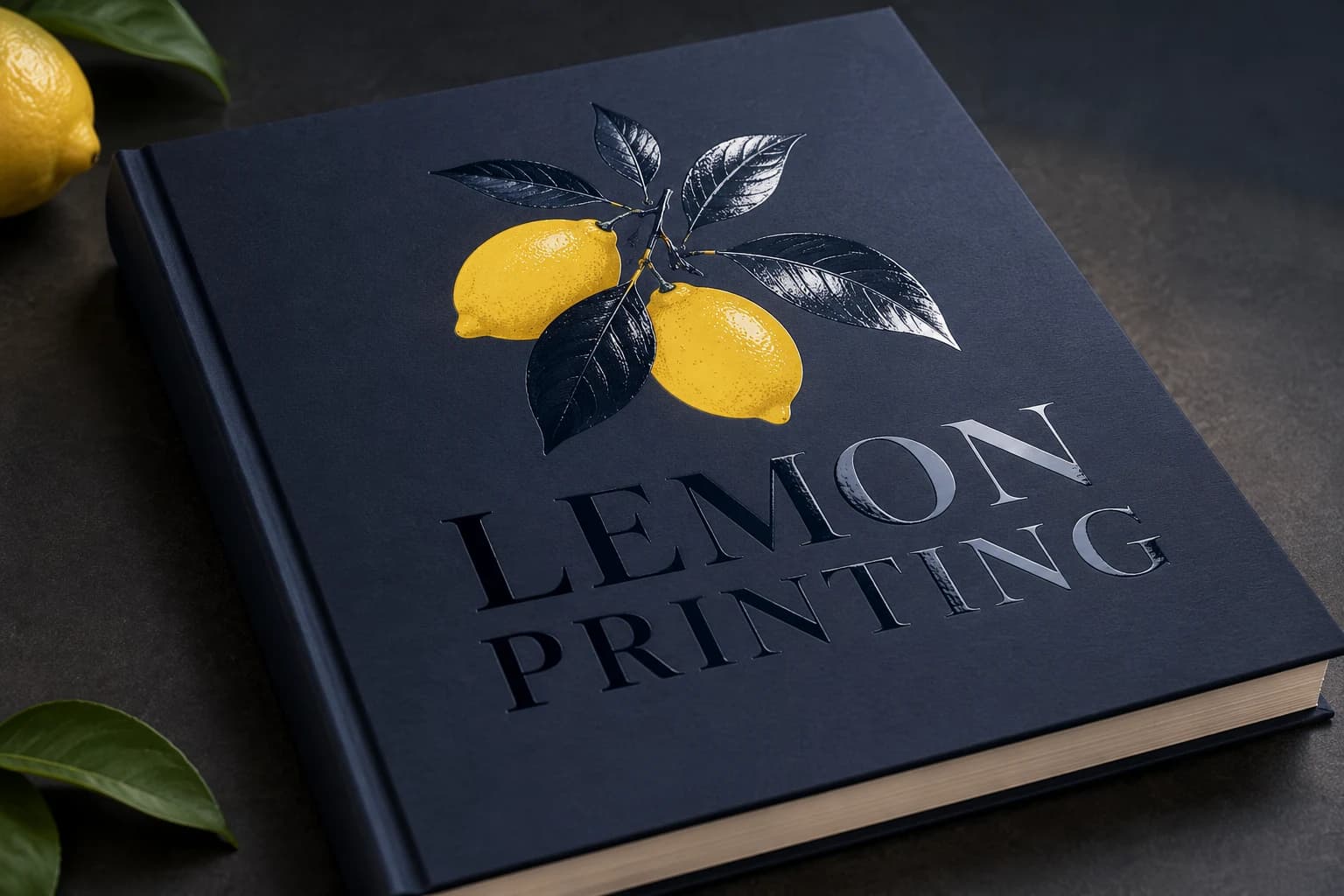 Spot UV View effect & artwork guidance
Illustrative finish samples, not photographs of this product. Final suitability follows the confirmed stock, construction and approved sample.
Compare all surface finishesHow it is made
Construction decisions with a practical effect.
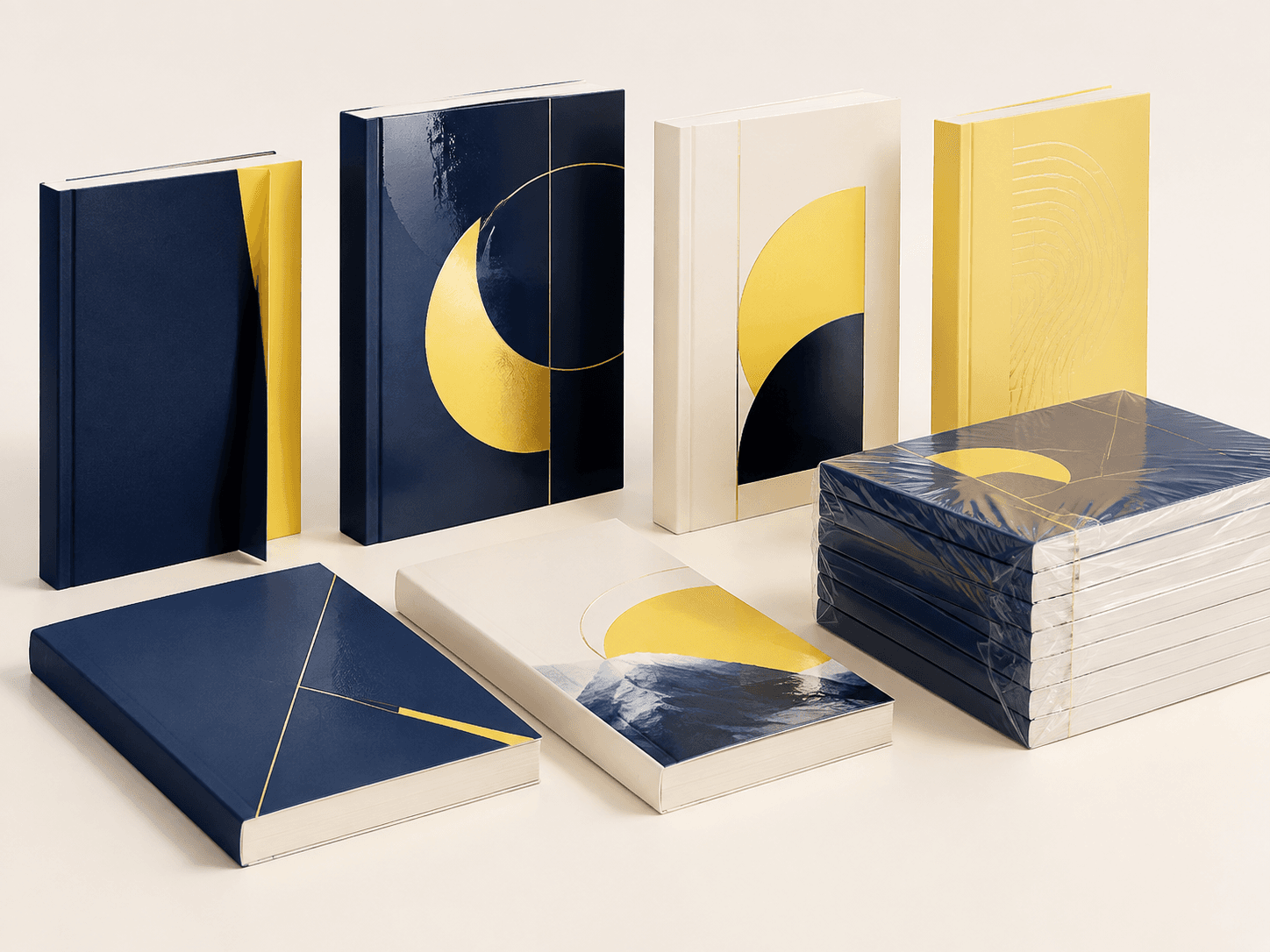
Spine preparation and adhesive
The book-block spine is prepared before adhesive bonds it to the cover. PUR and EVA are different adhesive routes; coated stocks and frequent use make the cured binding sample especially important. A glue name alone does not establish strength.
Scoring and cover flaps
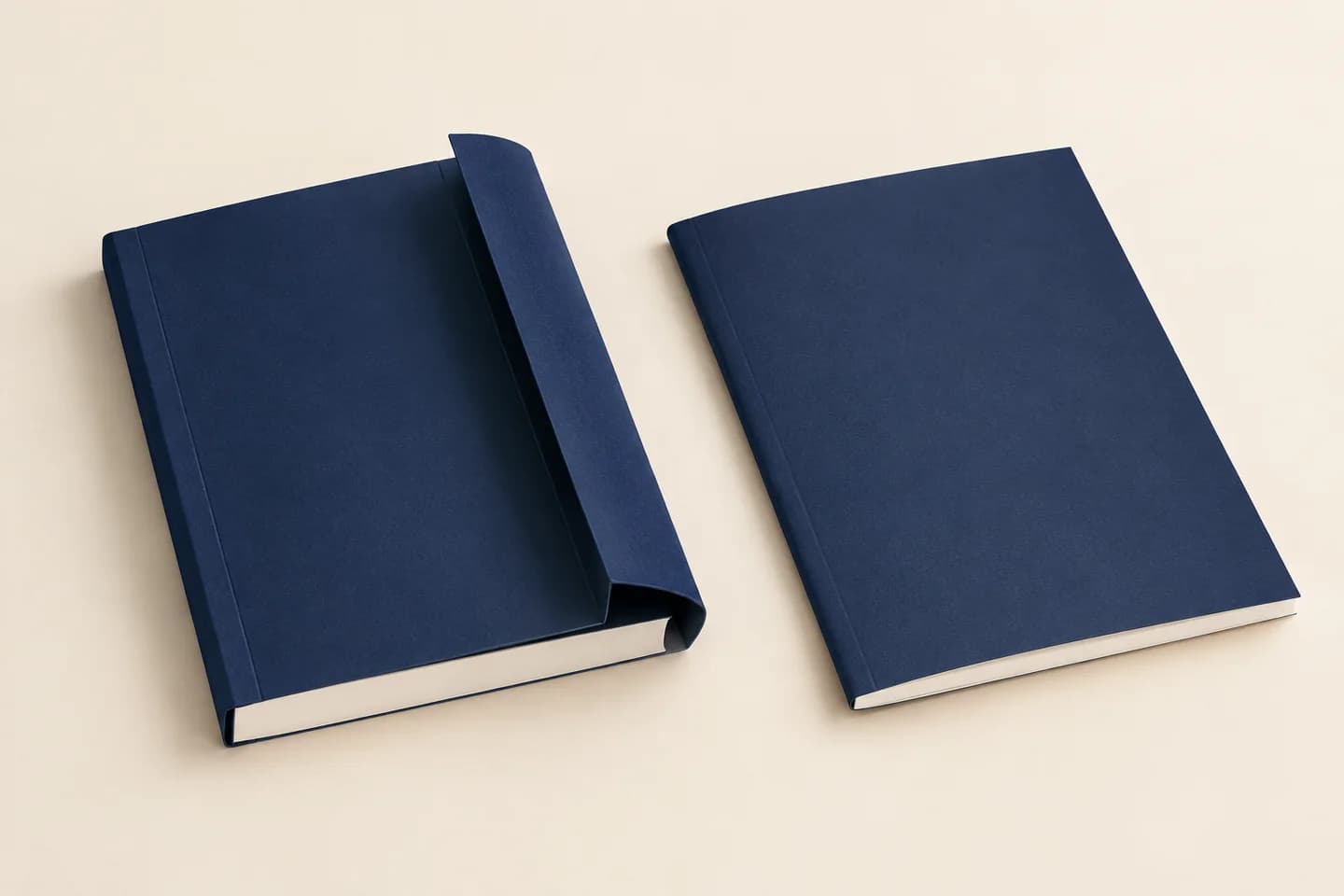
A crease guides the cover around the spine; French flaps fold inward from extended cover panels. Film, paper grain and crease geometry must work together so the cover opens without whitening or splitting.
Details that change the finished book
Plain covers and French flaps need different artwork.
A flap is an extension of the cover, not an extra interior page. Plan its fold and the reader’s access to the first and last pages before decorating the wrap.
Build the wrap from the finished block
Use separate front, spine, back and optional flap panels. A stock change can move every fold position, even when the front cover trim stays the same.
Keep finishing away from working folds
Separate foil, spot UV and emboss artwork from process printing. Assess fine details over creases on the actual cover material and film combination.
Test an assembled cover
Open the front hinge, fold the flap and inspect edge whitening. A flat cover proof checks artwork; a bound sample also checks geometry and opening.
Match the specification to the project
Paperback Book configurations in use.
Trade fiction
Uncoated text · flexible printed wrap
Prioritize readable type, opacity and manageable book weight. A thicker-looking page may increase the spine without increasing the word count.
Illustrated reference
Coated images · compatible spine adhesive
Choose the image surface and binding together; coated sheets can change opening and page retention. Keep diagram labels outside the binding gutter.
Author or brand edition
French flaps · restrained cover finishing
Flaps carry biographies, edition notes or product information. Their added cover area and crease work change the cover specification.
Solve the risk before production
What can go wrong, and how to check it.
The cover spine is mis-sized
Cause: Paper or pagination changed after the cover was laid out.
Fix and check: Calculate from the final book block, regenerate the wrap template and check the folded cover on a bound sample.
Pages loosen or the cover cracks
Cause: Spine preparation, adhesive or cover creasing does not suit the selected materials.
Fix and check: Assess a cured sample for page retention and open the creased cover repeatedly before release.
Interior show-through distracts from reading
Cause: Heavy reverse-side coverage combines with insufficient paper opacity.
Fix and check: Proof two-sided text and dense images on the intended grade. Compare opacity and shade rather than increasing GSM without examining a printed sheet.
When to choose another format
Paperback Book or another format?
| Alternative | Structure | Use and trade-off |
|---|---|---|
| Hardcover | Rigid case and endpapers | More protection and case-making components; heavier for the same interior. |
| Saddle-stitched booklet | Nested folded sheets, stapled fold | Useful for short publications; lacks a square shelf spine. |
Samples & order planning
Test the physical question before the bulk run.
A sample for the actual product
A cured, bound sample reveals opening, page retention and spine fit. A print proof answers color and show-through questions; it does not prove the adhesive bond.
Two-sided paper proof
Check text show-through, image density and paper shade using both sides of a representative interior sheet.
Creased cover and bound dummy
Check flap reach, hinge movement, spine fit and page opening with the specified cover and interior thickness.
Order Details for Paperback Book Printing
Quantity and quotation
Quote complete finished books per title or version. Send trim size, interior page count, quantity per title, paper choice, adhesive or sewn preference, cover finish and any French flaps. Include destination and required arrival date.
Sample scope and schedule
Free samples are available, with preparation completed within 15 days. Confirm which materials, finishes and construction the sample represents. Courier arrangements and transit time are separate. The quotation records bulk production timing and the minimum quantity for your configuration.
Packing and delivery
Protect cover edges from rubbing and set carton counts by the finished book weight. Flap covers need support against bending; agree freight scope separately.
- 01
Supply interior pages in reading order, with embedded fonts and blank pages included.
- 02
Use the final paper caliper and page count for the cover template; keep flaps on the cover file.
- 03
Use 300ppi images at final placement size and the template’s bleed; a 3mm bleed is a common reference.
- 04
Keep text out of the binding gutter and separate foil or varnish layers as vector artwork.
Configuration details
Use measured paper thickness to plan the spine.
Two text papers with the same GSM can create different spine widths. Cover artwork should be based on the chosen grade, leaf count and binding allowance after the text paper is selected. A bulkier paper can give a short edition a fuller block without adding the mass of a heavier sheet.
- Leaf count
240 printed text pages = 120 leaves in a conventional duplex block
This counts text leaves only; covers, inserts and endpapers need separate treatment.
- Spine input
Measured caliper in micrometres, leaf count and binding allowance
Do not derive a production spine from GSM alone or reuse the spine of another paper grade.
Explore the relevant formats
Product questions
Details worth settling before ordering.
Can a thin paperback carry spine text?
Only when the final spine provides sufficient space for the artwork and production allowance. Do not apply another printer’s minimum page count; use the job’s final cover template.
Why must the adhesive sample be cured?
A freshly assembled book does not represent the finished bond. The adhesive route sets the conditioning interval and the point at which retention can be evaluated.
Do French flaps change the page count?
They belong to the cover, not the interior pagination. Quote flap width, cover material and finishing separately from the text block.
Can a paperback have foil and French flaps together?
Yes, they are compatible design options when the cover stock, film, tooling and flap folds work together. Keep finishing layers separate and trial details near creases on the chosen cover. The flap width comes from the complete wrap template.
Does PUR make every paperback open flat?
No. Adhesive selection addresses the bond; opening also depends on grain, paper stiffness, spine preparation and book-block construction. Evaluate a cured bound sample, and use a dedicated lay-flat format when an uninterrupted spread is essential.
Your paperback book project
Send a brief that can become a specification.
Send trim size, interior page count, quantity per title, paper choice, adhesive or sewn preference, cover finish and any French flaps. Include destination and required arrival date.
Related formats & guidance