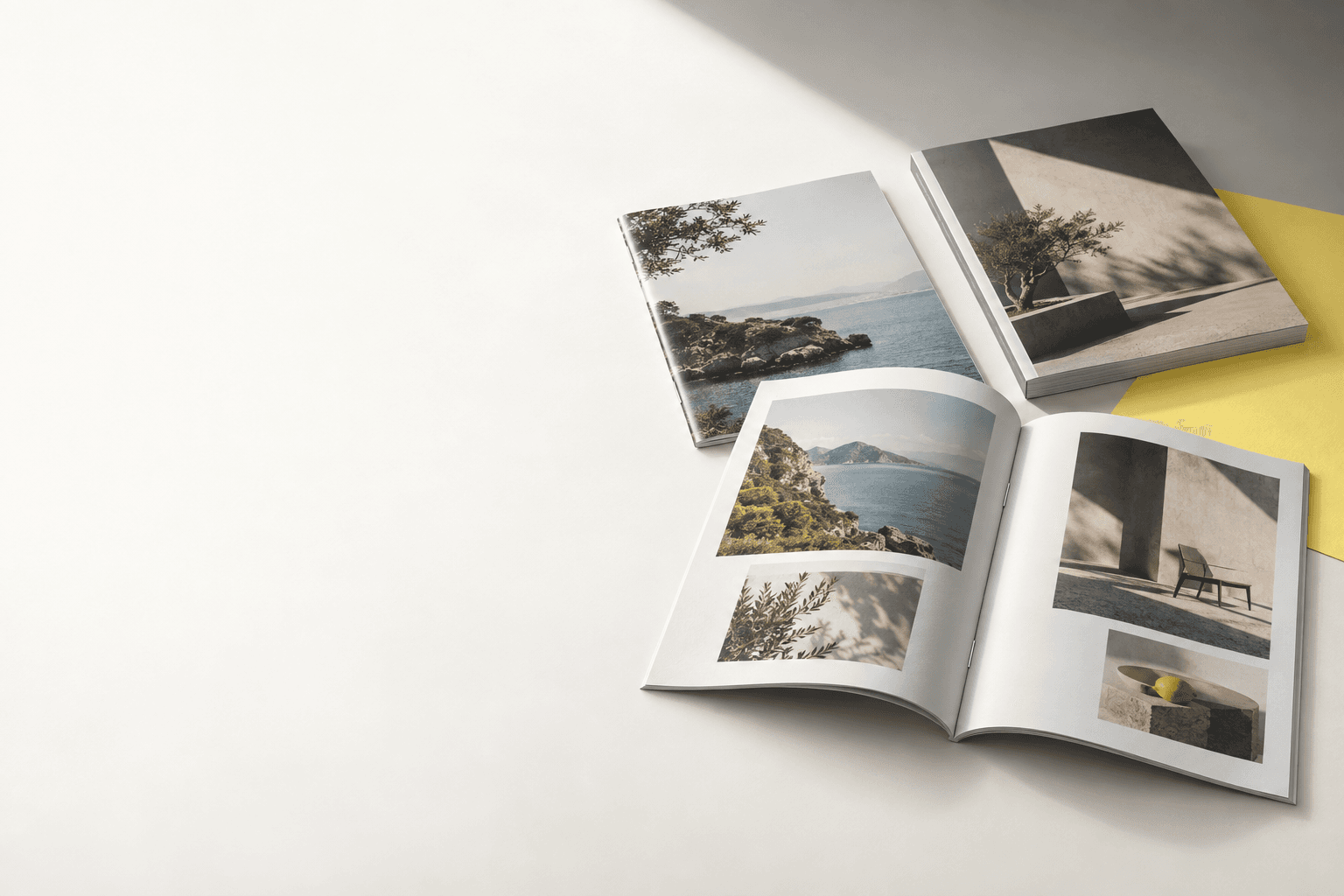
Repeatable editorial issues with controlled pagination
Custom Magazine Printing
Print editorial issues with consistent sections, image reproduction and cover treatment. Balance paper feel against mailing weight, then choose binding around the real issue thickness.
- Self-cover or separate cover
- Nested sheets or a bound spine
- Issue, stock and mailing-weight planning
The product in use
Build a repeatable issue without hiding the content.
A magazine combines recurring editorial sections with an issue identity and publication date. A self-cover uses the interior stock throughout; a separate cover can add stiffness and finishing. Saddle stitch keeps a short issue light, while a bound spine identifies thicker issues. Paper bulk, inserts and the advertising mix change the finished thickness, so an earlier issue is a reference rather than an automatic production specification.
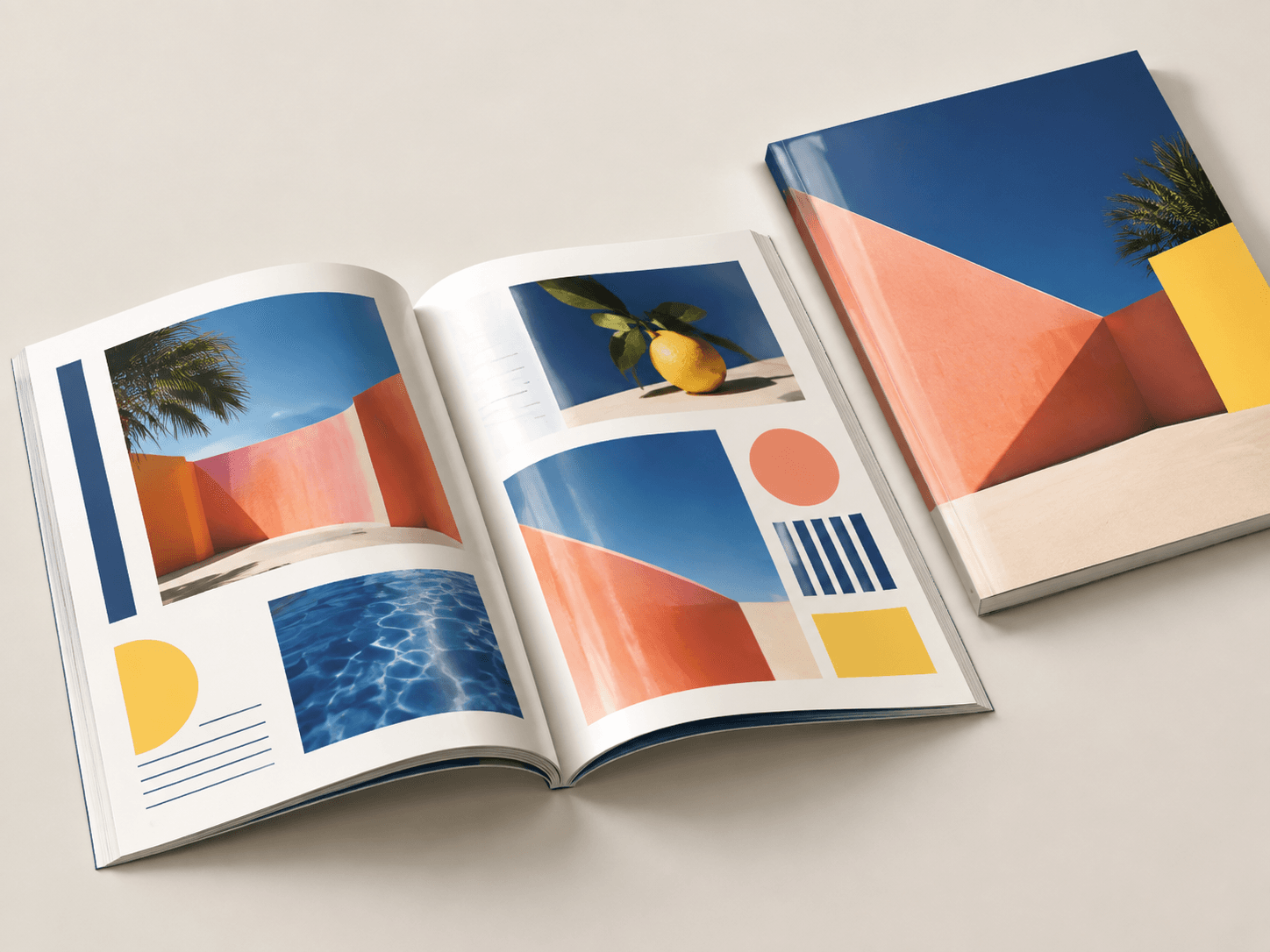
The cover strategy changes the whole issue.
- 01Outer sheet or separate cover
- A self-cover shares the interior stock; a separate cover has its own material and finishing specification. State the counting convention.
- 02Editorial sections
- Recurring section starts and page furniture create continuity across issues. Ads and inserts can change final pagination.
- 03Fold or glued spine
- Saddle stitch nests folded sheets; a bound block creates a printable square spine. Physical thickness determines suitability.
Specifications & materials
Compare the options and what they change.
Numeric dimensions and paper weights are selection references, not guaranteed Lemon production limits or a stocked-material list. The quoted specification identifies the available grade and construction.
| Engineering spec | Reference or option | Selection effect |
|---|---|---|
| Finished dimensions | 8.5 × 11 in (215.9 × 279.4 mm); 8 × 10 in (203.2 × 254 mm) | Interior trim references, not manufacturing limits. Editorial reference with room for columns and advertising. Compact illustrated issue; design ads for the final proportions. |
| Format and component count | Complete book: interior, cover and separately identified components | Send issue trim, total pagination, self-cover or separate cover, paper, quantity by region, insert plan and required arrival dates. |
| Interior stock | 90, 115 or 130gsm coated references | A lighter grade can reduce mailing weight; inspect opacity with full-page advertisements. |
| Cover | Self-cover or 200/250gsm separate coated-cover references | Separate covers add weight and can carry a different finish. |
| Pagination | Saddle-stitched total in multiples of four; adhesive option for a thicker block | Inserts and cover accounting must be explicit before scheduling. |
| Issue identity | Issue number, date, barcode and edition revision | Keep recurring templates consistent but verify each dated issue. |
| Cover accounting | Self-cover uses outer faces of the nested stock; separate cover specified independently | For saddle stitch, folded sheets contribute four pages; distinguish total faces from interior-only page count. |
| Edge furniture | Folio, running headings and ad boundaries clear of final trim | Creep depends on nested stock thickness; do not apply a universal compensation value. |
Light editorial interior
90/115gsm coated references where weight and pagination matter.
Review reverse-side show-through on dark ads and portrait pages.
Heavier image-led issue
130/150gsm coated references for image-led limited editions.
More bulk changes creep, binding and postage; do not judge from a single sheet.
Lighter paper can reduce issue mass; opacity and surface still need to suit full-coverage photographs. A separate cover adds stiffness and finishing options without requiring the same stock throughout the issue.
A decision for this product
Count the complete issue, not only editorial pages.
48 self-cover pages = 12 folded sheets
Each folded sheet has four pages in a saddle-stitched issue. A separate cover or insert must be described separately; this example is not a maximum page count.
Selection illustration · not a production template or test result
Selected direction
Light stock + controlled components
Regular mailed issue · Light stock + controlled components
Prioritizes distribution weight and predictable recurring pagination.
Collectible issue · Heavier cover or bound spine
Changes feel and storage; allow for the added materials and thickness.
See the trim proportions.
These are publishing references, not required sizes. Compare the usable page shape before adapting an existing layout.
Selected: 8.5 × 11 in. Proportions only; not actual size.
Trim dimensions describe the cut page. Artwork bleed, cover overhang, tabs and modules are separate allowances.
Surface finish options
Printed covers and jackets
Choose the finish for the printed cover or jacket, not automatically for the interior. Check color, rub marks, hinges and compatibility with the cover stock. Cloth and synthetic wraps need a separate material trial.
 Matte lamination View effect & artwork guidance
 Gloss lamination View effect & artwork guidance
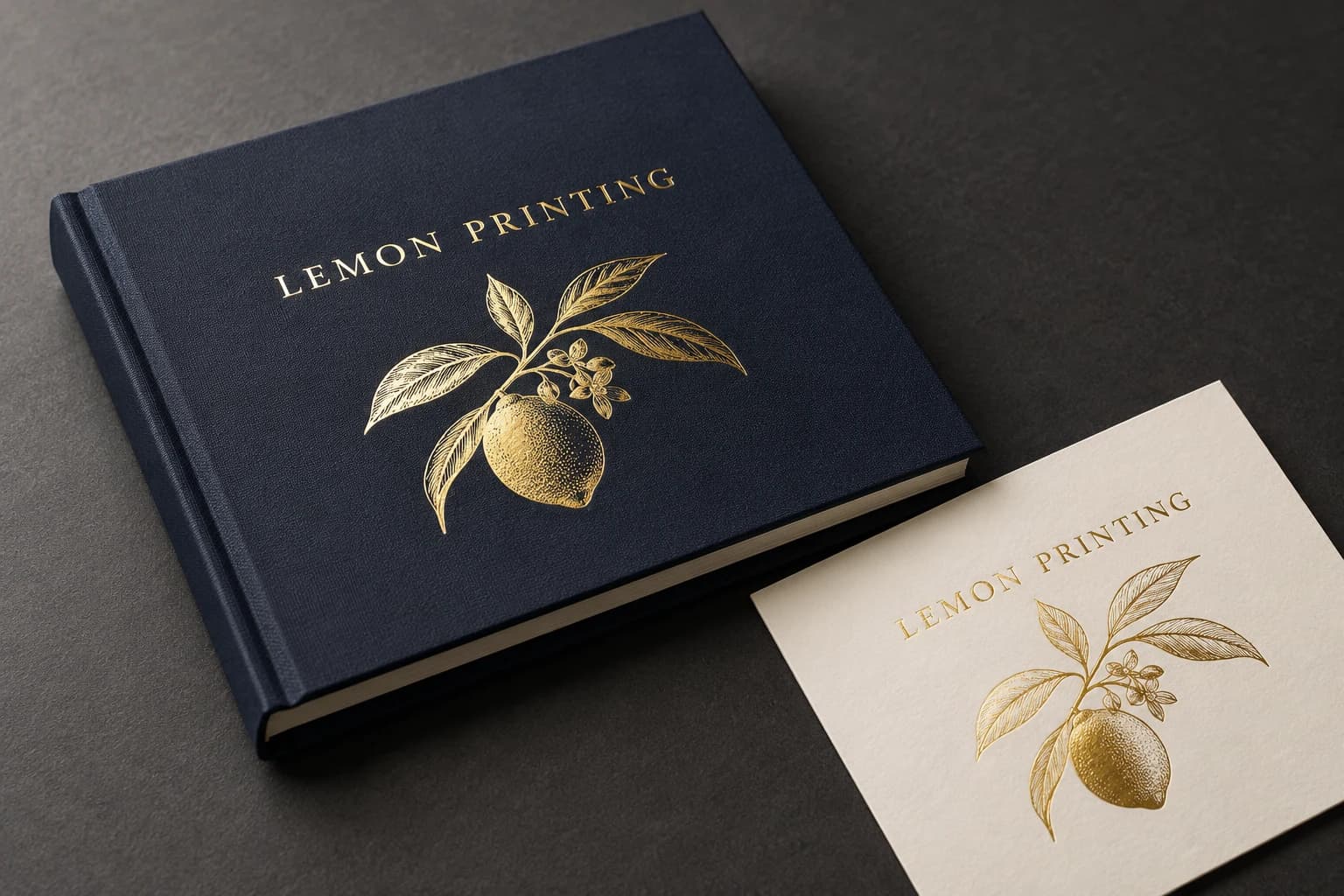 Gold foil stamping View effect & artwork guidance
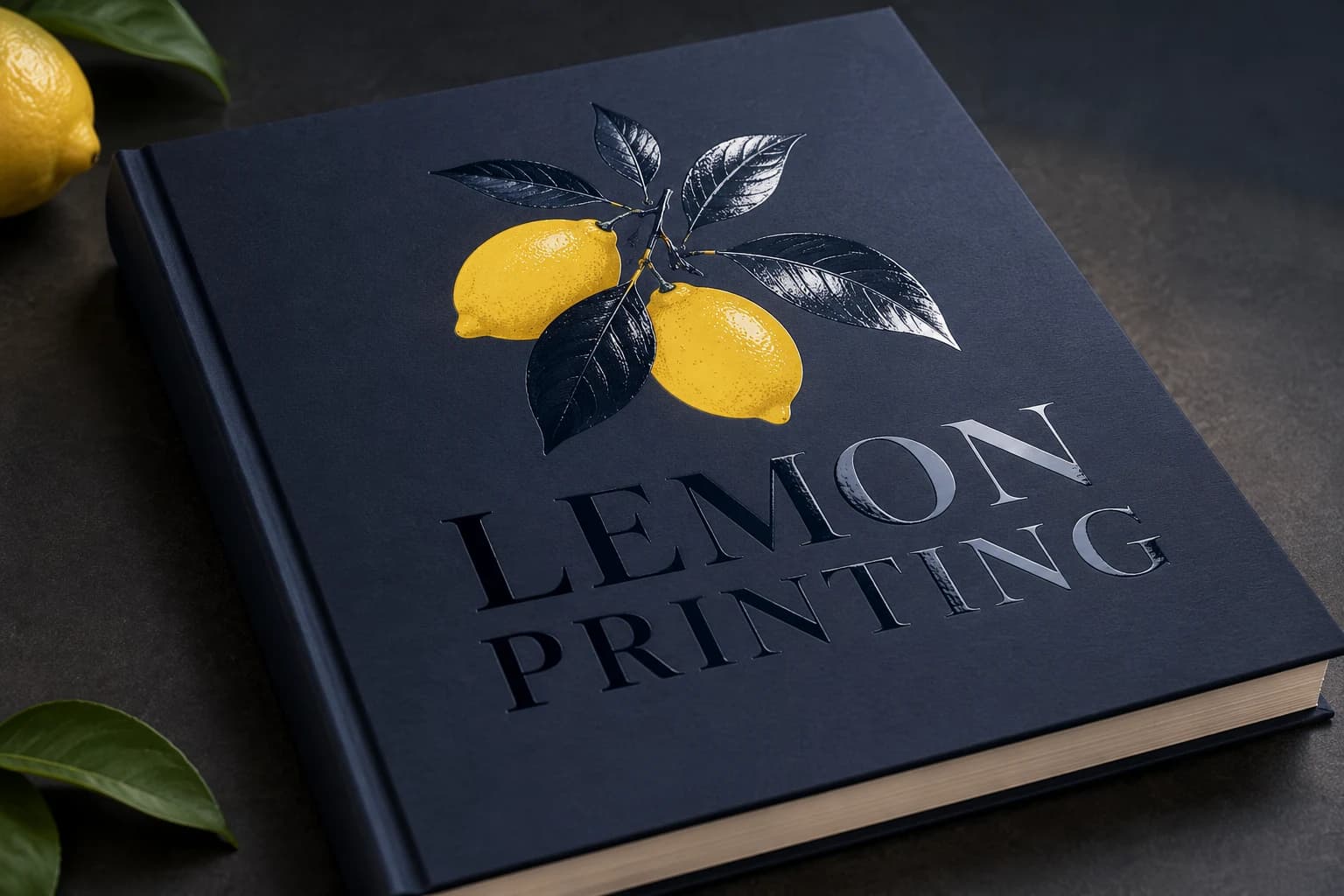 Spot UV View effect & artwork guidance
Illustrative finish samples, not photographs of this product. Final suitability follows the confirmed stock, construction and approved sample.
Compare all surface finishesHow it is made
Construction decisions with a practical effect.

Nested-sheet creep
Folded sheets build thickness toward the center. Their edges move outward before trimming; imposition compensates for this creep so folios and narrow borders remain inside the final page.
Separate cover and inserts
A heavier cover, foldout or bound insert changes assembly and counting. Identify each component and its position rather than assuming the page PDF completely describes the issue.
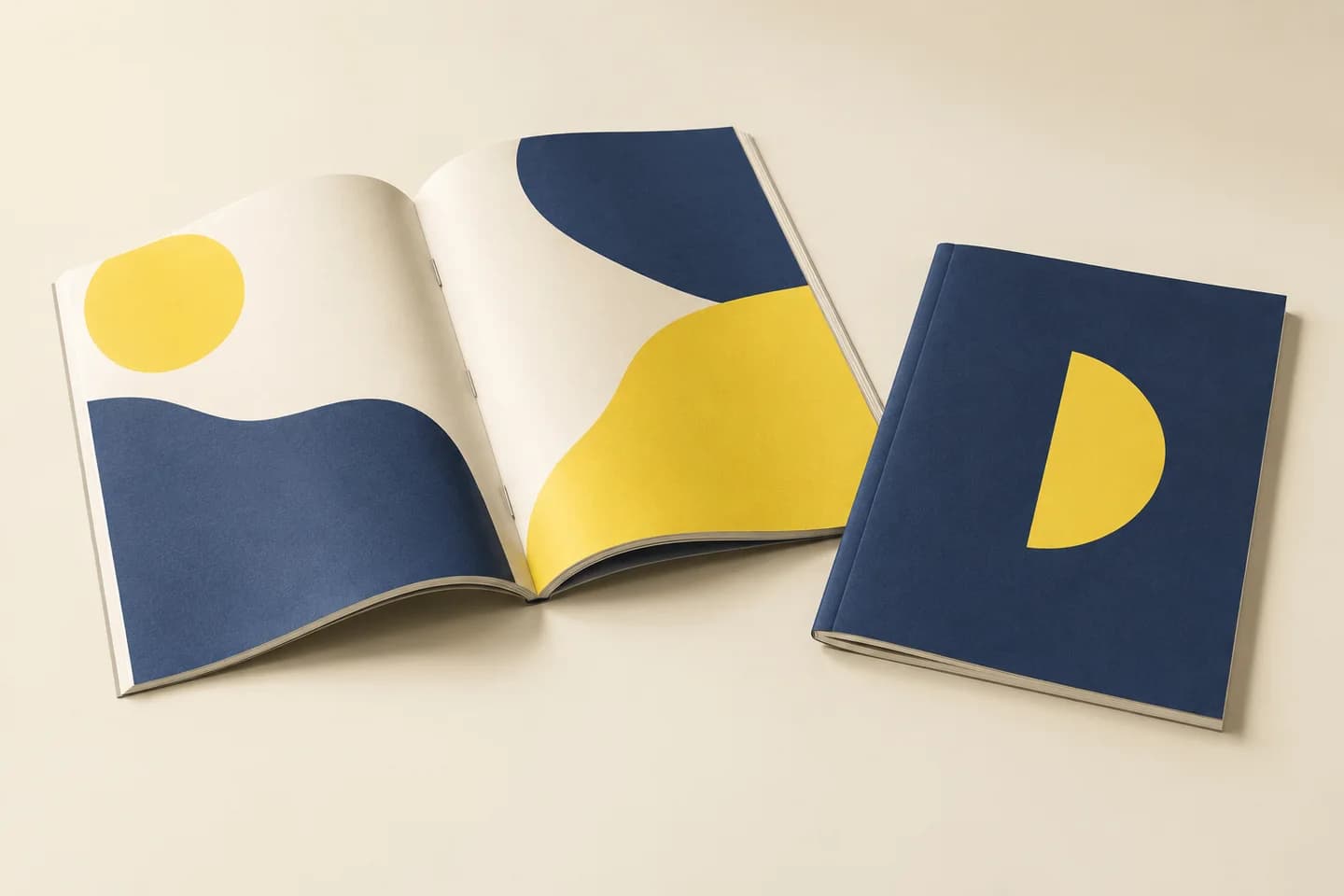
Details that change the finished book
Keep the issue identity stable while stock and content change.
A recurring issue needs reproducible page accounting, image proofing and distribution planning. A heavier sheet may improve feel while increasing mailing weight.
Separate cover and interior accounting
State total designed pages and whether the cover is self-cover or a separate four-face component. Identify blanks and inserted sheets explicitly.
Treat creep as a construction effect
Nested sheets move outward as stack thickness increases. Check page furniture near the trimmed edge and plan imposition compensation from the actual stock.
Approve issue and distribution versions
Control issue number, date and any regional cover or ad changes. Keep the approved packed quantity tied to the final issue and shipping destination.
Match the specification to the project
Magazine configurations in use.
Regular mailed issue
Lighter coated interior · controlled page count
Balance image detail with mass and mailing dimensions. A heavier separate cover adds another distribution variable.
Collectible edition
Stiffer cover or bound block · stronger shelf identity
The added components change feel and storage; assess opening and the final spine rather than choosing on cover appearance alone.
Event distribution
Compact trim · short editorial sequence
Prioritize readable short articles and easy handling. A smaller page may require more pagination for the same content.
Solve the risk before production
What can go wrong, and how to check it.
Center pages lose narrow borders
Cause: Creep and trim movement were not allowed for.
Fix and check: Avoid critical edge borders and proof the imposed pagination with the final stock.
A mailed issue exceeds the expected weight
Cause: Paper, cover or insert changed from the previous edition.
Fix and check: Use a complete dummy for weight planning, including all inserts and the mailing wrapper.
Recurring issues vary in image appearance
Cause: Stock shade, finish or proof references changed without being included in the issue specification.
Fix and check: Retain the paper and image-proof reference with each edition. Reproof critical images when stock or production conditions change.
When to choose another format
Magazine or another format?
Samples & order planning
Test the physical question before the bulk run.
A sample for the actual product
Review full-page dark ads, fine editorial type and a complete bound dummy. Include the cover and all inserts when evaluating thickness and mailing weight.
Issue-specific image and layout proof
Check recurring colors, folios, advertisements and cover/interior counting against the approved issue.
Folded or bound distribution dummy
Check edge creep, opening, finished dimensions and assembled weight before setting pack quantities.
Order Details for Magazine Printing
Quantity and quotation
Quote complete finished books per title or version. Send issue trim, total pagination, self-cover or separate cover, paper, quantity by region, insert plan and required arrival dates.
Sample scope and schedule
Free samples are available, with preparation completed within 15 days. Confirm which materials, finishes and construction the sample represents. Courier arrangements and transit time are separate. The quotation records bulk production timing and the minimum quantity for your configuration.
Packing and delivery
Label cartons by issue and edition. Protect cover edges and include any mailing wrapper in the packed-dimension and weight calculation.
- 01
Include all editorial and advertising pages in final reading order.
- 02
Verify issue number, date, barcode and ad revisions.
- 03
Use 300ppi photographs and keep folios away from trim and creep-sensitive edges.
- 04
Identify separate cover, inserts and mailing versions in the job brief.
Configuration details
Distinguish self-cover and separate-cover pagination.
A self-cover magazine uses the same stock through the outside and inside; a separate cover can add stiffness or a different surface. Changing this choice affects the page sequence and how an imposed proof is read. The cover pages must be identified before the text count is priced.
- Cover build
Self-cover or four-page separate cover
State whether the quoted page count includes the cover and identify blank inside-cover faces.
- Folded sequence
Complete imposed sheet positions
Nested folded sheets create four page positions each; deliberate blanks still occupy positions.
Explore the relevant formats
Product questions
Details worth settling before ordering.
What is a self-cover magazine?
The outer pages use the same stock as the interior. A separately specified cover can use another grade or finish and must be counted consistently.
Can we keep the same template each issue?
Yes, but page count, insert placement, issue identity and image revision still require their own checks. A recurring template is not a recurring approval.
Should the issue deadline equal the arrival date?
No. Keep artwork release, production, dispatch and transit separate, especially when issues are mailed in several regions.
Can a magazine switch from stitching to a square spine?
Yes as a construction decision, but it changes opening, cover geometry and gutter access. Make the switch after final pagination and physical thickness are known; do not reuse a stitched cover PDF as the bound cover template.
Does a separate cover add four pages?
A conventional folded cover has four faces. The quote must state whether those faces are included in the total or are additional to the interior. Label both files and the final page count consistently.
Your magazine project
Send a brief that can become a specification.
Send issue trim, total pagination, self-cover or separate cover, paper, quantity by region, insert plan and required arrival dates.
Related formats & guidance