Image-led art and brand editions with deliberate scale
Custom Coffee Table Book Printing
Give art, photography and design projects a larger page with deliberate image sequencing. Match trim, paper surface and binding to the spreads before adding case decoration or a slipcase.
- Landscape, portrait or large-square formats
- Cover texture and restrained finishing
- Gutter access and assembled-weight planning
The product in use
Let the image sequence determine the construction.
A coffee table book is an image-led publishing format rather than a single binding specification. Larger pages give images more presence but add weight and leverage to the book block. A sewn hardcover, adhesive construction or dedicated lay-flat format can produce different opening behavior. Coated stock supports image detail; paper shade, sheen and opacity shape the viewing experience. Cover materials and a slipcase affect presentation without resolving the gutter.
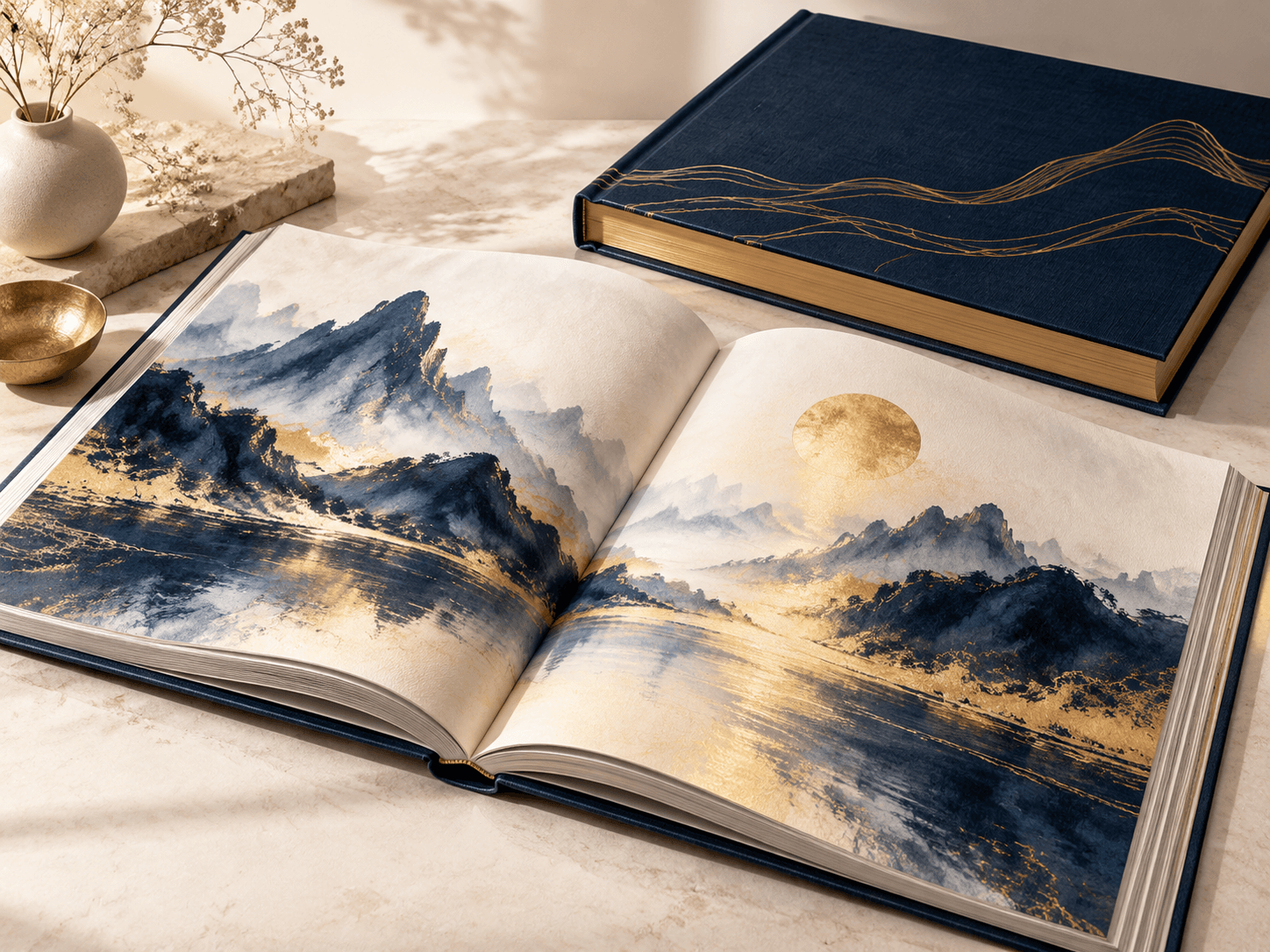
Large images do not remove the book’s structural constraints.
- 01Image-bearing block
- Paper surface and caliper affect reproduction, page stiffness and opening. Large leaves also increase material mass.
- 02Case and covering
- Cloth or printed wrap surrounds rigid boards. Grain, hinges and finish compatibility shape handling and appearance.
- 03Presentation components
- A jacket or slipcase is a separate fitted component. Its dimensions and packing volume follow the finished book.
Specifications & materials
Compare the options and what they change.
Numeric dimensions and paper weights are selection references, not guaranteed Lemon production limits or a stocked-material list. The quoted specification identifies the available grade and construction.
| Engineering spec | Reference or option | Selection effect |
|---|---|---|
| Finished dimensions | 10 × 8 in (254 × 203.2 mm); 12 × 12 in (304.8 × 304.8 mm) | Interior trim references, not manufacturing limits. Landscape reference for wide images and design spreads. Large square publishing reference; compare handling and freight weight. |
| Format and component count | Complete book: interior, cover and separately identified components | Send trim, total pages, quantity, paper, binding/opening requirement, case material, finishing and optional jacket/slipcase. Include a critical spread and destination. |
| Image paper | 130, 150 or 170gsm coated references | Compare sheen, opacity and full-book weight; heavier stock changes opening. |
| Binding | Sewn/adhesive book block or dedicated lay-flat construction | A premium-looking hardcover does not establish uninterrupted panoramas. |
| Case | Printed wrap or cloth; optional jacket and slipcase | List decorative layers and protective components separately. |
| Image treatment | Consistent crop, color space and proof reference | Large reproductions need sufficient final-size image resolution. |
| Cover decoration | Printed wrap or cloth; separate foil, emboss/deboss or spot-UV artwork | Finish compatibility depends on covering and tooling; a motif trial should use the selected material. |
| Presentation fit | Optional jacket, slipcase or protective sleeve matched to finished case | Freeze stock and pagination before final fit; assess removal clearance and packed protection. |
Smooth coated interior
130/150gsm references for detailed photography and illustration.
A moderate stock can help opening and weight; judge the complete edition.
Heavier image pages
170gsm coated reference where the page feel is a priority.
Greater bulk can restrict the gutter and raise shipping weight.
A heavy coated page can make an image feel substantial while increasing stiffness and shipping mass. Compare a lighter grade and the same bound spread before committing to the complete edition.
A decision for this product
Choose opening before placing the focal point.
Bound gutter / dedicated lay-flat
A large page does not eliminate the gutter. Keep faces, vertical lines and essential details away from the center unless the approved construction supports that composition.
Selection illustration · not a production template or test result
Selected direction
Sewn hardcover with controlled gutters
Art monograph · Sewn hardcover with controlled gutters
Shelf presentation and repeated reference; allow for the book-block opening.
Panoramic portfolio · Dedicated lay-flat configuration
Assess the full spread and increased page construction separately.
Gift edition · Cloth, foil or slipcase option
Changes exterior texture and pack volume, not the interior opening.
See the trim proportions.
These are publishing references, not required sizes. Compare the usable page shape before adapting an existing layout.
Selected: 10 × 8 in. Proportions only; not actual size.
Trim dimensions describe the cut page. Artwork bleed, cover overhang, tabs and modules are separate allowances.
Surface finish options
Printed covers and jackets
Choose the finish for the printed cover or jacket, not automatically for the interior. Check color, rub marks, hinges and compatibility with the cover stock. Cloth and synthetic wraps need a separate material trial.
 Matte lamination View effect & artwork guidance
 Gloss lamination View effect & artwork guidance
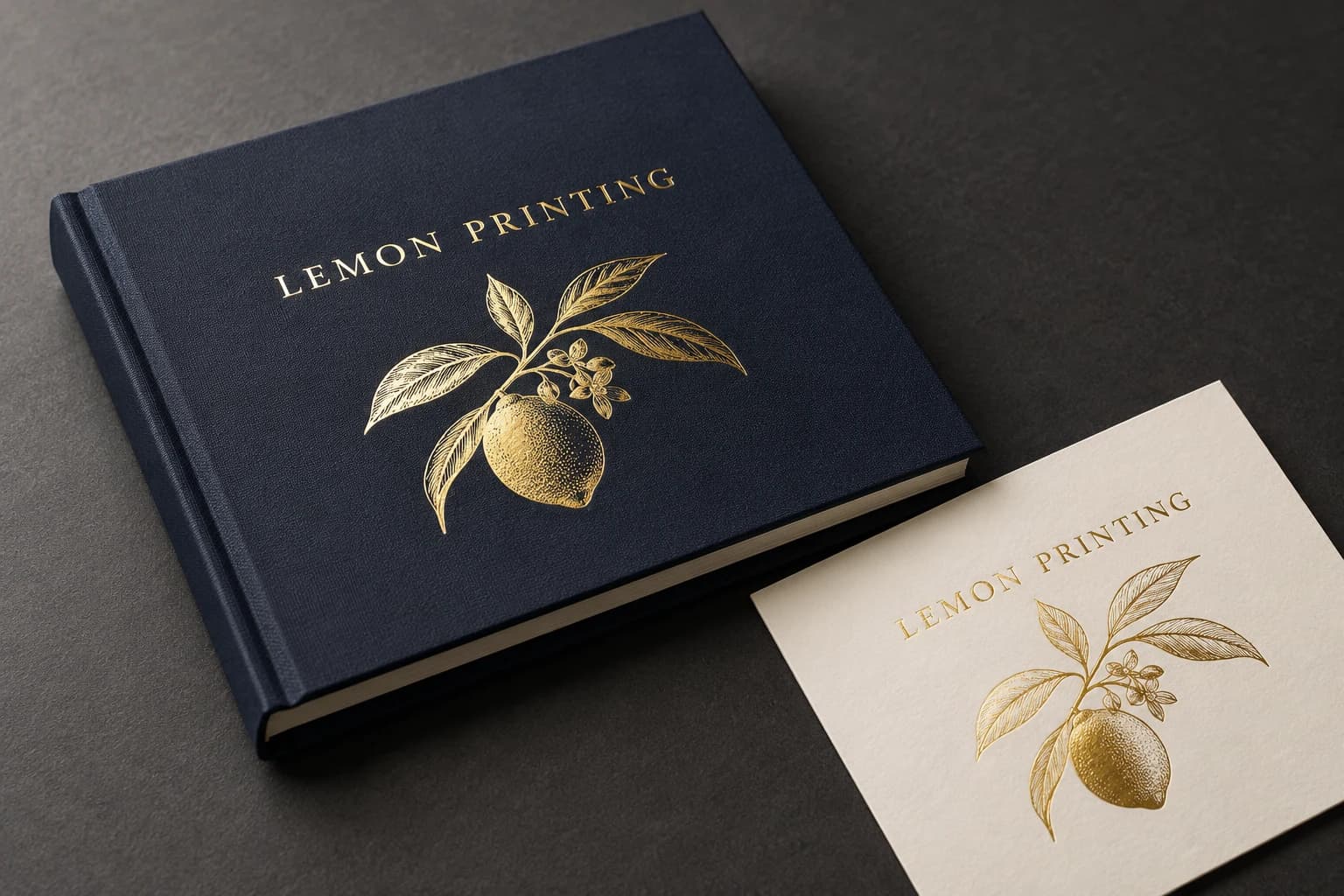 Gold foil stamping View effect & artwork guidance
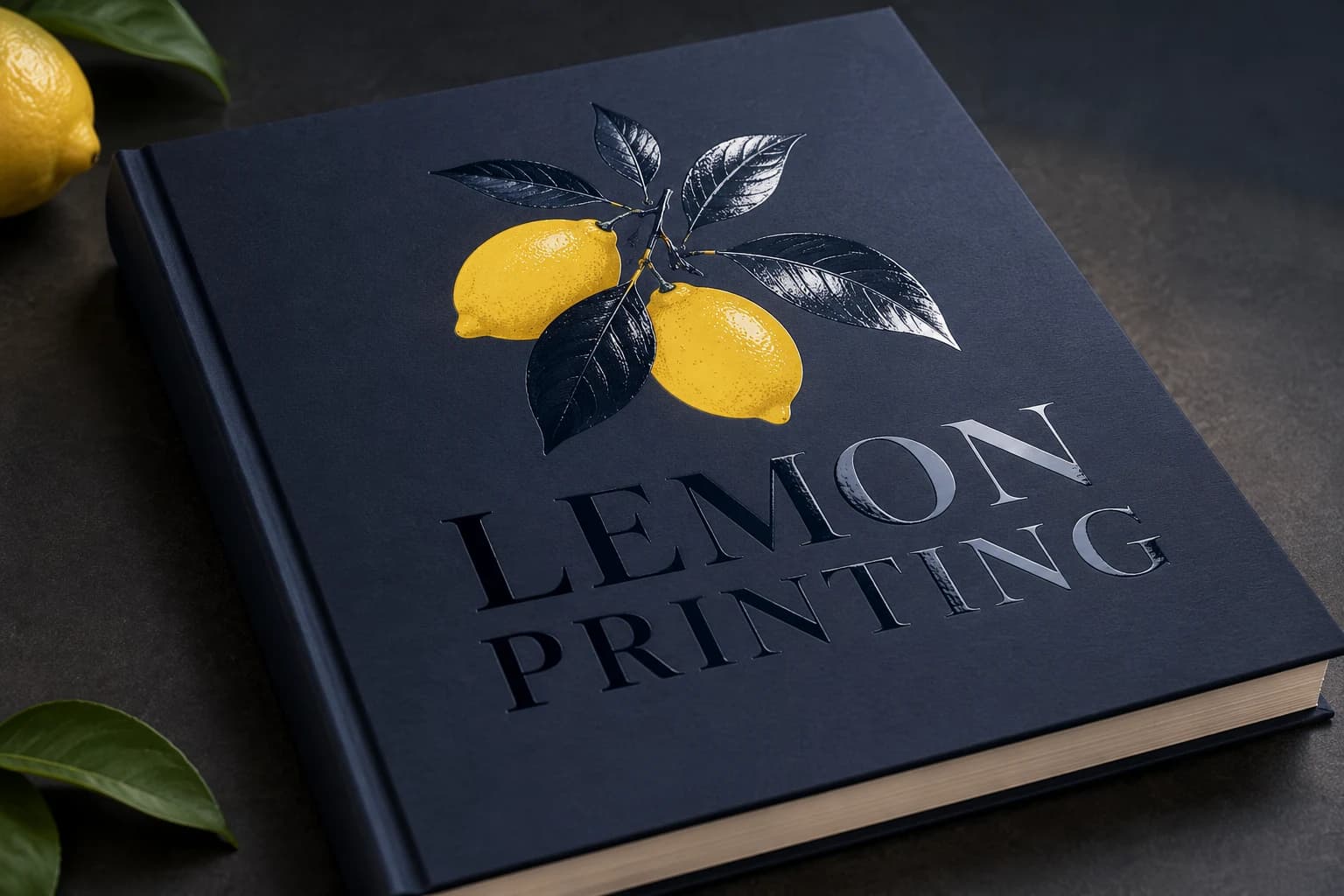 Spot UV View effect & artwork guidance
Illustrative finish samples, not photographs of this product. Final suitability follows the confirmed stock, construction and approved sample.
Compare all surface finishesHow it is made
Construction decisions with a practical effect.
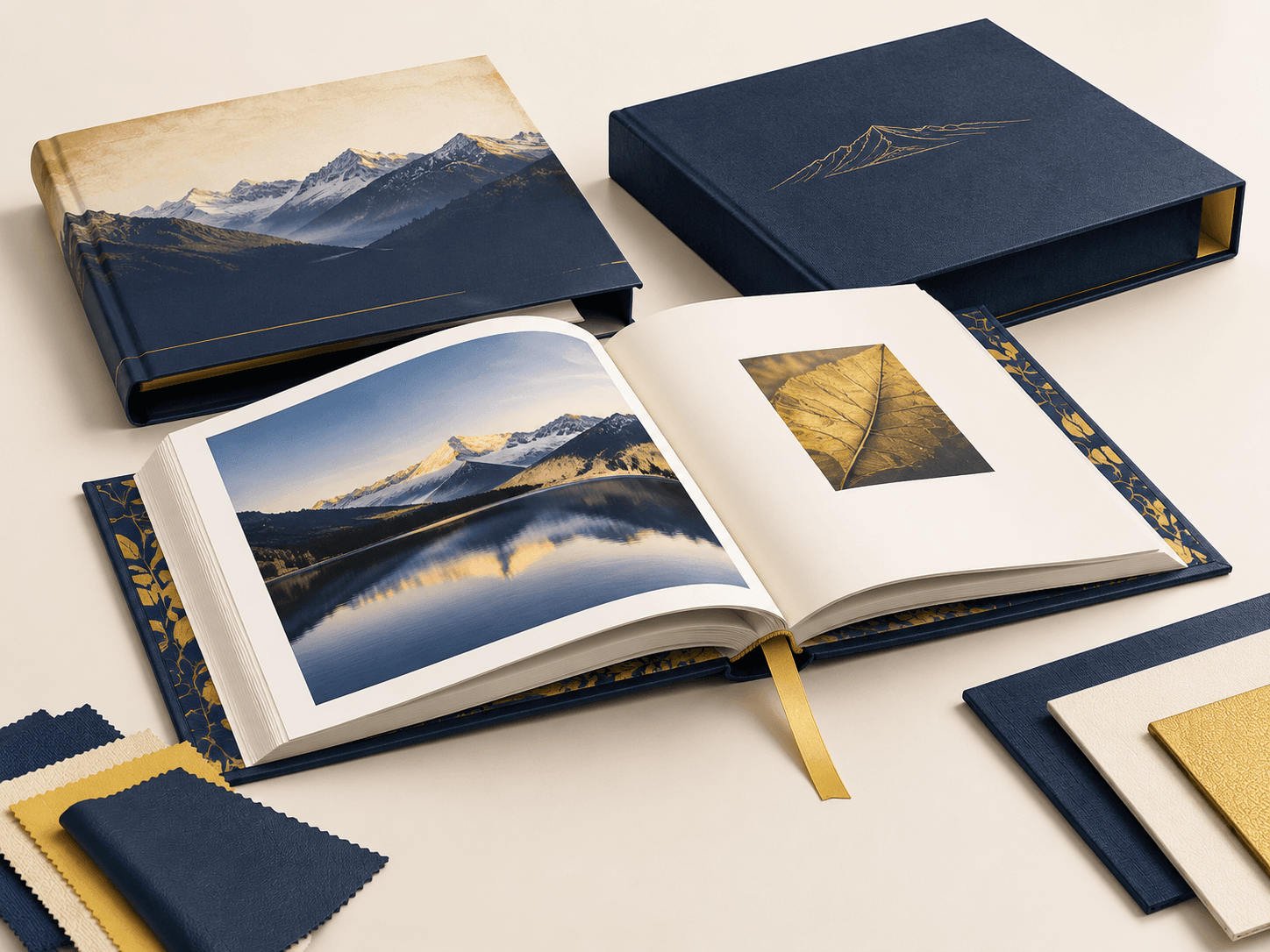
Bound spreads and panoramas
The block is bound before it is cased or assembled into its selected format. Keep focal details away from the center unless a dedicated lay-flat construction has been approved. Sewing alone is not a lay-flat guarantee.
Cloth, wrap and case finishing
Printed wrap carries a full image; cloth adds visible texture. Foil or debossing should be tested on the actual covering material, especially for fine motifs. A slipcase needs clearance around the complete edition.
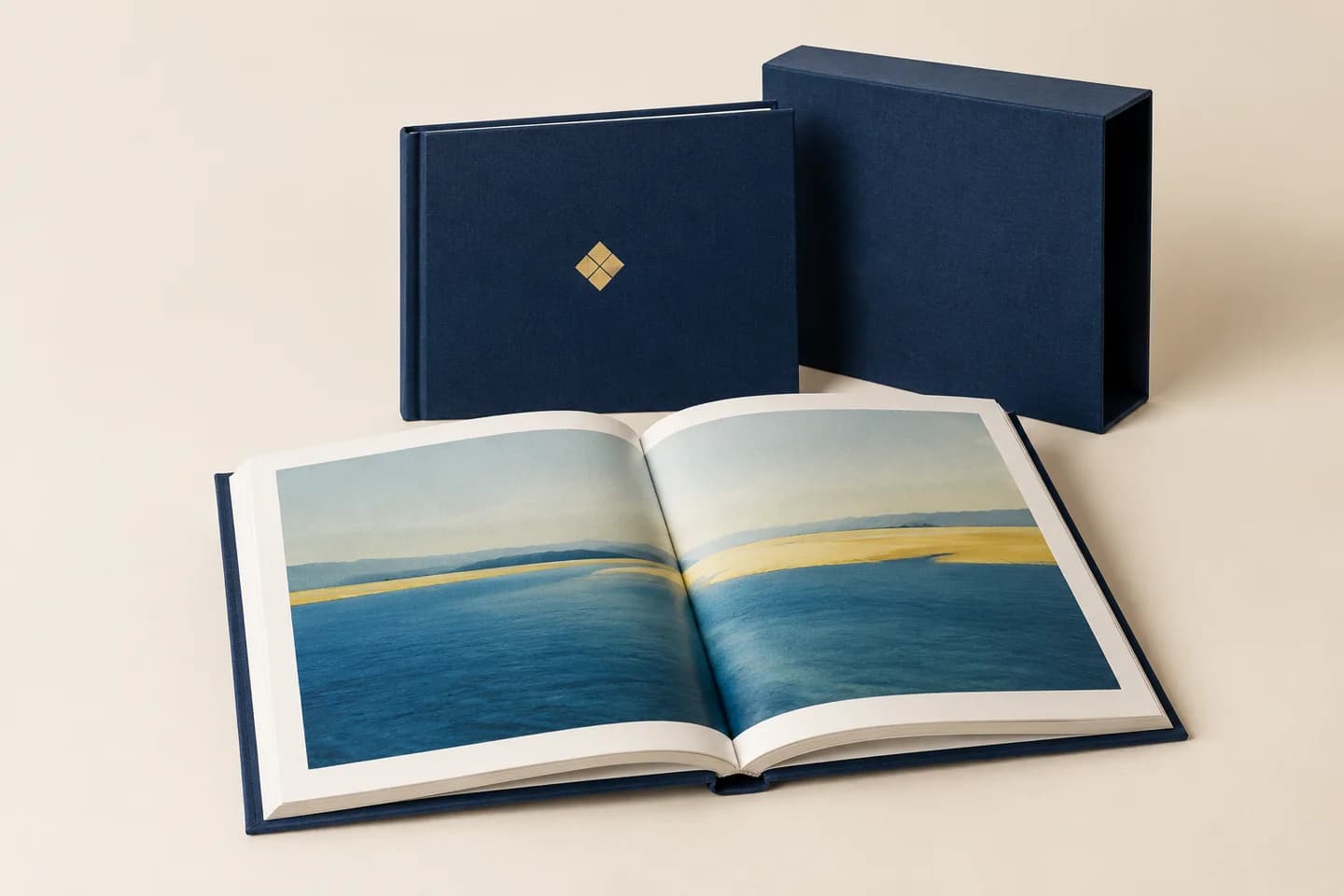
Details that change the finished book
Coordinate the interior, cloth finish and presentation fit.
The edition’s visual impact comes from scale and controlled material choices. Begin with the image sequence and opening before specifying foil, jackets or slipcases.
Review every critical panorama
Faces, vertical lines and captions should remain clear of a conventional gutter. Evaluate a full bound spread; a large trim is not a substitute for lay-flat construction.
Test decoration on the actual covering
Cloth weave changes fine foil transfer. Use vector finishing artwork and a material-specific trial instead of judging the motif on screen.
Fit presentation components last
A paper or pagination change affects book thickness and the jacket or slipcase fit. Check removal, edge support and packed weight on the assembled edition.
Match the specification to the project
Coffee Table Book configurations in use.
Art monograph
Image-led coated interior · sewn-block option
Assess illustration detail and opening together; keep critical content off the center where the construction obscures it.
Panoramic portfolio
Dedicated lay-flat construction · full-spread proof
The construction is selected for the uninterrupted spread, with its own thickness and weight implications.
Gift or brand edition
Cloth or printed case · foil · fitted slipcase
Surface texture and presentation matter, while the fitted components add material and shipping volume.
Solve the risk before production
What can go wrong, and how to check it.
A panoramic image is interrupted
Cause: The selected opening does not match the intended full-spread image.
Fix and check: Test the most demanding spread in a bound dummy or select a dedicated lay-flat route.
The edition is unexpectedly heavy
Cause: Large trim and heavier stock were judged from loose samples.
Fix and check: Estimate from the final specification and weigh a complete dummy before planning freight.
The slipcase fit changes late in production
Cause: Paper or case materials changed after the presentation component was designed.
Fix and check: Recalculate from the final assembled book and test insertion/removal on a fitted sample before releasing the slipcase.
When to choose another format
Coffee Table Book or another format?
| Alternative | Structure | Use and trade-off |
|---|---|---|
| Photo book | Image album or photographic narrative | Similar image concerns, with more explicit album and lay-flat alternatives. |
| Lookbook | Seasonal brand and collection sequence | Usually driven by campaign and distribution rather than keepsake storage. |
Samples & order planning
Test the physical question before the bulk run.
A sample for the actual product
Review representative light and dark images on the selected paper, plus a complete dummy for weight, gutter and case fit.
Full-spread image and finish proof
Review panoramas, shadow detail and a trial of decoration on the actual cover material.
Complete presentation sample
Check opening, cover movement, slipcase/jacket fit and assembled dimensions and mass.
Order Details for Coffee Table Book Printing
Quantity and quotation
Quote complete finished books per title or version. Send trim, total pages, quantity, paper, binding/opening requirement, case material, finishing and optional jacket/slipcase. Include a critical spread and destination.
Sample scope and schedule
Free samples are available, with preparation completed within 15 days. Confirm which materials, finishes and construction the sample represents. Courier arrangements and transit time are separate. The quotation records bulk production timing and the minimum quantity for your configuration.
Packing and delivery
Support heavy book blocks, protect case corners and isolate covers from rubbing. Include slipcases or jackets in final carton dimensions and weight.
- 01
Sequence final images and preserve consistent crop and color handling.
- 02
Check resolution at final placement rather than file pixel count alone.
- 03
Keep focal details away from the bound center and follow the final case template.
- 04
Separate foil/deboss layers and identify jacket or slipcase files.
Configuration details
Compare the image surface and handling weight together.
A large image-led book can become heavy even before the case is added. Selecting a thicker sheet for every spread increases page-block mass and may change opening behavior. Compare the surface on a representative image and assess the complete book at the actual trim.
- Mass example
200 duplex pages = 100 text leaves
Text-only mass equals one-leaf area in m² × grammage × leaf count; the case, glue and inserts add weight.
- Reproduction reference
Neutral tones, shadows and skin tones on the selected sheet
Review the paper surface and physical image proof together; a screen cannot establish the printed appearance.
Explore the relevant formats
Product questions
Details worth settling before ordering.
Should every photograph be 300ppi?
300ppi at final size is a common preparation reference. Evaluate actual placement and source detail; enlarging a small file does not create missing detail.
Can we add a slipcase after the book is approved?
Its fit follows the complete book dimensions and finish. Treat it as another designed, sampled and quoted component.
How much does a larger trim affect shipping weight?
Interior paper mass increases with page area, leaf count and GSM. The paper-weight calculator in the Selection section estimates only interior paper; boards, wrap, adhesive, slipcase and packing must be added to establish the shipped unit.
Does sewn binding guarantee a seamless panorama?
No. Sewn sections can improve handling, but opening also depends on stock, grain and the full block. Choose a dedicated lay-flat construction when uninterrupted center imagery is required and prove the complete spread.
Your coffee table book project
Send a brief that can become a specification.
Send trim, total pages, quantity, paper, binding/opening requirement, case material, finishing and optional jacket/slipcase. Include a critical spread and destination.
Related formats & guidance