Book Printing · Formats & construction
Large-Format Book Printing
Large books give artwork, maps and detailed photographs more room, but increase handling weight and the leverage on the binding.
- Portrait or landscape trim; cover and board sized to the edition
- Coated image paper
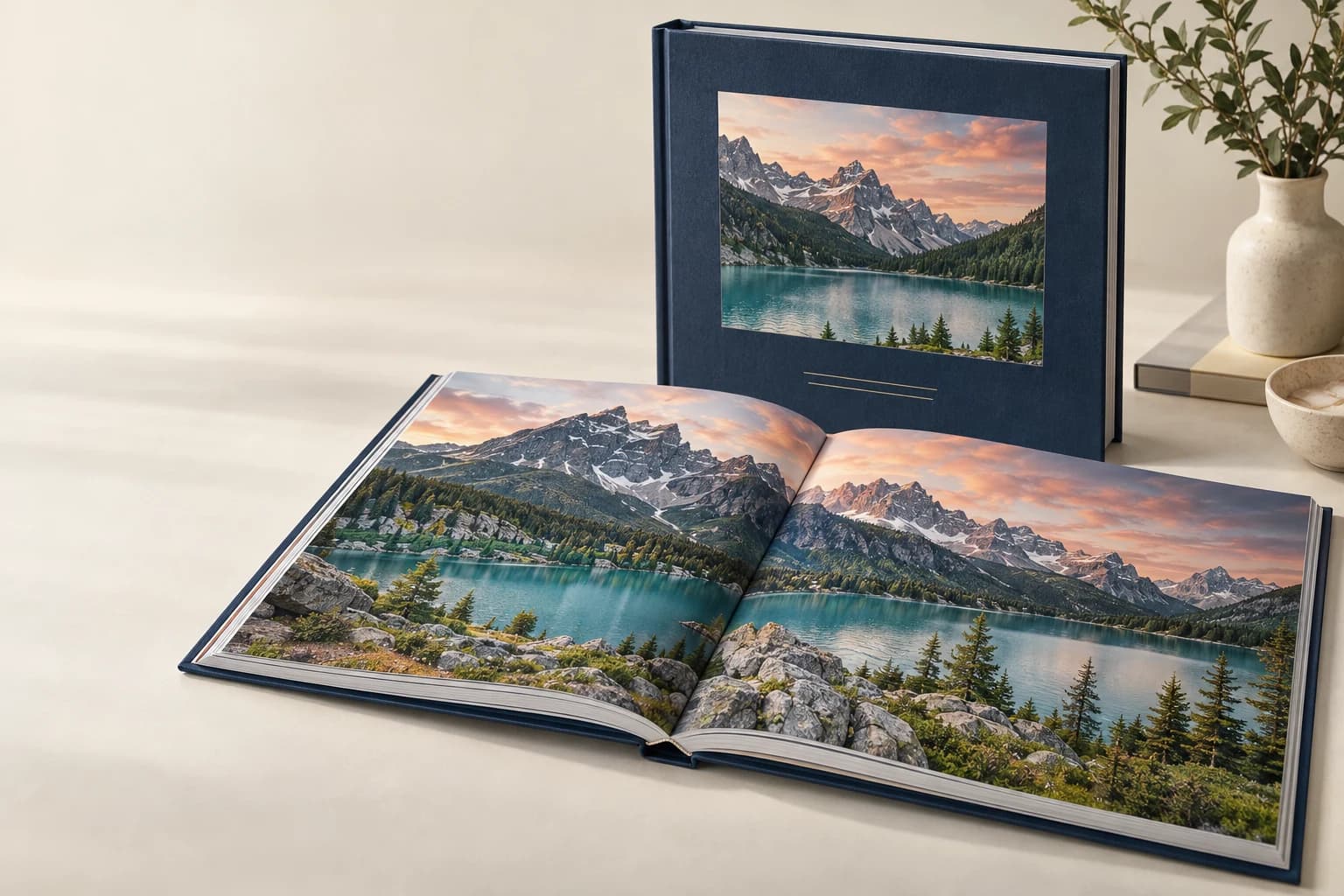
- Photographic display
Start with the intended use, finished size and quantity. The material and construction can follow.
The product in use
More viewing space with a different handling footprint
A large-format book gives photographs, maps and detailed illustrations more viewing space. Larger leaves also increase the complete book’s weight and leverage on the binding. Portrait and landscape proportions create different spread widths, support needs and reading positions.
What makes up the finished product?
- Page-block planning
- Large leaves increase leverage at the spine and need a representative bound opening check.
- Coated image paper
- A smooth coated surface supports fine image detail. Higher sheet mass increases the weight of the complete edition.
- Cover and additions
- A casebound cover can support a substantial block; very large formats need an individual production assessment.
Specifications and materials
Large-Format Book Printing specifications
Use these reference options to build the project brief. Dimensions are design examples; material availability, tooling and production timing depend on the confirmed specification.
| Parameter | Reference or option | Why it matters |
|---|---|---|
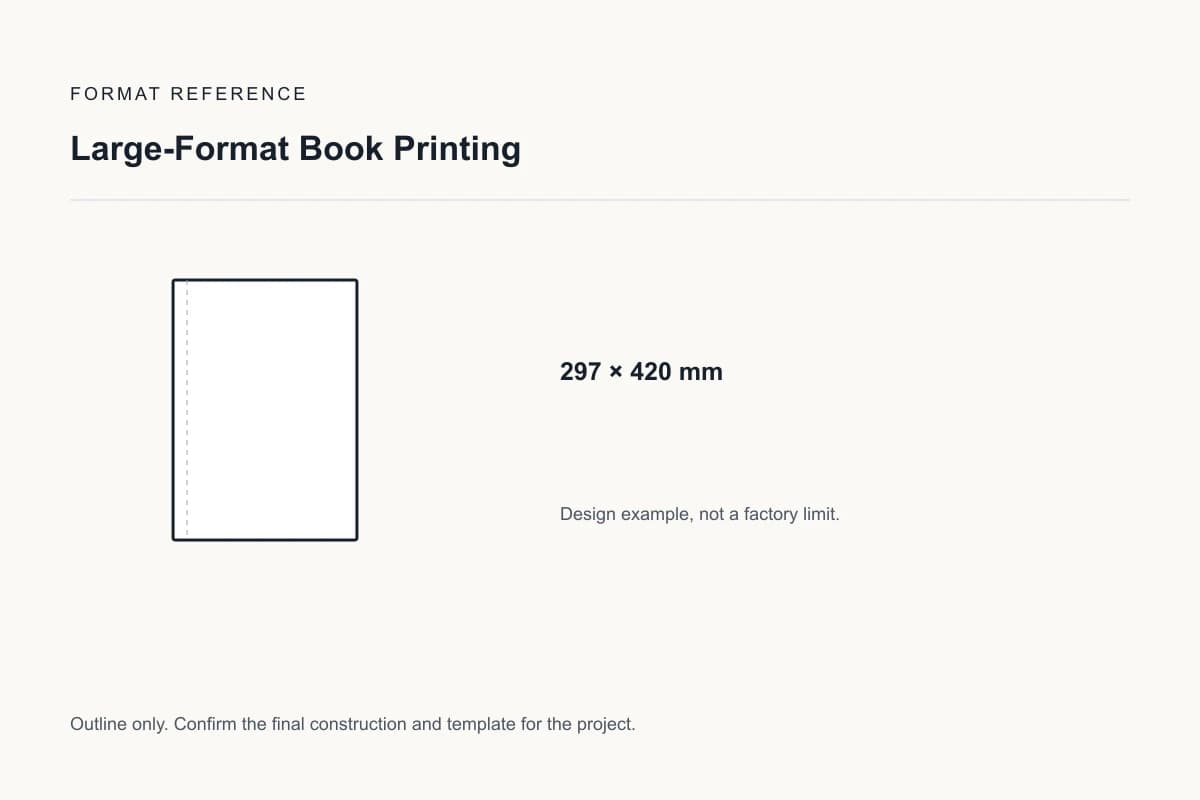
| Finished dimensions | 297 × 420 mm | An A3 design example creates a large viewing area and needs a substantial desk or display surface. Design reference, not a factory limit. |
| Page-block planning | Portrait or landscape trim; cover and board sized to the edition | Large leaves increase leverage at the spine and need a representative bound opening check. |
| Interior page count | Final reading-order PDF, including intentional blanks; covers stated separately | Page count, actual paper caliper and binding determine the page block and cover spine. |
| Binding and cover | Sewn or another specifically evaluated large-page construction | A bound sample checks page turning, the gutter, the spine and any inserted sections. |
| Material construction | Coated image paper or Uncoated image paper | Compare the actual grade and construction. Compare the lightest image, deepest shadow and neutral gray on the chosen grade. |
| Material selection | 115, 150 or 170 g/m² supplier reference grades | A smooth coated surface supports fine image detail. Higher sheet mass increases the weight of the complete edition. Compare the lightest image, deepest shadow and neutral gray on the chosen grade. |
| Format and order unit | complete books per language, artwork version and binding | List components and versions separately so quantities refer to the same finished unit. |
| Finishing choice | A casebound cover can support a substantial block; very large formats need an individual production assessment. | Approve the proposed material and process combination on an appropriate sample. |
Compare the material and its effect.
Choose the surface and construction for the way the finished product will be used. The options below are selection references, not a guaranteed inventory list.
Coated image paper
115, 150 or 170 g/m² supplier reference grades
A smooth coated surface supports fine image detail. Higher sheet mass increases the weight of the complete edition.
Sample check: Compare the lightest image, deepest shadow and neutral gray on the chosen grade.
Uncoated image paper
Woodfree uncoated; grade selected by opacity and surface
A visible paper texture changes the reproduction and reduces surface glare. The printed appearance will differ from a coated proof.
Sample check: Use the actual artwork on this surface before adopting a coated-paper color reference.
Selected sample focus — Coated image paper: Compare the lightest image, deepest shadow and neutral gray on the chosen grade.
Format & usable space
Large Book Trim, Page Support & Handling
297 × 420 mm
An A3 design example creates a large viewing area and needs a substantial desk or display surface.
This is a design reference, not a required size or a manufacturing limit.
Page-block planning
Portrait or landscape trim; cover and board sized to the edition
Large leaves increase leverage at the spine and need a representative bound opening check.
See the trim proportions.
These are publishing references, not required sizes. Compare the usable page shape before adapting an existing layout.
Selected: A3 portrait reference. Proportions only; not actual size.
Trim dimensions describe the cut page. Artwork bleed, cover overhang, tabs and modules are separate allowances.
View the original format reference
Surface finish options
Printed covers and jackets
Choose the finish for the printed cover or jacket, not automatically for the interior. Check color, rub marks, hinges and compatibility with the cover stock. Cloth and synthetic wraps need a separate material trial.
 Matte lamination View effect & artwork guidance
 Gloss lamination View effect & artwork guidance
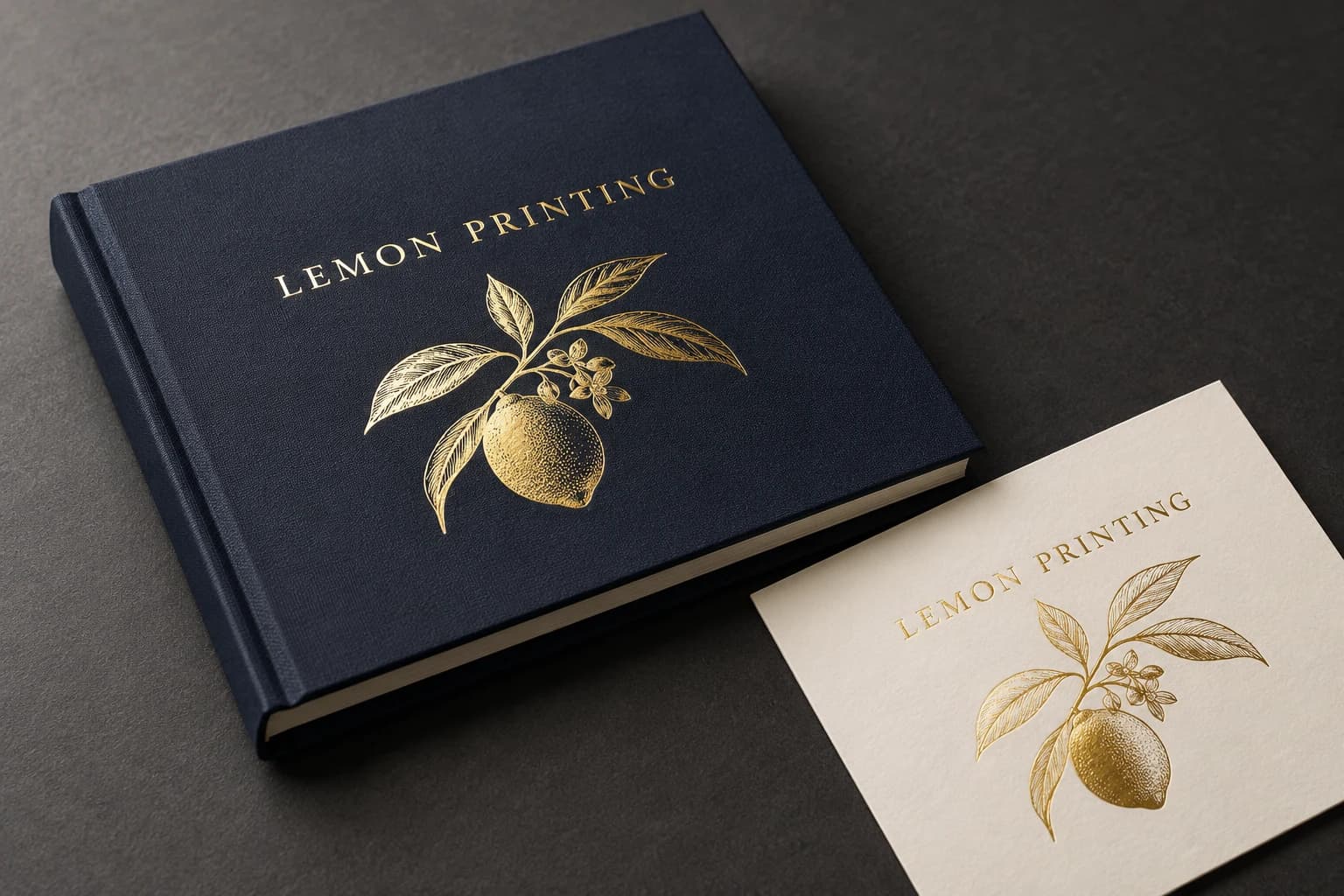 Gold foil stamping View effect & artwork guidance
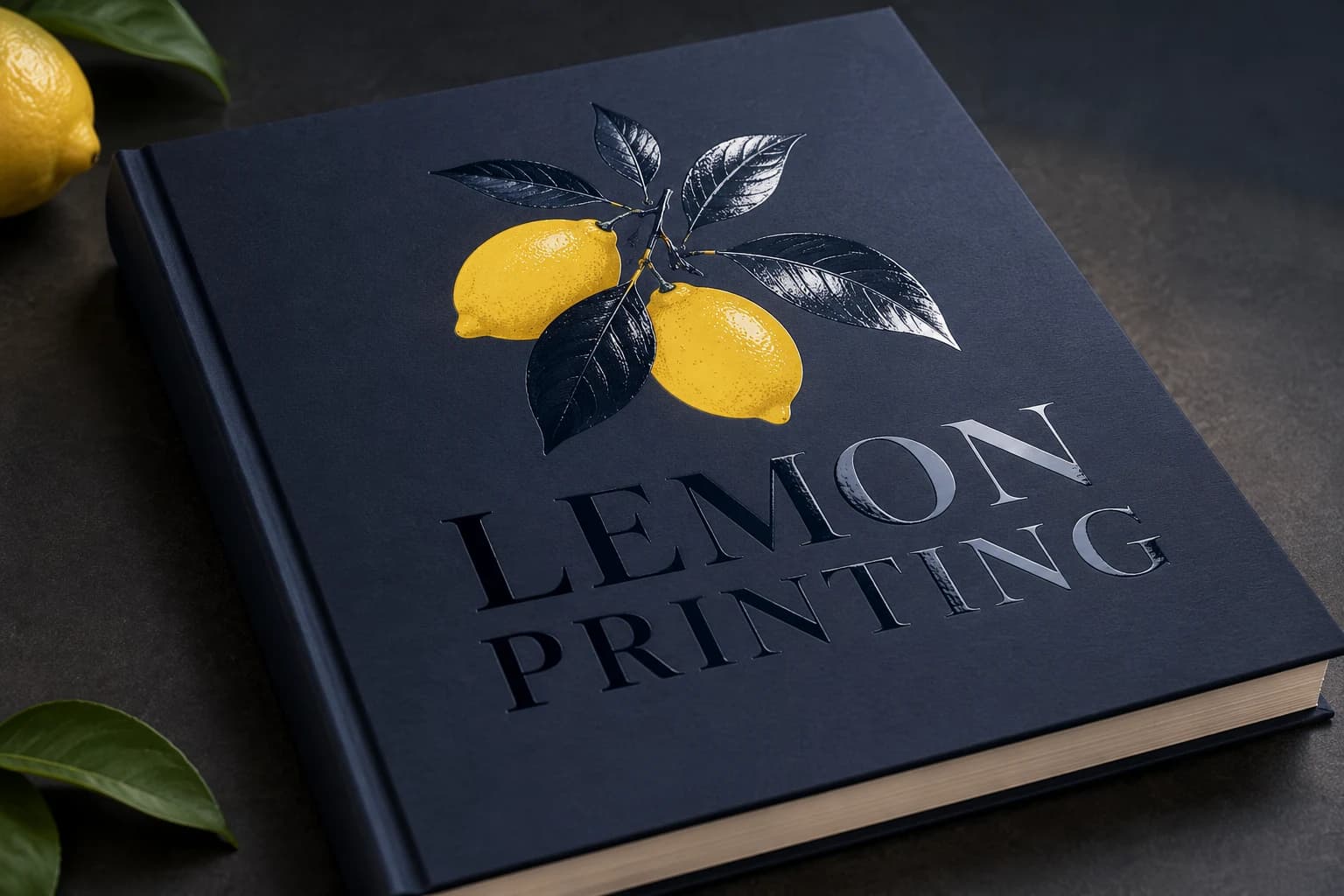 Spot UV View effect & artwork guidance
Illustrative finish samples, not photographs of this product. Final suitability follows the confirmed stock, construction and approved sample.
Compare all surface finishes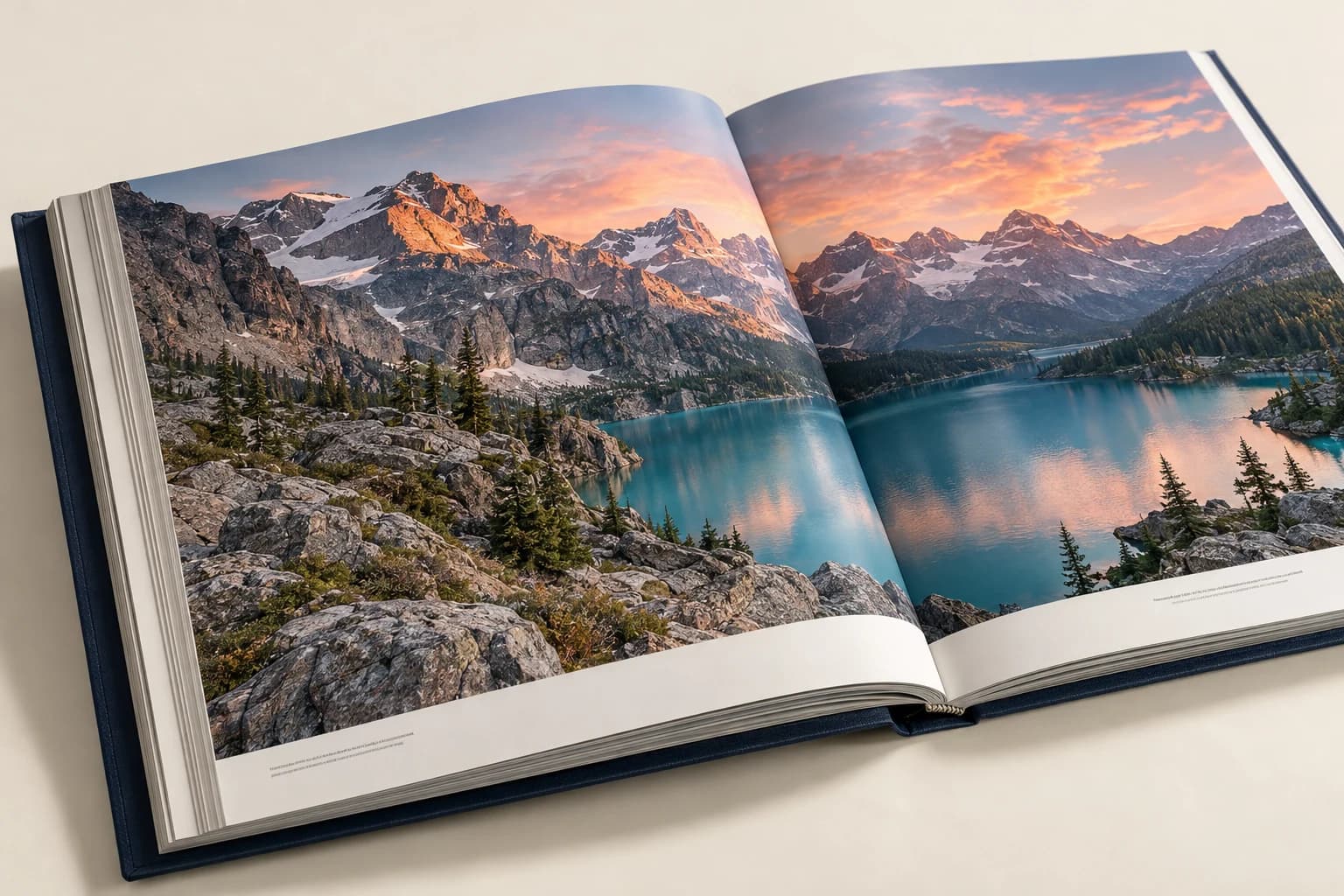
Details that change the finished product
Inspect the paper, print and bound opening
Support wide pages without losing the spread
Calculate page-block mass from paper area, leaf count and grammage, then assess the complete bound sample. Board, case and inserts add weight beyond the text block.
Page-block planning
Large leaves increase leverage at the spine and need a representative bound opening check. A bound sample checks page turning, the gutter, the spine and any inserted sections.
Surface and finishing compatibility
A casebound cover can support a substantial block; very large formats need an individual production assessment. A smooth coated surface supports fine image detail. Higher sheet mass increases the weight of the complete edition. Compare the lightest image, deepest shadow and neutral gray on the chosen grade.
Large Photographic Books & Map References
Photographic display
A wider trim can preserve panoramic images; verify the bound opening and viewing setting.
Map or technical reference
Test fine labels and diagrams at final size before deciding whether folds are needed.
Solve the risk before production
Check Large-Leaf Support & Hinge Strain
The critical finished-product check
Large leaves can strain the hinge when the book is lifted by an open cover. Review support, board stiffness and opening on an actual-size bound dummy.
Page images become soft
Why it happens: A smaller original is enlarged without enough effective image resolution.
Fix and check: Evaluate the placed image at final dimensions and replace or rebuild undersized artwork.
When to choose another format
Large Books, Display Editions & Lay-Flat Formats
| Alternative | Use and trade-off |
|---|---|
| Coffee Table Book Printing | A display book can offer a smaller handling footprint while retaining an image-led presentation. |
| Lay-Flat Book Printing | A different opening construction can improve a panorama without increasing trim size. |
Sample and approval
Test the Large Book at Its Actual Size
Free samples are available, with preparation completed within 15 days. Confirm the sample scope; courier arrangements and transit time are separate.
Structural sample
Checks dimensions, fit and assembly using unprinted or representative materials. It does not establish final color.
Printed proof
Checks text, image reproduction and artwork on the agreed proof medium. It may not reproduce final assembly or every finish.
Complete finished sample
A bound sample checks page turning, the gutter, the spine and any inserted sections.
From brief to delivery
Order Details for Large-Format Book Printing
Build and approve the order in five steps
Send the project brief
Send finished trim, full page count, proposed paper and how the book will be displayed. Include finished dimensions, quantity by version, destination and required arrival date. If a configuration is undecided, describe the intended use.
Compare the quoted configuration
Compare the same quantity basis: complete books per language, artwork version and binding. Check that the quote identifies materials, finishing, included components, sample scope, packing and freight.
Approve the appropriate sample
A bound sample checks page turning, the gutter, the spine and any inserted sections. A print proof checks artwork and color; a complete finished sample also checks assembly. Record what the selected sample does and does not reproduce.
Confirm files and release production
Approve the final artwork revision and the page-block planning specification. Record the agreed quantity, payment conditions, packing and production schedule in the order.
Confirm packing and dispatch
State books per carton, edition labels and any slipcases or individual wrapping. Confirm production completion and transit as separate dates, using the delivery destination and required arrival date.
- Supply the complete reading-order interior PDF, including intentional blank pages. Supply a separate cover file built from the approved spine, hinge or punched-edge template. Case-wrap turn-ins, hinge areas and binding clearance are separate from trim bleed; keep essential content outside all of them. Supply finish masks as named separations.
- Extend edge-to-edge trim artwork by 3 mm unless the approved template specifies a different bleed. Use approximately 300 effective ppi for continuous-tone images at their placed size; keep fine linework as vectors where possible.
Project questions
Planning Large-Format Book Printing
Does a large trim guarantee better image detail?
No. The source image must contain enough detail for the intended reproduction size. Review a crop at final printed scale and identify any images that need to appear smaller within the page rather than being enlarged to fill it.
How should I specify quantities and versions?
Count complete books per language, artwork version and binding. State finished trim, full page count, proposed paper and how the book will be displayed; components, language versions and different structures must be listed separately.
What determines the minimum quantity and delivery schedule?
The selected stock, construction, finishing, version count and sample scope determine production planning. Request quantity breaks for the same configuration and an arrival-date plan that separates sampling, manufacturing and transit. No minimum or lead time is implied by the design examples above.
Specify the finished product.
Send finished trim, full page count, proposed paper and how the book will be displayed. Include finished dimensions, quantity by version, destination and required arrival date.