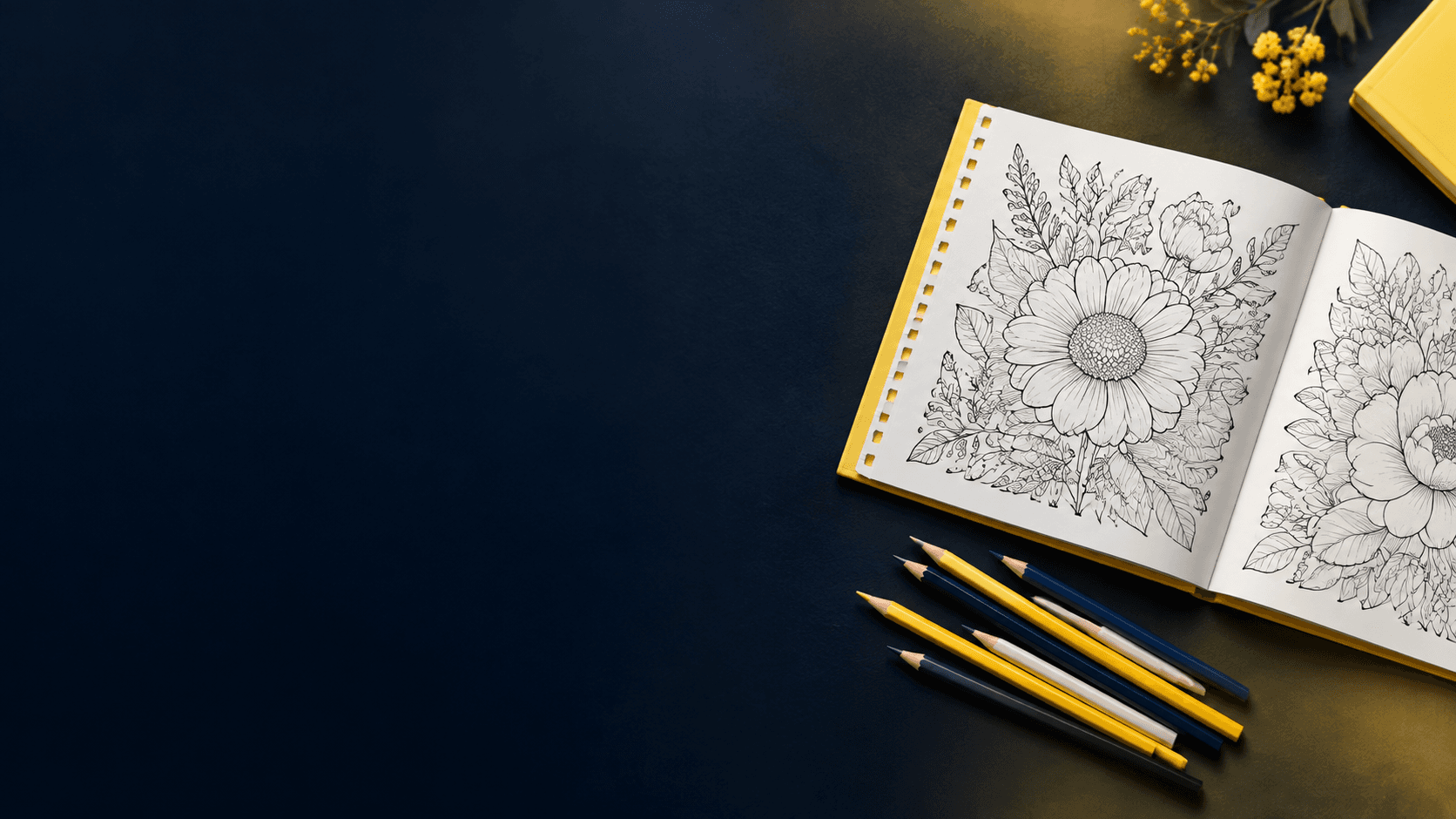
Clear outlines on a surface matched to coloring tools
Custom Coloring Book Printing
Give pencils, crayons or selected pens a usable surface with clear printed outlines. Choose the actual paper through tool testing, then decide whether the artwork should be single-sided and how the book should open.
- Pencil and ink use evaluated separately
- Single-sided artwork and blank reverses
- Binding and tear-out planning
The product in use
Match the page to the coloring tool.
A coloring book is a working surface as well as a printed publication. Paper tooth helps pencils grip; surface treatment controls how liquid ink spreads and penetrates. GSM describes weight, not marker resistance. Single-sided artwork avoids placing another drawing directly behind a colored area, while a bound or coil format changes access to the inner edge. Line quality, erasing and the intended tools should be evaluated together.
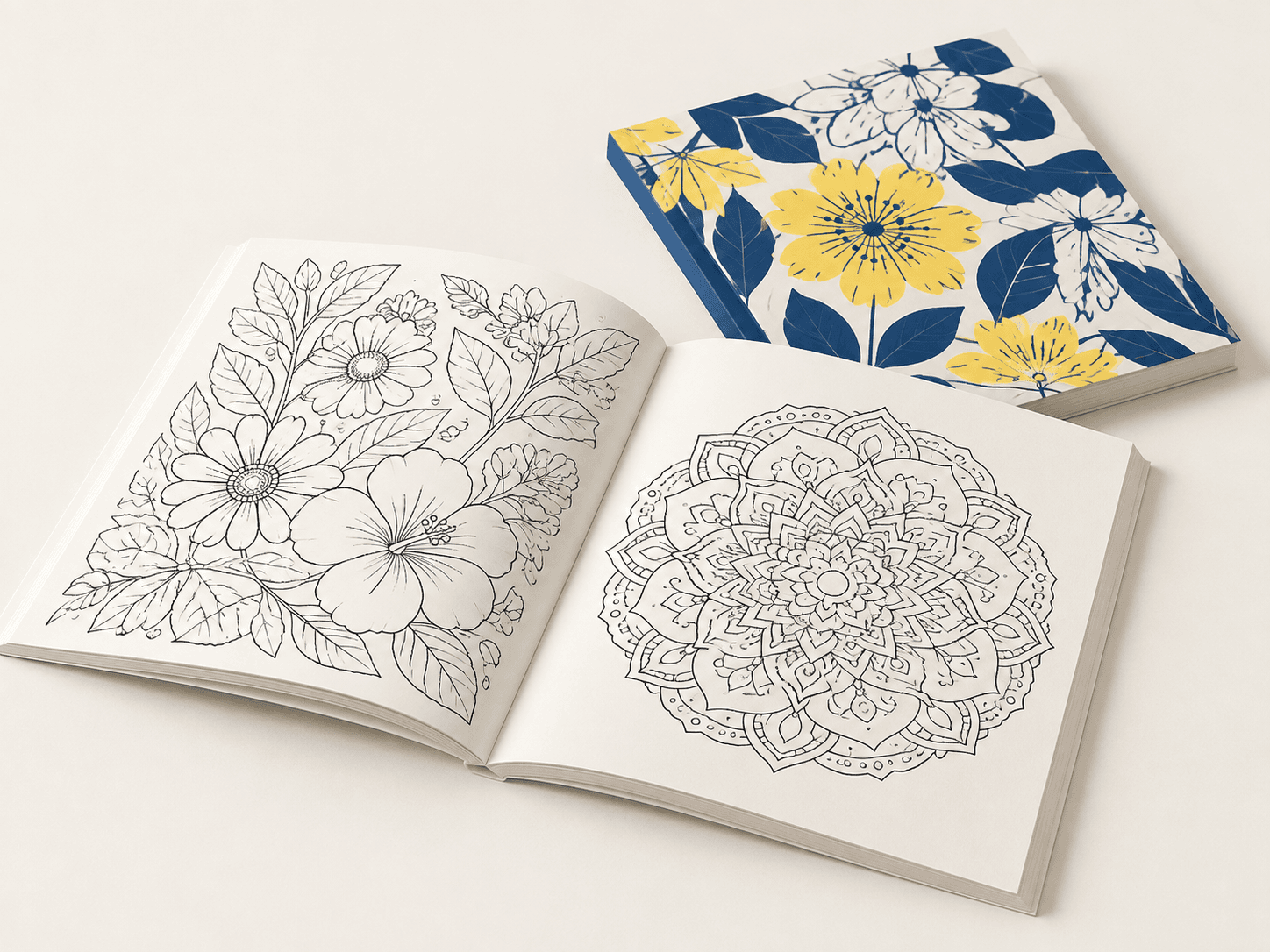
A coloring page is a working surface.
- 01Outline artwork
- Fine enclosed shapes need readable scale and clean black lines. Avoid screened or low-resolution outlines that become distracting at print size.
- 02Paper surface
- Tooth helps pencil grip while sizing and barrier properties influence liquid ink. GSM does not establish marker performance.
- 03Reverse and removal plan
- Single-sided drawings protect the reverse artwork, but ink may still reach the next sheet. Perforation changes the tear and usable area.
Specifications & materials
Compare the options and what they change.
Numeric dimensions and paper weights are selection references, not guaranteed Lemon production limits or a stocked-material list. The quoted specification identifies the available grade and construction.
| Engineering spec | Reference or option | Selection effect |
|---|---|---|
| Finished dimensions | 8.5 × 11 in (215.9 × 279.4 mm); 8 × 10 in (203.2 × 254 mm) | Interior trim references, not manufacturing limits. Room for detailed drawings and hand movement. Compact illustrated format; check fine enclosed areas at actual size. |
| Format and component count | Complete book: interior, cover and separately identified components | Send trim, number of drawings and total faces including blanks, quantity, tools, binding, stock preference and any perforation. Include destination. |
| Paper | 100 or 120gsm uncoated references for pencil/crayon trials | These weights are not an alcohol-marker guarantee. |
| Artwork sides | Single-sided drawings with blank backs or double-sided artwork | A blank reverse preserves another drawing but does not stop ink penetration. |
| Binding | Paperback, saddle stitch or continuous coil | Compare access to the inner drawing edge and whether pages need fold-back use. |
| Tool compatibility | Pencil, crayon, water-based or alcohol-based tool identified in the brief | Specialist marker stock relies on surface/barrier design, not simply more GSM. |
| Outline reproduction | Vector or suitable high-resolution black linework; actual-size detail proof | Check fine enclosed areas and line continuity; a resolution label alone does not prove clean outlines. |
| Blank-face accounting | 20 drawings × 2 faces = 40 interior pages in a single-sided example | Exclude additional content and specify cover counting separately; blank reverses do not guarantee ink isolation. |
Pencil and crayon trial
100/120gsm uncoated references with a usable surface texture.
Color and erase on the actual grade; inspect damage and line visibility.
Marker-oriented project
A separately tested specialist surface rather than a heavier generic sheet.
Canson’s purpose-designed 70gsm marker paper shows why paper treatment matters; it is not a Lemon stock promise.
General uncoated paper and purpose-designed marker paper have different surface behavior. Choose by the specified tools and test conditions; a high GSM description should not substitute for a coloring trial.
A decision for this product
Use a pen test, not a “thick paper” claim.
Apply → dry → inspect both sides
Try the intended pencil or pen with normal strokes and dense filled areas. Look for feathering, penetration and surface damage after drying.
Selection illustration · not a production template or test result
Selected direction
Uncoated paper with appropriate tooth
Pencil or crayon · Uncoated paper with appropriate tooth
Check layering and erasing without damaging the printed outline.
Liquid-ink tools · Purpose-selected, tested stock
Surface and barrier behavior matter; no universal bleed-proof claim.
Single-sided drawings · Blank reverse faces included
Protects content placement, while ink may still reach the next sheet.
See the trim proportions.
These are publishing references, not required sizes. Compare the usable page shape before adapting an existing layout.
Selected: 8.5 × 11 in. Proportions only; not actual size.
Trim dimensions describe the cut page. Artwork bleed, cover overhang, tabs and modules are separate allowances.
Surface finish options
Cover protection; writable interiors
Compare film finishes for the cover while keeping writing, coloring and activity areas free of added coating. Test the intended pen or pencil on the interior stock; a laminated cover does not make the whole book waterproof.
 No added surface treatment View effect & artwork guidance
 Matte lamination View effect & artwork guidance
 Gloss lamination View effect & artwork guidance
Illustrative finish samples, not photographs of this product. Final suitability follows the confirmed stock, construction and approved sample.
Compare all surface finishesHow it is made
Construction decisions with a practical effect.
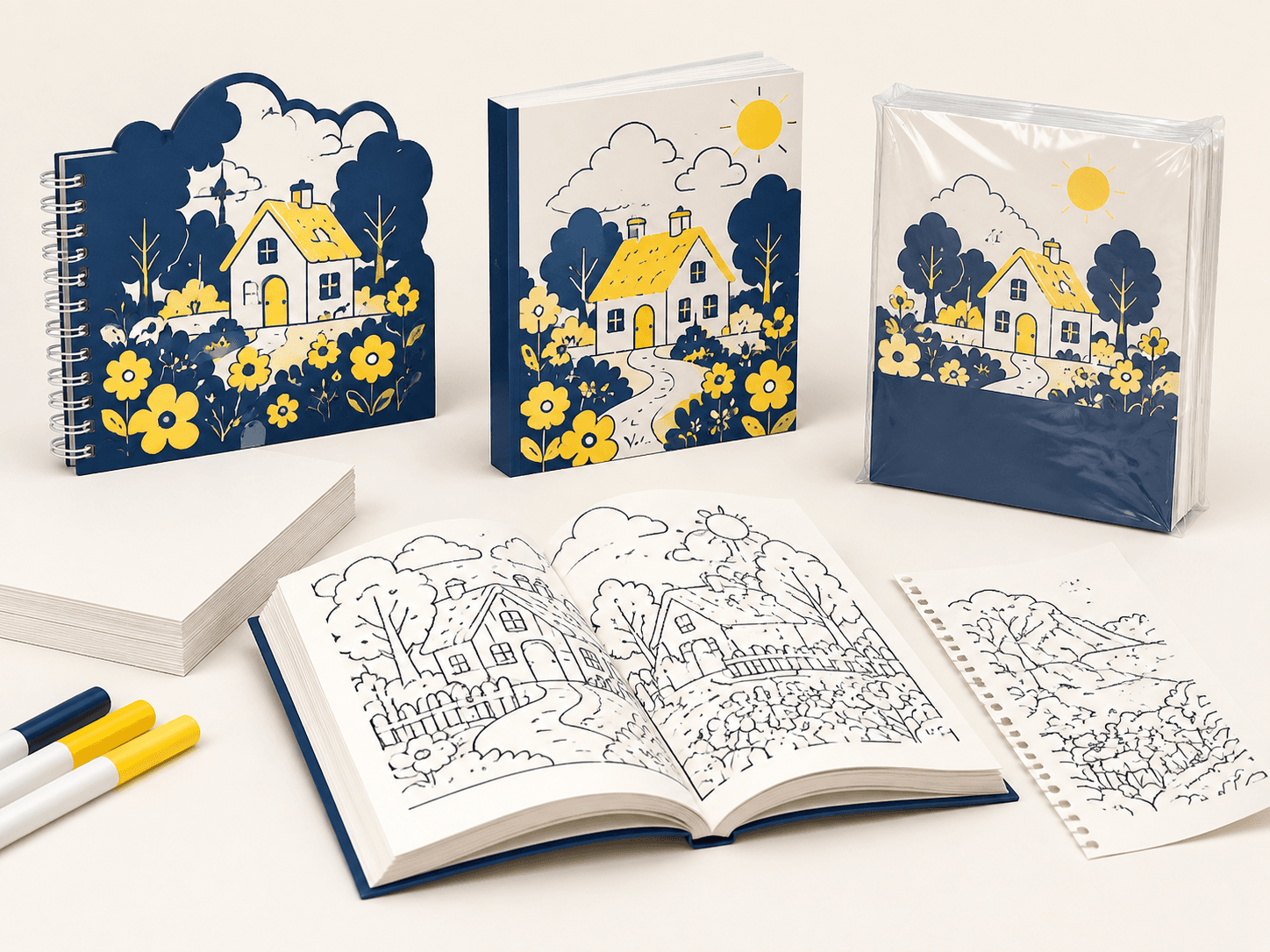
Clean outline reproduction
Fine outlines must survive the final scale and print separation. Preserve vector artwork where possible and test small spaces; overly dense lines leave less usable coloring area.
Single-sided and removable pages
A blank back is part of pagination. Perforated removal, if specified, needs a separate tear line clear of the binding; verify a finished tear test rather than assuming any binding gives easy removal.
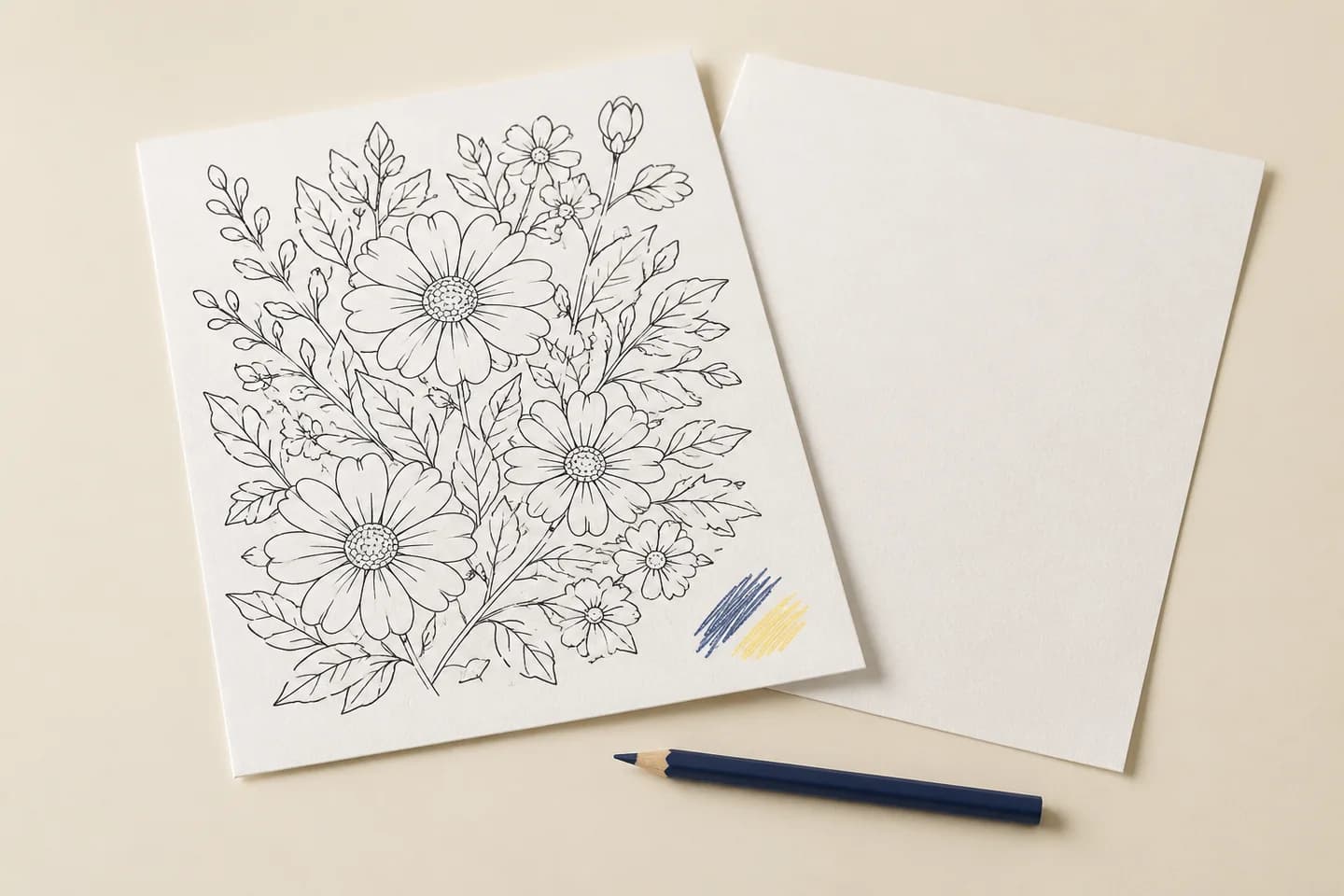
Details that change the finished book
Specify the tool, the reverse face and the removal method.
Pencils, crayons and liquid-ink tools load paper differently. Test the intended tool and decide whether each drawing stays in the book or can be removed.
Use representative marks
Try normal strokes, overlapping color and dense areas. Inspect edge feathering, reverse penetration and surface damage after drying.
Count intentional blank faces
A blank reverse remains a page face. Twenty single-sided drawings with a blank reverse create forty interior faces before other content and cover accounting.
Separate tear-out geometry
A perforation needs a defined position and a retained binding area. Check tear cleanliness and whether the remaining strip exposes the next page.
Match the specification to the project
Coloring Book configurations in use.
Pencil-led coloring
Uncoated tooth · clean black outlines
Assess layering and erasing on the printed surface, including the smallest enclosed shapes.
Selected liquid-ink tools
Purpose-selected stock · blank reverses · tool trial
Treat penetration and drying as tests of the actual grade. Do not promise universal marker resistance.
Display or sharing pages
Tear-out construction · protected drawing area
The drawing needs room beyond the removal line. Sample the tear path and retained binding strip.
Solve the risk before production
What can go wrong, and how to check it.
Ink penetrates to the next drawing
Cause: The tool deposits more liquid than the paper surface can retain.
Fix and check: Test the intended pen, use suitable stock and consider single-sided artwork plus an interleaving sheet during use.
The inner edge is hard to color
Cause: The image is too close to a resistant binding.
Fix and check: Increase the working gutter or choose a fold-back construction, then trial the full drawing in a bound sample.
A removed drawing loses part of the artwork
Cause: The design was centered on trim size instead of the usable area beyond the perforation and binding strip.
Fix and check: Overlay the removal template, reposition the artwork and test a bound tear-out sample.
When to choose another format
Coloring Book or another format?
| Alternative | Structure | Use and trade-off |
|---|---|---|
| Activity book | Mixed exercises and puzzles | May combine writing, stickers and coloring with different surfaces. |
| Workbook | Structured questions and answers | Prioritizes handwriting space and curriculum sequence rather than coloring media. |
Samples & order planning
Test the physical question before the bulk run.
A sample for the actual product
A printed trial sheet and bound sample should be colored with the intended tools. Inspect drying, both sides, erasing and inner-edge access.
Linework and tool proof
Check fine outlines, coloring response and both sides of the intended printed stock.
Bound or tear-out sample
Review usable drawing area, opening and the intended removal path with the complete binding.
Order Details for Coloring Book Printing
Quantity and quotation
Quote complete finished books per title or version. Send trim, number of drawings and total faces including blanks, quantity, tools, binding, stock preference and any perforation. Include destination.
Sample scope and schedule
Free samples are available, with preparation completed within 15 days. Confirm which materials, finishes and construction the sample represents. Courier arrangements and transit time are separate. The quotation records bulk production timing and the minimum quantity for your configuration.
Packing and delivery
Keep working pages dry and flat. Protect any perforated edges and cover corners; include sheet count and chosen binding in carton-weight planning.
- 01
Supply sharp outlines at final size, preferably vector where suitable.
- 02
Include every intentional blank reverse in reading order.
- 03
Keep coloring areas clear of trim, binding and any perforation.
- 04
Identify the intended tools and preserve print-ready line-art resolution.
Configuration details
Match the page to the coloring tool.
A coloring sheet intended for crayons does not automatically suit wet markers. Coating, absorption and reverse print determine whether the activity stays usable. If marker bleed-through is acceptable only onto a blank reverse, that decision needs to be reflected in the artwork sequence.
- Tool test
Crayon, colored pencil or the specified marker
Test filling, rubbing and reverse bleed on the proposed paper; GSM alone cannot establish compatibility.
- Printing sides
One-sided artwork or duplex activities
Count blank reverse faces in the pagination and check whether artwork on the next leaf can be marked during use.
Explore the relevant formats
Product questions
Details worth settling before ordering.
Will 120gsm paper stop alcohol markers?
Not necessarily. Marker compatibility depends on surface treatment and the tool. Test the actual stock and do not infer resistance from weight.
Does single-sided mean one printed page per leaf?
For the interior drawings, yes: a drawing can occupy one face with the reverse blank. Include every blank face in the file and page count.
Can drawings be removed?
A removable design needs a defined perforation or another release construction. Check the tear path and remaining binding strength on a finished sample.
Does a blank reverse make a book marker-proof?
No. It avoids placing another drawing on that reverse, but ink can still pass through to the next sheet. Test the intended tool and decide whether a protective interleaf is part of the use instructions or product configuration.
Can the pages be both perforated and coil-bound?
They can form a proposed construction when the punch row, retained strip and tear line leave sufficient material. Establish the usable drawing area from the complete template and approve a bound tear-out sample.
Your coloring book project
Send a brief that can become a specification.
Send trim, number of drawings and total faces including blanks, quantity, tools, binding, stock preference and any perforation. Include destination.
Related formats & guidance