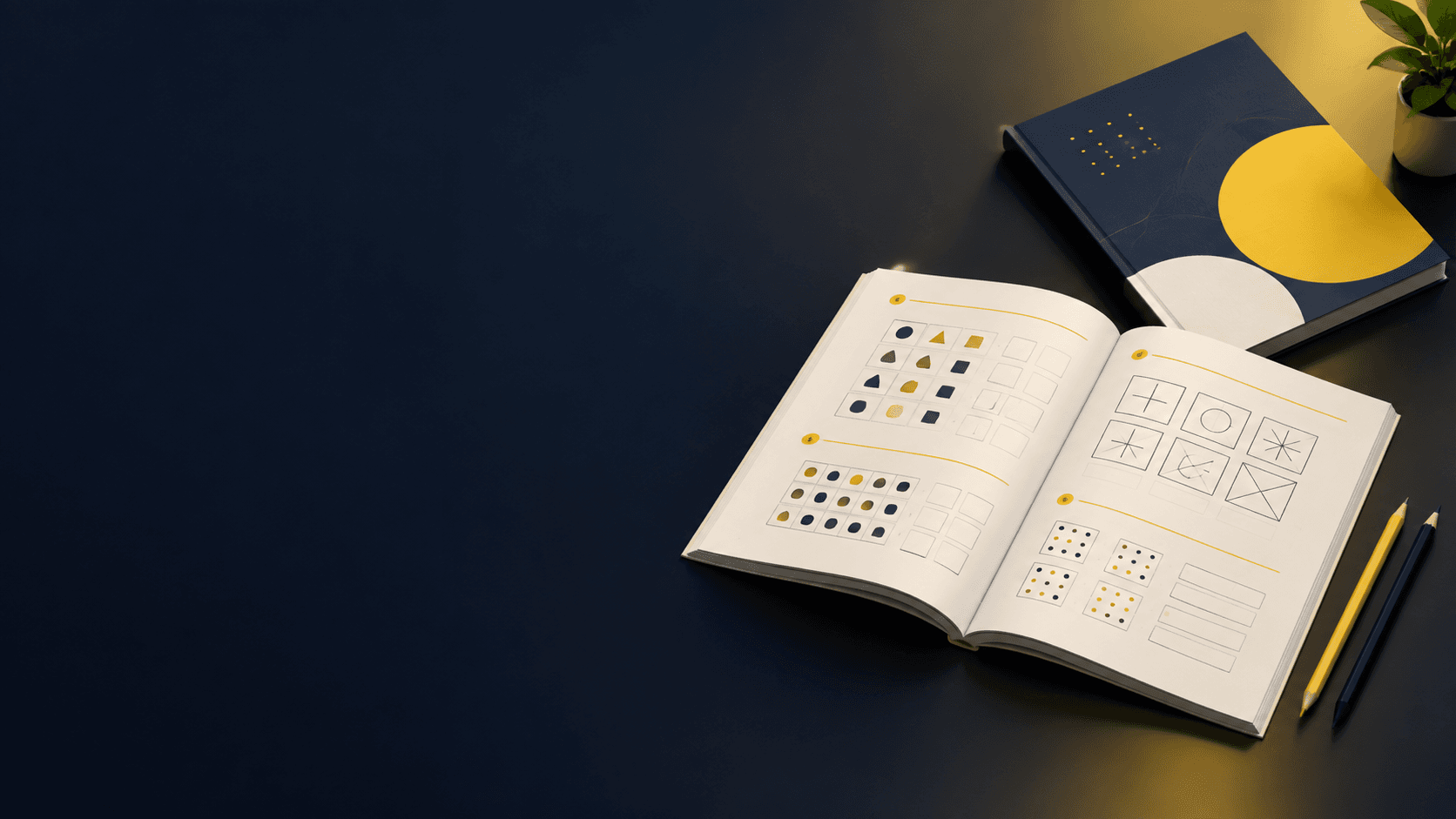
Exercises with usable response space and working-page access
Custom Workbook Printing
Make course exercises easy to complete with writable pages, readable diagrams and enough answer space. Choose binding for the way learners work, then organize editions and solution pages.
- Answer-area and diagram planning
- Writable stock and binding access
- Learner/instructor edition control
The product in use
Make room for the answer, not just the question.
A workbook guides a reader through actions rather than continuous prose. Response areas, ruling and diagram labels must remain usable at the final trim. Coil or twin-loop formats help keep a task open; a bound spine makes a course volume easier to identify on a shelf. Paper opacity matters when answers or dense exercises appear on the reverse. Learner and instructor versions need coordinated content but separate approval.
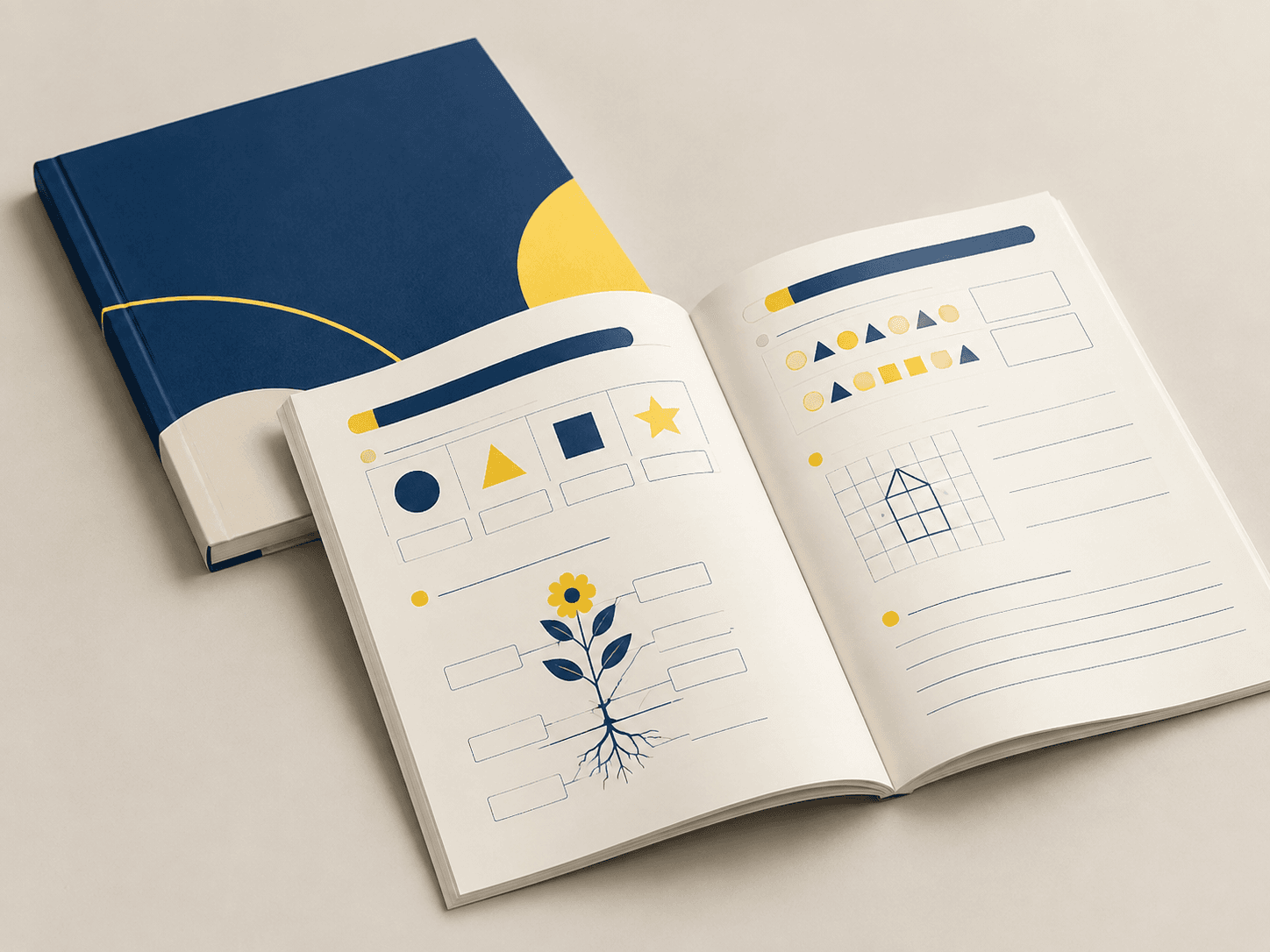
Response space is part of the physical specification.
- 01Prompt and diagram
- Instructions must remain legible at the finished trim. Long questions and diagrams can reduce the space left for responses.
- 02Writing field
- Rule spacing, boxes or blank areas should suit the expected answer. Check the longest response rather than only a short sample.
- 03Binding edge
- A punched strip or bound gutter consumes usable page area. The reader must reach the response field without forcing the book open.
Specifications & materials
Compare the options and what they change.
Numeric dimensions and paper weights are selection references, not guaranteed Lemon production limits or a stocked-material list. The quoted specification identifies the available grade and construction.
| Engineering spec | Reference or option | Selection effect |
|---|---|---|
| Finished dimensions | 8.5 × 11 in (215.9 × 279.4 mm); 6 × 9 in (152.4 × 228.6 mm) | Interior trim references, not manufacturing limits. Course exercises with larger response areas. Portable training workbook; simplify diagrams and writing demands. |
| Format and component count | Complete book: interior, cover and separately identified components | Send course version, trim, total pages, quantity per edition, intended writing tools, binding, paper and destination. Include the longest exercise. |
| Working stock | 80, 100 or 120gsm uncoated references | Select for pen behavior, opacity and the complete course weight. |
| Binding | Coil/twin-loop for open working pages; adhesive for shelf identification | Punch clearance and binding gutters reduce the usable page differently. |
| Course editions | Learner, instructor, language and revision identifiers | List quantities by version and keep solution pagination coordinated. |
| Response layout | Ruled, boxed, table or blank areas matched to expected answers | Use actual-size response trials; any demonstrated spacing is a layout example rather than a printing tolerance. |
| Edition mapping | Prompt ID, learner/instructor version and solution reference | Check dependent answers and cross-references after content revisions. |
Everyday response pages
80/100gsm uncoated references for short answers and course portability.
Test ordinary pens and heavy reverse-side content.
Substantial working pages
120gsm uncoated reference for extensive annotation or repeated use.
Check erasing and book bulk before increasing weight across the whole course.
Opacity matters when dense diagrams sit on the reverse of answer pages. Compare two-sided writing trials and overall book bulk; adding heavier stock can reduce portability without solving a poorly placed response field.
A decision for this product
Try the longest answer on the final page.
Prompt → response area → usable binding edge
A reduced proof can hide crowded line spacing and small diagrams. Test with the intended pen on a full-size, bound working page.
Selection illustration · not a production template or test result
Selected direction
Coil with writable interior
Desk-based course · Coil with writable interior
Supports hands-free completion; include hole clearance.
Portable course volume · Flexible cover and bound spine
Stores neatly; preserve a generous working gutter.
Instructor version · Separate notes or solution section
Control revision and carton identification independently.
See the trim proportions.
These are publishing references, not required sizes. Compare the usable page shape before adapting an existing layout.
Selected: 8.5 × 11 in. Proportions only; not actual size.
Trim dimensions describe the cut page. Artwork bleed, cover overhang, tabs and modules are separate allowances.
Surface finish options
Cover protection; writable interiors
Compare film finishes for the cover while keeping writing, coloring and activity areas free of added coating. Test the intended pen or pencil on the interior stock; a laminated cover does not make the whole book waterproof.
 No added surface treatment View effect & artwork guidance
 Matte lamination View effect & artwork guidance
 Gloss lamination View effect & artwork guidance
Illustrative finish samples, not photographs of this product. Final suitability follows the confirmed stock, construction and approved sample.
Compare all surface finishesHow it is made
Construction decisions with a practical effect.
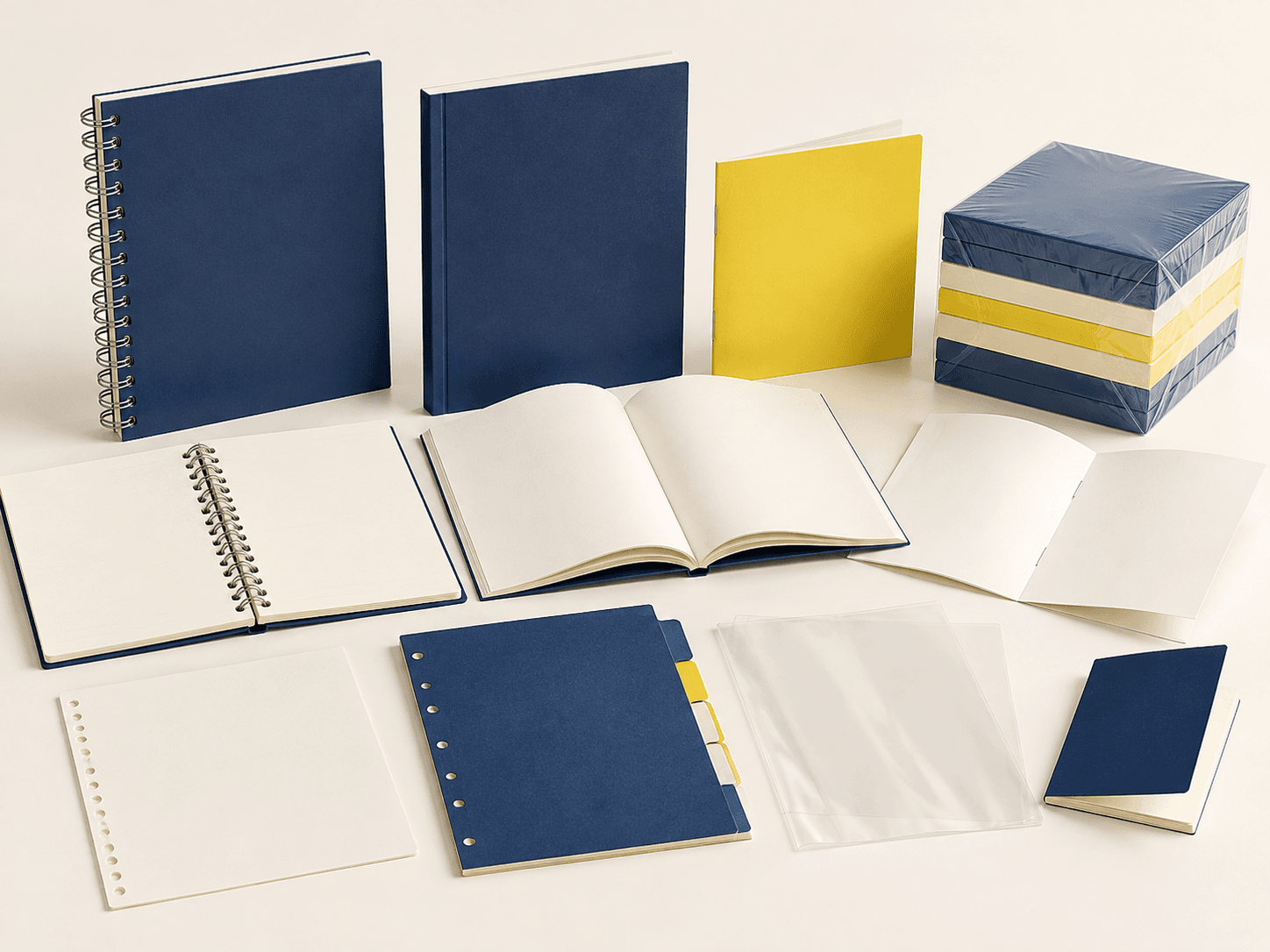
Writing layout and binding edge
The response area should remain accessible near the binding. Punch holes and a bound gutter need different clearances; test the longest response on a complete dummy.
Course-version collation
Instructor notes, solutions and learner pages can look nearly identical. Controlled version IDs and a page map prevent mixed assemblies and incorrect answer references.
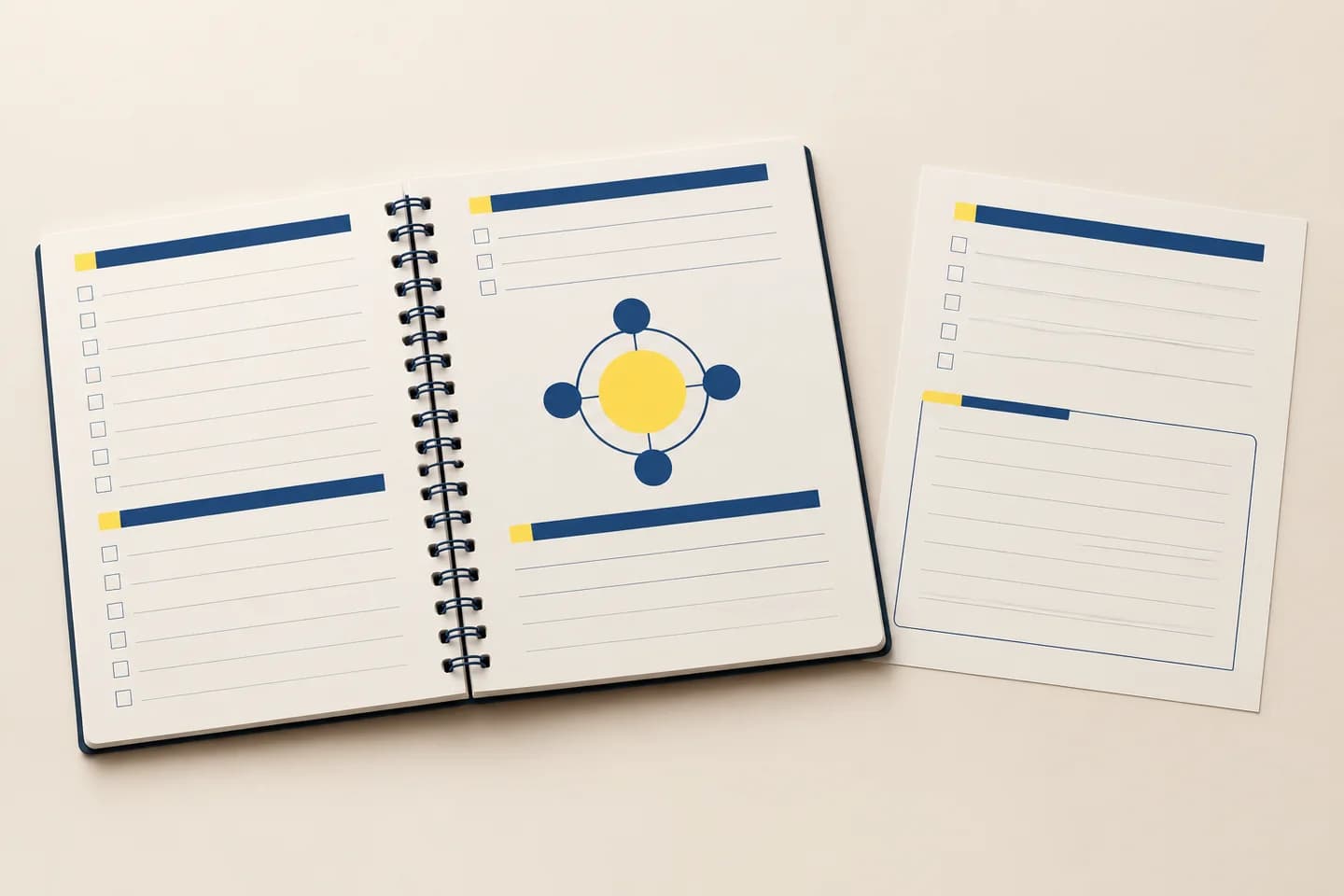
Details that change the finished book
Test the exercise on the final page geometry.
A workbook is a tool for completing tasks. Layout, writing surface and opening should be assessed together with the expected response and learner setting.
Map each exercise to its response
Classify answers as short text, long writing, tables or drawings. Reserve the correct space before adding decorative artwork.
Work through an actual-size spread
Try the longest response on a full-scale printed page. A reduced screen proof can hide crowded rules and small labels.
Keep edition logic controlled
Identify learner, instructor and answer-key versions. A changed prompt can affect solutions and cross-references even when pagination remains unchanged.
Match the specification to the project
Workbook configurations in use.
Desk-based course
Coil · writable stock · generous answer areas
Open-page access helps completion. Keep working fields clear of the punch strip.
Portable training volume
Flexible bound cover · controlled gutter
A compact edition is easier to carry, but long responses may need more pages or a different layout.
Instructor edition
Separate notes/solutions · version-linked exercises
The same page map may support both editions, while answer content and edition identity remain independently approved.
Solve the risk before production
What can go wrong, and how to check it.
Answers show through a task page
Cause: The reverse carries dense solutions and paper opacity is insufficient.
Fix and check: Proof the busiest two-sided pair or move the answer section elsewhere.
Students cannot use the inner answer space
Cause: The layout ignores the binding clearance.
Fix and check: Complete the task on a bound sample and move lines outside the hole or gutter zone.
Learners cannot comfortably write near the center
Cause: The response box ignores the bound gutter or punch zone.
Fix and check: Reposition the response field and complete the exercise on a bound sample, including early and late pages where opening may differ.
When to choose another format
Workbook or another format?
Samples & order planning
Test the physical question before the bulk run.
A sample for the actual product
Use a printed working spread for a completion test and a complete bound dummy for writing access, weight and page order.
Actual-size exercise proof
Complete a long response and inspect small diagram labels with the intended writing tool.
Bound working sample
Check response access, opening and edition identity on the complete page sequence.
Order Details for Workbook Printing
Quantity and quotation
Quote complete finished books per title or version. Send course version, trim, total pages, quantity per edition, intended writing tools, binding, paper and destination. Include the longest exercise.
Sample scope and schedule
Free samples are available, with preparation completed within 15 days. Confirm which materials, finishes and construction the sample represents. Courier arrangements and transit time are separate. The quotation records bulk production timing and the minimum quantity for your configuration.
Packing and delivery
Separate learner and instructor cartons with clear revision labels. Protect exposed coils and tabs so the books remain usable on arrival.
- 01
Identify learner/instructor, course revision and language in each file.
- 02
Check answer references and intentional working blanks.
- 03
Keep response lines clear of binding and preserve vector diagrams.
- 04
Use 300ppi raster images, embedded fonts and the job bleed.
Product questions
Details worth settling before ordering.
Can learner and instructor books share a print file?
Only when the content is identical. Notes and solutions normally require separately named, approved versions with their own quantities.
Will a laminated cover make pages erasable?
No. The interior surface is a separate material decision. Reusable writing requires a selected surface and tool test.
Should response pages be double-sided?
They can be, but test reverse-side distraction and the intended pen. Dense solutions may need another position or stock.
Should the entire workbook use coated paper?
Not by default. Coated sheets can suit image-heavy areas, but the main working pages need the intended pen or pencil to behave well. Check writing, drying and erasing on the actual printed grade.
Can an instructor version share the learner layout?
It can share the structure, but added answers may alter spacing and pagination. Link prompts and solutions by stable IDs and approve each complete version rather than assuming an answer layer will fit every page.
Your workbook project
Send a brief that can become a specification.
Send course version, trim, total pages, quantity per edition, intended writing tools, binding, paper and destination. Include the longest exercise.
Related formats & guidance