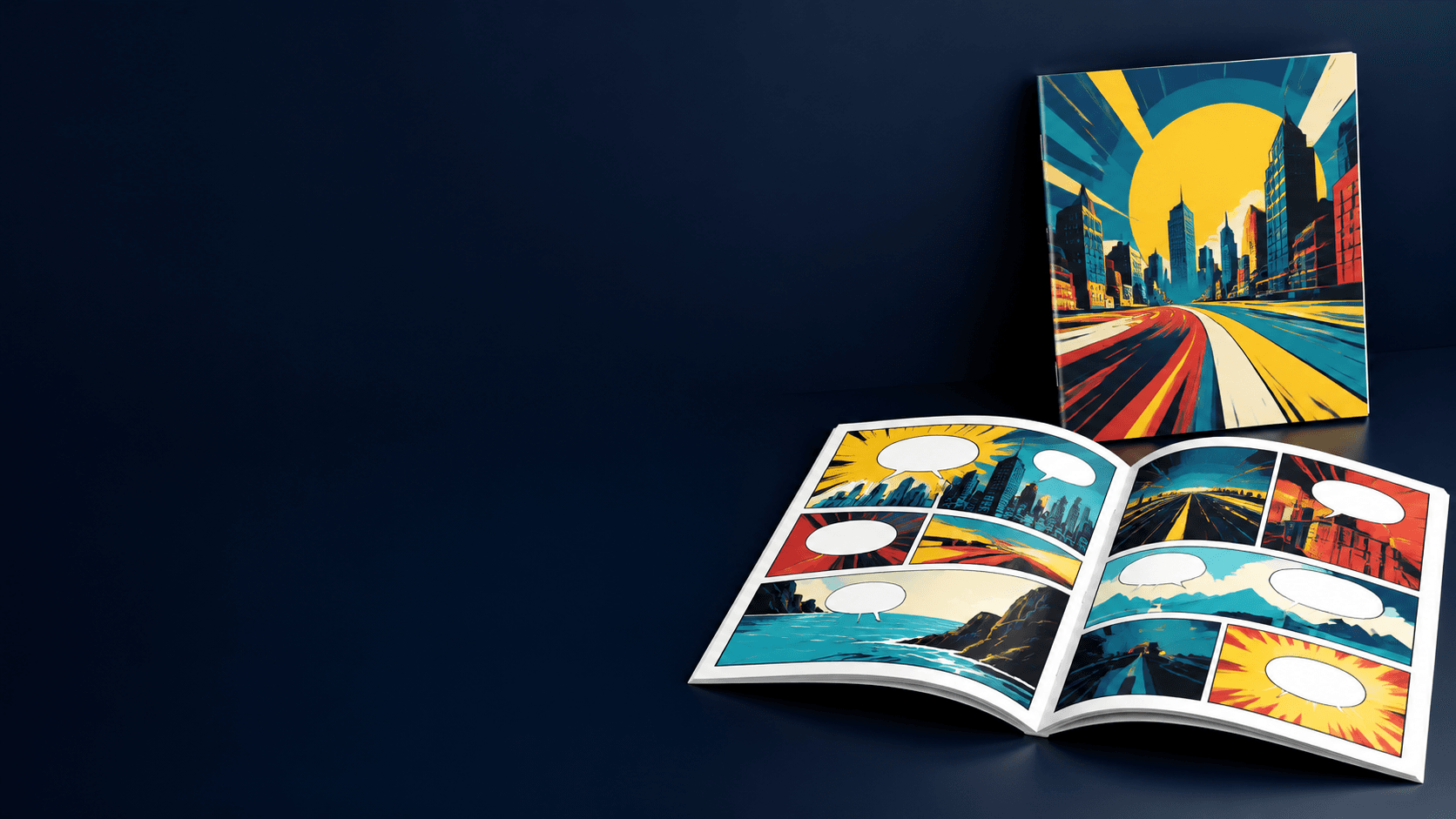
Sequential artwork with readable panels & lettering
Custom Comic Book Printing
Print sequential artwork without losing speech, small linework or the reading direction. Choose the trim and binding around panel density, spread composition and the length of the story.
- Single issues or collected volumes
- Vector lettering and fine-line checks
- Reading direction and gutter planning
The product in use
Keep the panels, lettering and reading order intact.
A comic combines artwork, lettering and panel order into one reading sequence. A small change in trim can make speech balloons crowded, while a thick bound gutter can hide part of a panel. A short issue can use saddle stitch; a collected graphic novel may need an adhesive or sewn block. Paper shade and surface change the appearance of fine blacks and colored backgrounds, so a representative interior spread matters more than a cover-only proof.

Panel sequence and binding create the reading path.
- 01Panel field
- Panels control rhythm and page turns. The trim and gutter affect the space that remains visible in the finished book.
- 02Lettering layer
- Speech balloons and captions need legible type and clean outlines. Keep essential dialogue away from trim and binding zones.
- 03Issue or collected block
- A short stitched issue and a thick collected volume need different page accounting, cover geometry and center allowances.
Specifications & materials
Compare the options and what they change.
Numeric dimensions and paper weights are selection references, not guaranteed Lemon production limits or a stocked-material list. The quoted specification identifies the available grade and construction.
| Engineering spec | Reference or option | Selection effect |
|---|---|---|
| Finished dimensions | 6.625 × 10.25 in (168.3 × 260.4 mm); 6 × 9 in (152.4 × 228.6 mm) | Interior trim references, not manufacturing limits. US comic reference, rounded to 0.1mm; check sleeve and distribution requirements. Collected-story reference; redesign rather than simply shrink crowded panels. |
| Format and component count | Complete book: interior, cover and separately identified components | Send trim, total page count, reading direction, black-only or color interior, binding, cover finish, quantity and destination. Include a densely lettered sample page. |
| Interior stock | 100 or 120gsm uncoated; 115 or 130gsm coated references | Choose around linework, image coverage, paper shade and opacity. |
| Story and page count | Saddle-stitched issue or bound collected volume | Four-page units apply to saddle stitch; bound volumes need their own signature plan. |
| Lettering and line art | Embedded vector text and clean linework where possible | Small black type needs registration-aware preparation; avoid unnecessary four-color text. |
| Reading direction | Left-to-right or right-to-left page order | Specify direction before cover, barcode and imposition are prepared. |
| Lettering and outlines | Vector lettering/line art where possible; controlled fine-black output | Check the smallest speech balloon and line weight at final size; do not equate raster DPI with readable typography. |
| Edition control | Issue/volume ID, reading direction and variant-cover mapping | Approve full page turns and match every cover variant to the correct interior release. |
Black-and-white story pages
100/120gsm uncoated references for black linework and a natural paper feel.
Compare feathering of fine lines and reverse-side show-through on dense panels.
Color comic pages
115/130gsm coated references for full-color panels.
Use the darkest spread to assess detail and total image coverage on the chosen stock.
Paper shade and finish influence dark panels and fine outlines. Check dense artwork on both sides and choose the interior for image detail, opacity and the required flexibility of the issue or volume.
A decision for this product
The gutter is part of the panel plan.
Panels → balloons → page turn
Use the page turn deliberately, keep dialogue out of the binding center and preserve the reading direction through the complete PDF.
Selection illustration · not a production template or test result
Selected direction
Saddle stitch with four-page accounting
Short issue · Saddle stitch with four-page accounting
Light construction; center-sheet creep affects edge content.
Collected volume · Bound block with a shelf spine
More pages in one edition; allow for the binding gutter.
See the trim proportions.
These are publishing references, not required sizes. Compare the usable page shape before adapting an existing layout.
Selected: 6.625 × 10.25 in. Proportions only; not actual size.
Trim dimensions describe the cut page. Artwork bleed, cover overhang, tabs and modules are separate allowances.
Surface finish options
Printed covers and jackets
Choose the finish for the printed cover or jacket, not automatically for the interior. Check color, rub marks, hinges and compatibility with the cover stock. Cloth and synthetic wraps need a separate material trial.
 Matte lamination View effect & artwork guidance
 Gloss lamination View effect & artwork guidance
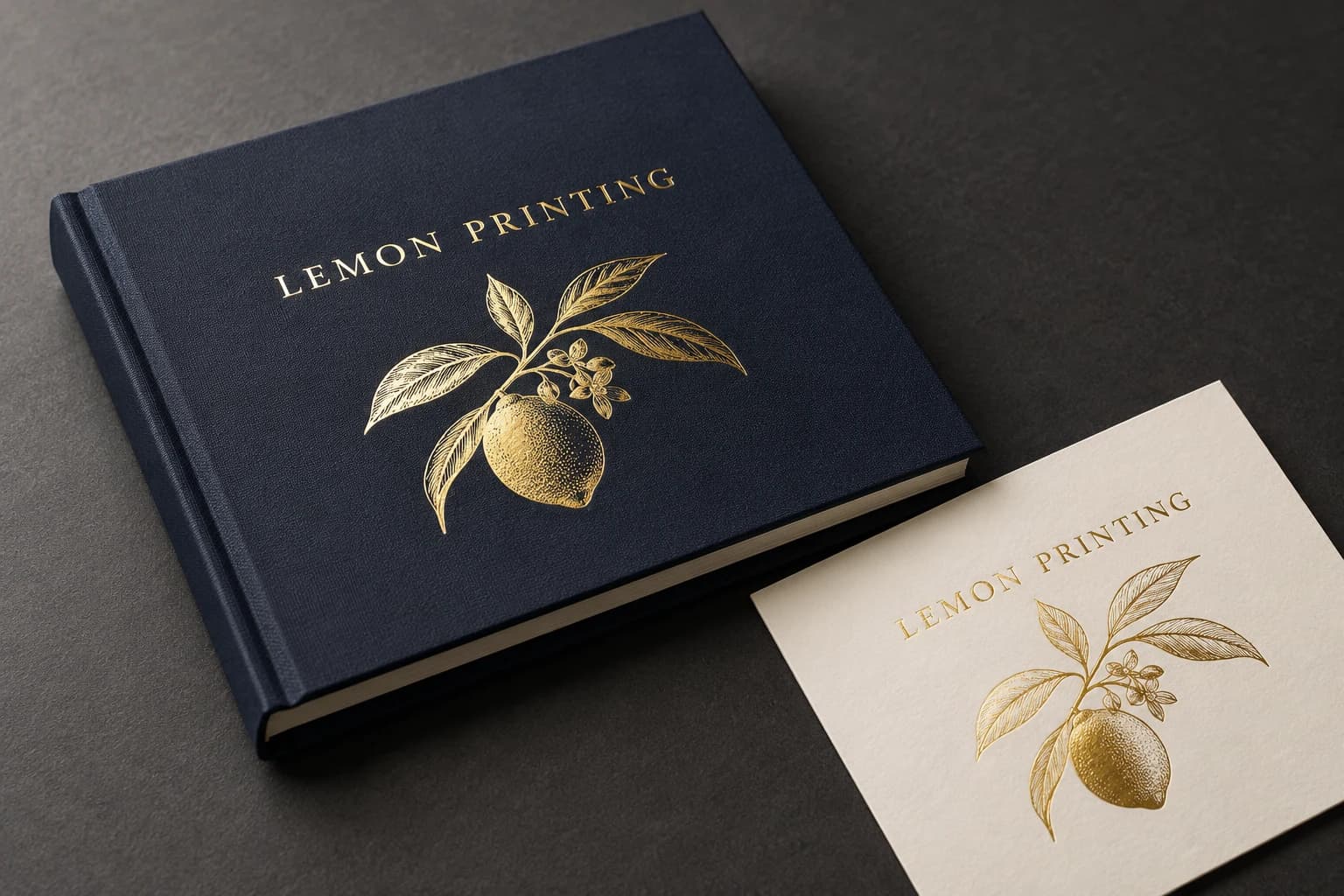 Gold foil stamping View effect & artwork guidance
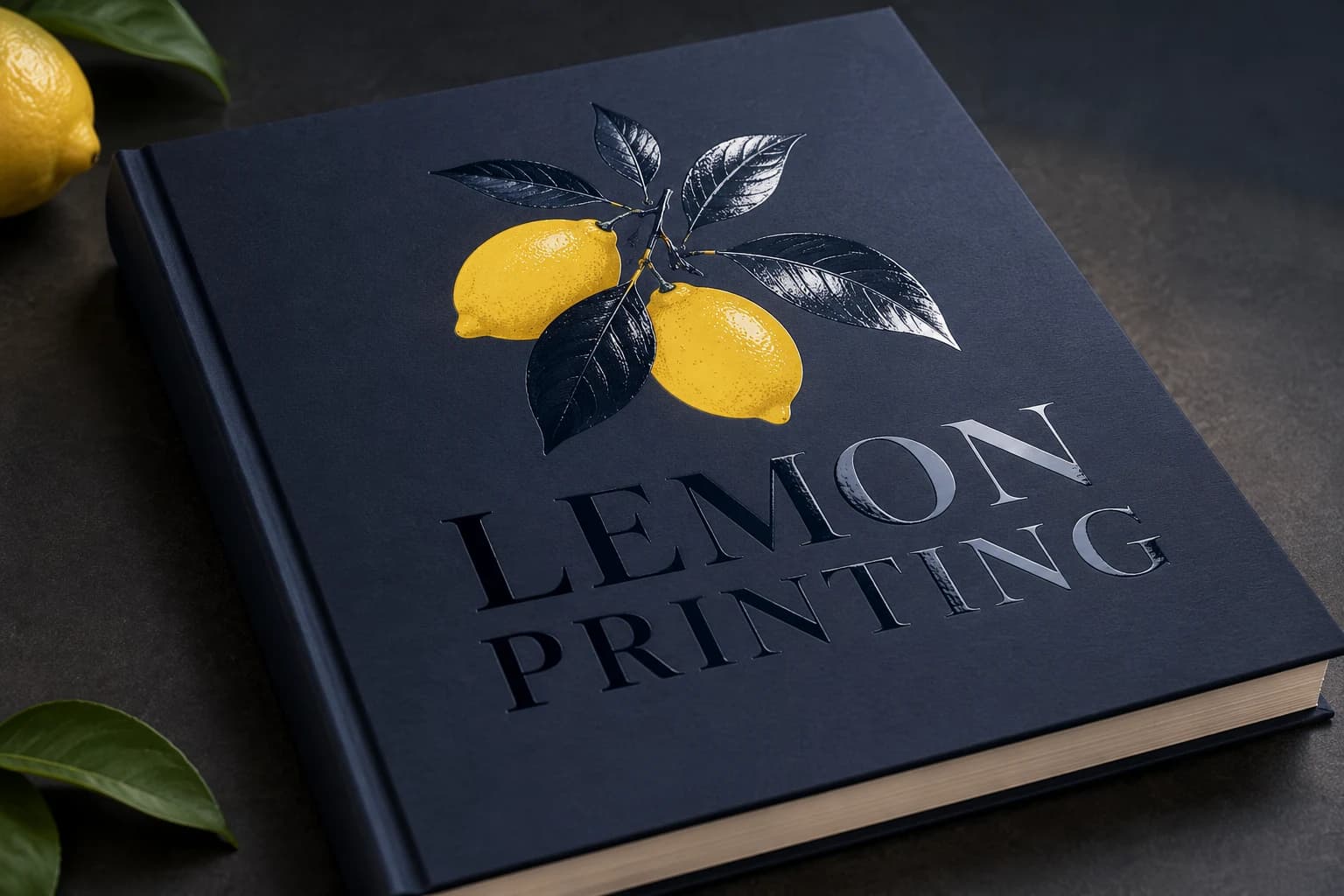 Spot UV View effect & artwork guidance
Illustrative finish samples, not photographs of this product. Final suitability follows the confirmed stock, construction and approved sample.
Compare all surface finishesHow it is made
Construction decisions with a practical effect.
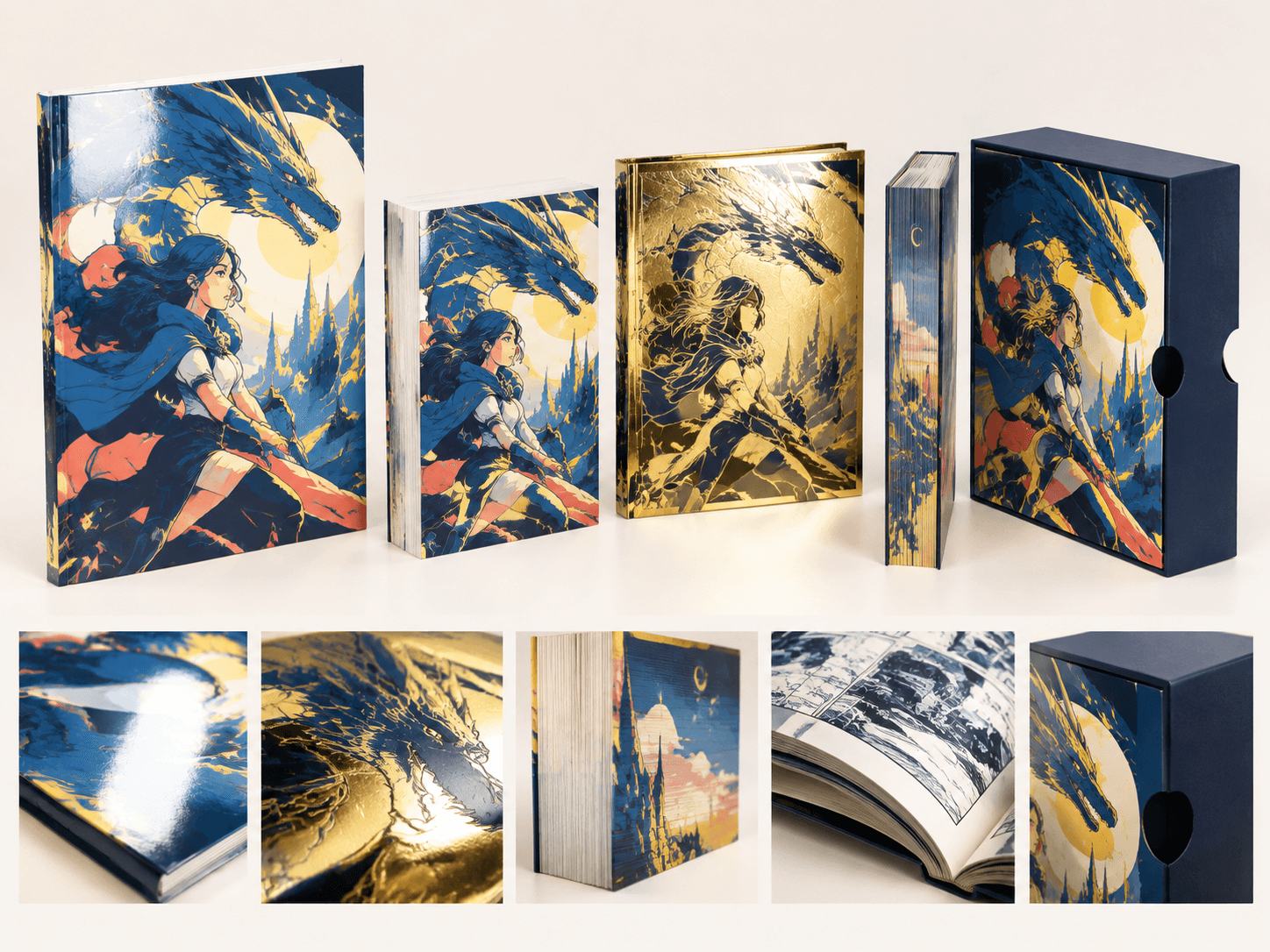
Linework and black preparation
Keep lettering and fine linework sharp. Single-channel black can reduce registration risk for small text; large solid areas need a separate ink-coverage decision. One rich-black formula is not suitable for every object.
Imposition and reading direction
The production layout follows the intended direction and final binding. A numbered dummy catches reversed covers, misplaced spreads and story interruptions before a short issue is folded or a collected volume is bound.
Details that change the finished book
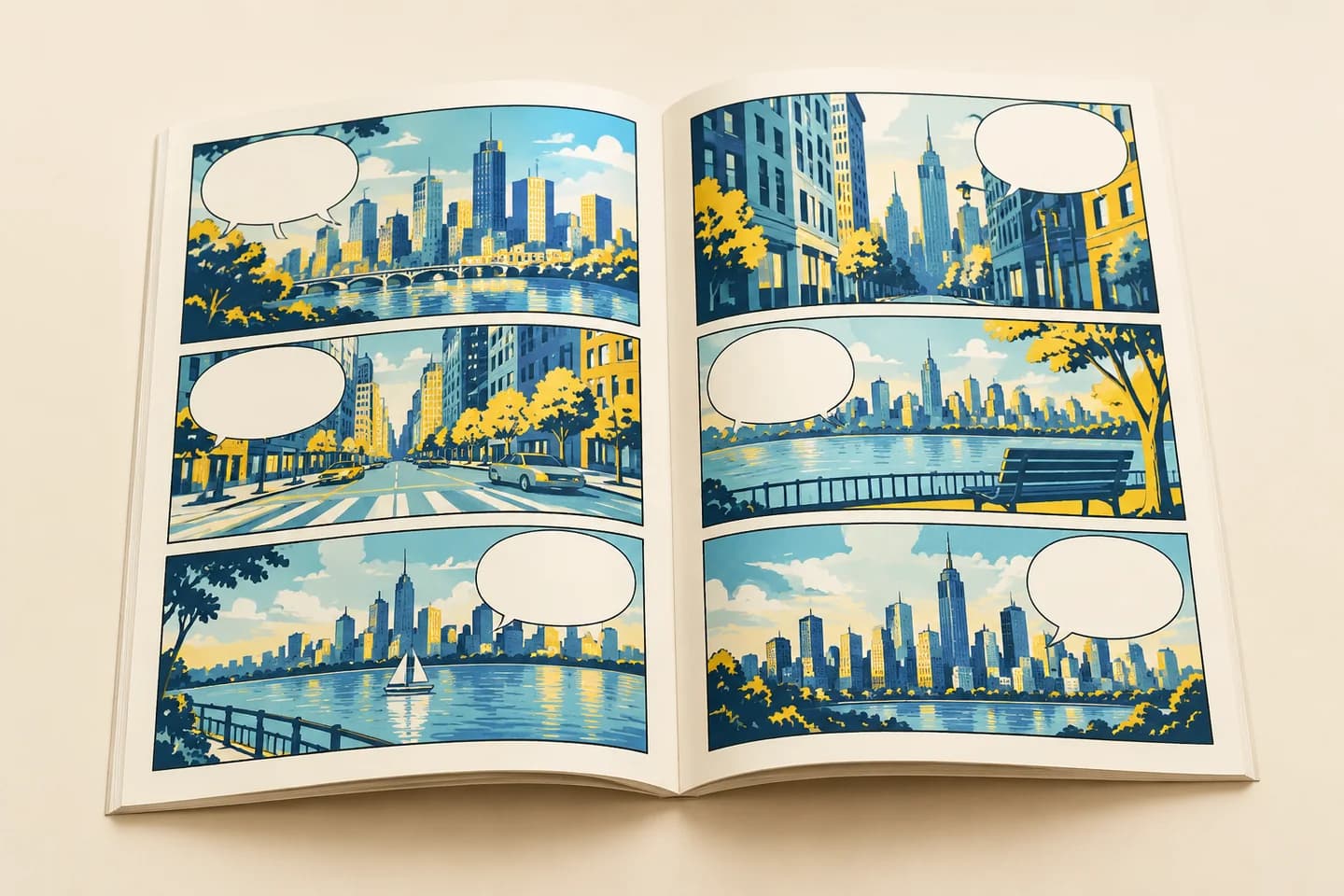
Check the smallest balloon and the busiest spread.
A striking cover cannot compensate for dialogue lost at the center or blurred linework. Proof the final reading sequence at printed size before releasing the issue.
Preserve the lettering source
Use vector text and line art where possible. Keep fine black lettering separate from large composite-black areas according to the output specification.
Review the binding-side panels
Keep dialogue and essential action out of the gutter. A collected volume may need the same artwork repositioned rather than simply copied from a thin issue.
Control edition and reading direction
Check page turns, front/back cover orientation and variant covers with the correct interior. Mark the approved issue or volume version.
Match the specification to the project
Comic Book configurations in use.
Periodical issue
Saddle stitch · short sequence · controlled cover variants
Four-page sheet accounting suits the folded build. Check the center crease and edge creep on the actual stock.
Collected story
Bound block · shelf spine · revised gutters
More pages create a different opening. Preserve dialogue by assessing the complete block.
Illustrated special edition
Coated artwork · separate cover finishing
Prioritize image detail and use a separate finishing layer; cover decoration should not obscure edition identity.
Solve the risk before production
What can go wrong, and how to check it.
Speech balloons become too small
Cause: Finished trim changed without editing lettering and panels.
Fix and check: Proof a demanding page at actual size and reflow crowded balloons rather than scaling the PDF indiscriminately.
An important panel disappears in the gutter
Cause: A full-width spread was designed without the bound opening.
Fix and check: Keep dialogue and focal details to either side of the center and judge the spread on a bound dummy.
Balloon outlines or text appear misregistered
Cause: Fine lines were built from multiple process colors instead of a suitable controlled black treatment.
Fix and check: Review the smallest lettering and outlines in the production proof, using the selected output specification. Keep rich-black background builds distinct from fine text.
When to choose another format
Comic Book or another format?
| Alternative | Structure | Use and trade-off |
|---|---|---|
| Booklet | Short folded publication | Similar folded construction, without the same panel-direction and lettering priorities. |
| Paperback | Longer flexible-cover edition | Useful for collected stories with a square spine and different gutter behavior. |
Samples & order planning
Test the physical question before the bulk run.
A sample for the actual product
Proof fine lettering, solid blacks and the most detailed panel spread. A numbered bound dummy verifies story order and gutter access.
Actual-size panel proof
Inspect fine lettering, dark linework and a dense action spread in the final reading direction.
Issue or volume dummy
Check page turns, center visibility and cover/interior mapping for the selected binding.
Order Details for Comic Book Printing
Quantity and quotation
Quote complete finished books per title or version. Send trim, total page count, reading direction, black-only or color interior, binding, cover finish, quantity and destination. Include a densely lettered sample page.
Sample scope and schedule
Free samples are available, with preparation completed within 15 days. Confirm which materials, finishes and construction the sample represents. Courier arrangements and transit time are separate. The quotation records bulk production timing and the minimum quantity for your configuration.
Packing and delivery
Keep issue corners flat and protect finished covers from rubbing. Specify any retail sleeve or backing board as a separate component.
- 01
Declare reading direction and include all story, advertising and blank pages.
- 02
Embed lettering fonts and preserve vector linework where possible.
- 03
Prepare raster artwork at 300ppi or the agreed line-art resolution at final size.
- 04
Separate fine black text from large fills and follow the cover/bleed template.
Configuration details
Keep tone patterns and reading order under control.
Fine screen patterns may change when a comic is scanned, resized or screened again in printing. Check the problematic panels at their final scale. Reading direction also changes the cover sequence and which page faces the reader first; it should be explicit in the production brief.
- Art test
Smallest lettering, fine lines and dense tone panels
Use clean source artwork and compare a final-size print, rather than judging enlarged screen previews.
- Sequence
Left-to-right or right-to-left; front and back cover identified
Verify the first and last reading pages against a folded or bound dummy.
Explore the relevant formats
Product questions
Details worth settling before ordering.
Should all black artwork use rich black?
No. Small text and fine lines have different registration needs from large fills. Set their separations deliberately and inspect the print proof.
Can we print right-to-left editions?
The edition can be planned that way; identify it in the brief and approve a numbered dummy with the front cover and story sequence.
Will reducing a comic PDF to another trim preserve readability?
Not necessarily. Balloon text, line weights and panel spacing all shrink. Check full-size printouts and redesign crowded pages.
Can the same panels be used in a collected volume?
The artwork can be reused, but a thicker bound block may hide more of the inner page. Reassess gutter-side dialogue, action and page turns on a bound dummy rather than assuming the original issue layout still fits.
Do all comics use 6.625 × 10.25in?
That is a familiar US comic format reference, not a universal requirement. Trim can follow market, sleeve and distribution needs. Any change should preserve readable lettering and the intended panel proportions.
Your comic book project
Send a brief that can become a specification.
Send trim, total page count, reading direction, black-only or color interior, binding, cover finish, quantity and destination. Include a densely lettered sample page.
Related formats & guidance