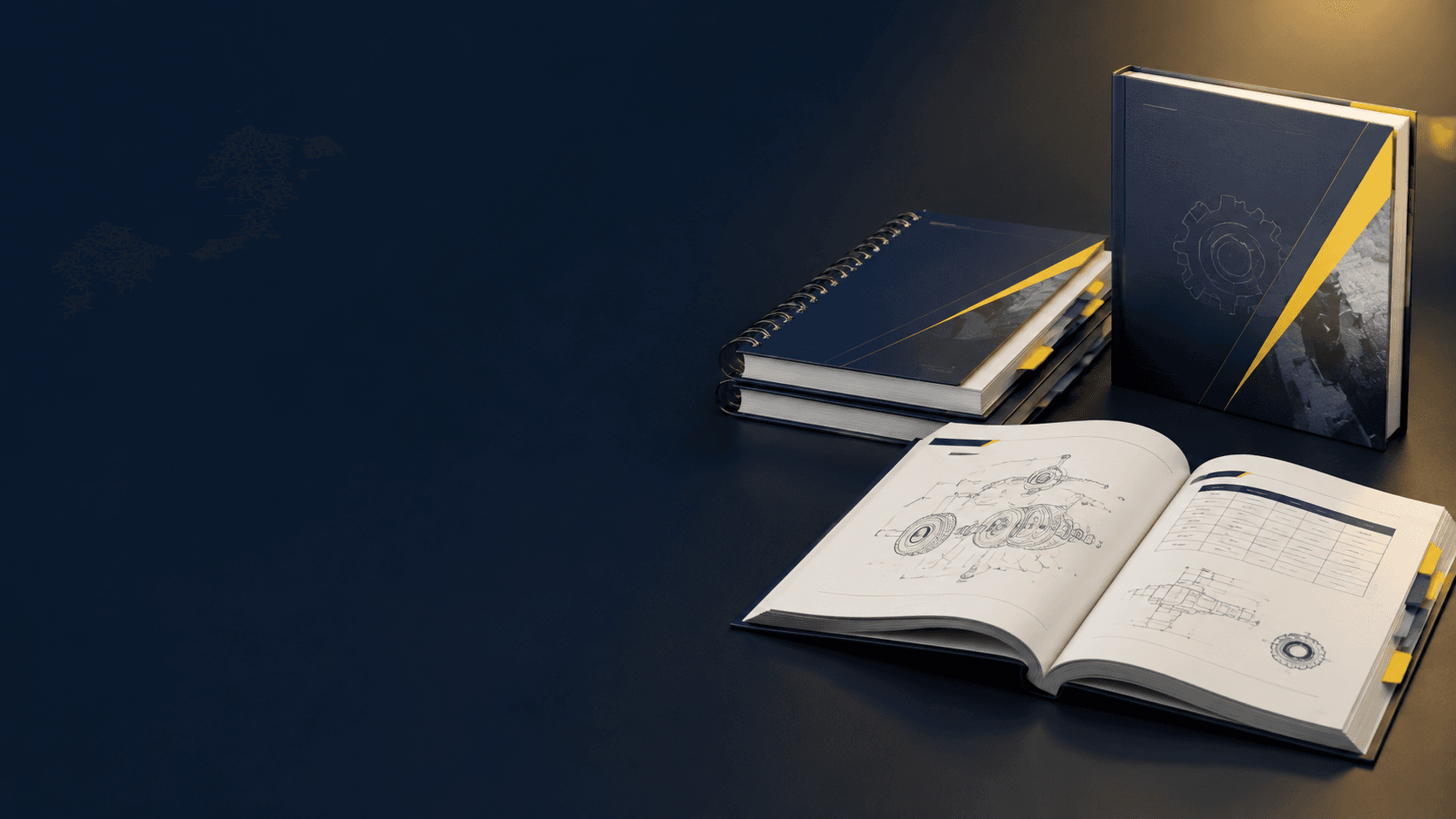
Usable technical information at the point of work
Custom Manual Printing
Make instructions easy to consult while the reader works. Choose fold-back binding, a printable spine or a replaceable format around how often pages are used and updated.
- Open-page, shelf-spine or replaceable formats
- Readable diagrams and section access
- Revision and component control
The product in use
Design for finding a step while doing the job.
A manual is organized for retrieval: numbered steps, diagrams, warnings and an index must remain easy to find. Spiral or twin-loop binding supports an open working page; a glued spine stores neatly on a shelf. Ring-binder construction is more suitable when pages are routinely replaced. Paper glare, diagram scale and tab projection matter because the book may be used beside equipment rather than read continuously.
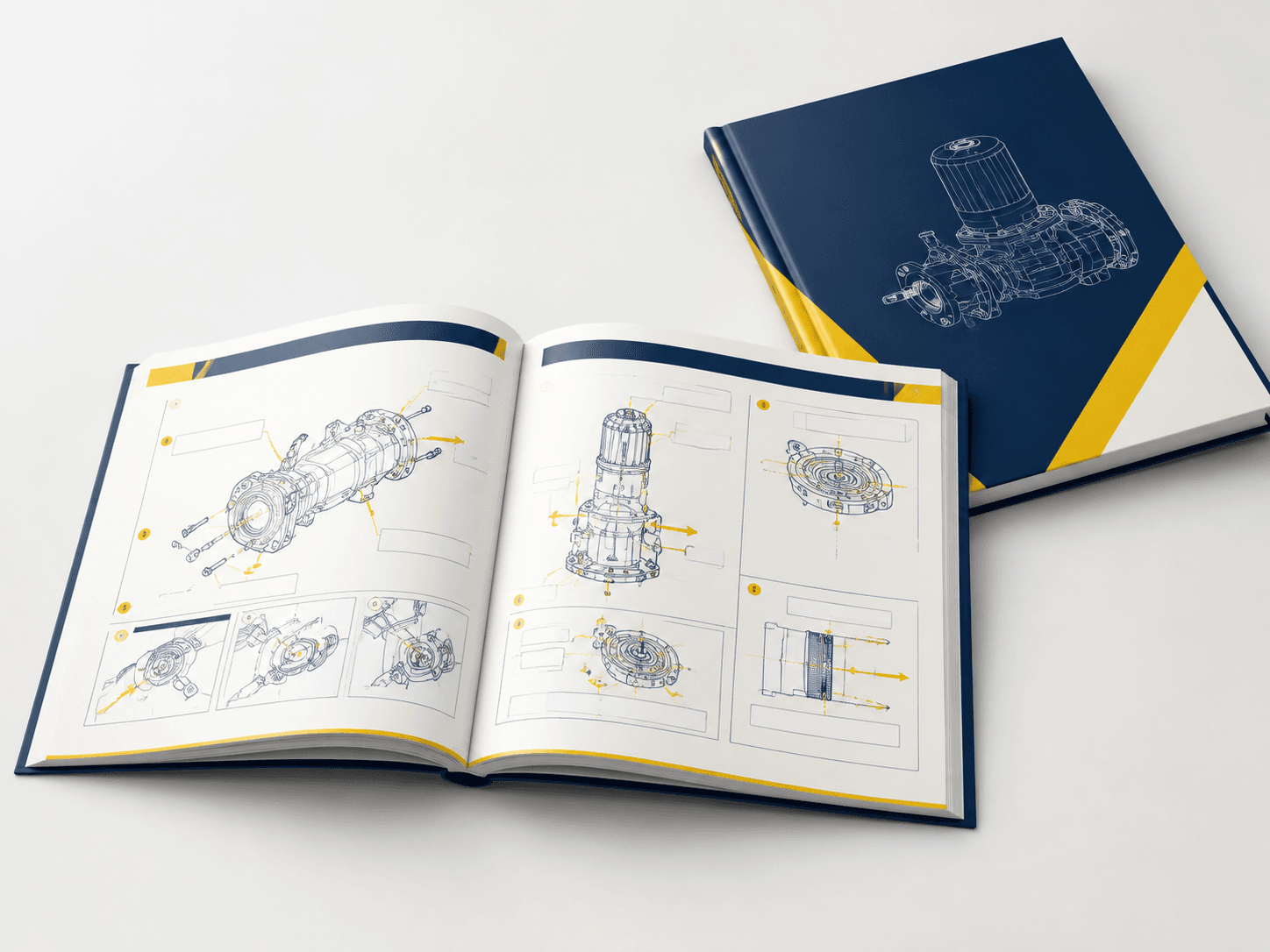
Access and revision needs determine the assembly.
- 01Binding or hardware
- Permanent coil supports open working pages; a bound spine suits shelving; ring hardware provides a replaceable page system.
- 02Navigation components
- Tabs, section starts and indexes shorten retrieval. Their projection and attachment must be included in the finished footprint.
- 03Controlled content
- Warnings, steps and diagrams need an approved revision. Page-level replacements require their own version identification.
Specifications & materials
Compare the options and what they change.
Numeric dimensions and paper weights are selection references, not guaranteed Lemon production limits or a stocked-material list. The quoted specification identifies the available grade and construction.
| Engineering spec | Reference or option | Selection effect |
|---|---|---|
| Finished dimensions | 8.5 × 11 in (215.9 × 279.4 mm); 6 × 9 in (152.4 × 228.6 mm) | Interior trim references, not manufacturing limits. Technical diagrams and tables with room for notes. Portable field reference; test small labels at actual size. |
| Format and component count | Complete book: interior, cover and separately identified components | Send trim, page count, quantity per revision/language, binding, tabs, foldouts, paper, working environment and destination. |
| Interior | 100 or 120gsm uncoated; 115gsm coated image reference | Less reflection suits working pages; dense diagrams may benefit from a smoother surface. |
| Binding | Continuous coil, twin-loop wire, adhesive or ring-binder format | Hands-free use, shelf identity and page replacement are different requirements. |
| Tabs and inserts | Printed section tabs, foldouts and revision sheets | Count projection and thickness in binding and packaging. |
| Revision control | Document ID, revision, language and page-reference map | Release the content set as one version so replacement or index references stay correct. |
| Diagram reproduction | Vector line art where available; raster images referenced at 300ppi final size | Check fine symbols and smallest labels at actual size; enlarging a low-resolution source does not restore detail. |
| Revision components | Edition or page revision ID, divider sequence and replacement policy | Content/version control must match the assembly; include hardware and tabs in the quote inputs. |
Working-page stock
100/120gsm uncoated references for annotation and less reflective reading.
Try the intended pen and inspect heavy diagrams through the reverse.
Illustrated technical stock
115/130gsm coated references for dense graphics.
Compare glare under the actual workplace lighting before selecting it.
Uncoated sheets support note-taking; coated sheets can help image detail. When pages are used near equipment, choose the surface by the actual handling and cleaning conditions rather than making a generic durability claim.
A decision for this product
Choose binding by the service workflow.
Open page / shelf spine / replaceable pages
These needs lead to different constructions. A permanent coil is not a substitute for a replaceable ring binder.
Selection illustration · not a production template or test result
Selected direction
Coil or twin-loop working page
Hands-free task · Coil or twin-loop working page
Useful beside equipment; keep content clear of the punch zone.
Shelf reference · Adhesive-bound manual
Printable spine aids identification, with less fold-back convenience.
Regular revisions · Ring-binder assembly
Replace pages in service; adds hardware and tab projection.
See the trim proportions.
These are publishing references, not required sizes. Compare the usable page shape before adapting an existing layout.
Selected: 8.5 × 11 in. Proportions only; not actual size.
Trim dimensions describe the cut page. Artwork bleed, cover overhang, tabs and modules are separate allowances.
Surface finish options
Printed covers and jackets
Choose the finish for the printed cover or jacket, not automatically for the interior. Check color, rub marks, hinges and compatibility with the cover stock. Cloth and synthetic wraps need a separate material trial.
 Matte lamination View effect & artwork guidance
 Gloss lamination View effect & artwork guidance
 Gold foil stamping View effect & artwork guidance
 Spot UV View effect & artwork guidance
Illustrative finish samples, not photographs of this product. Final suitability follows the confirmed stock, construction and approved sample.
Compare all surface finishesHow it is made
Construction decisions with a practical effect.
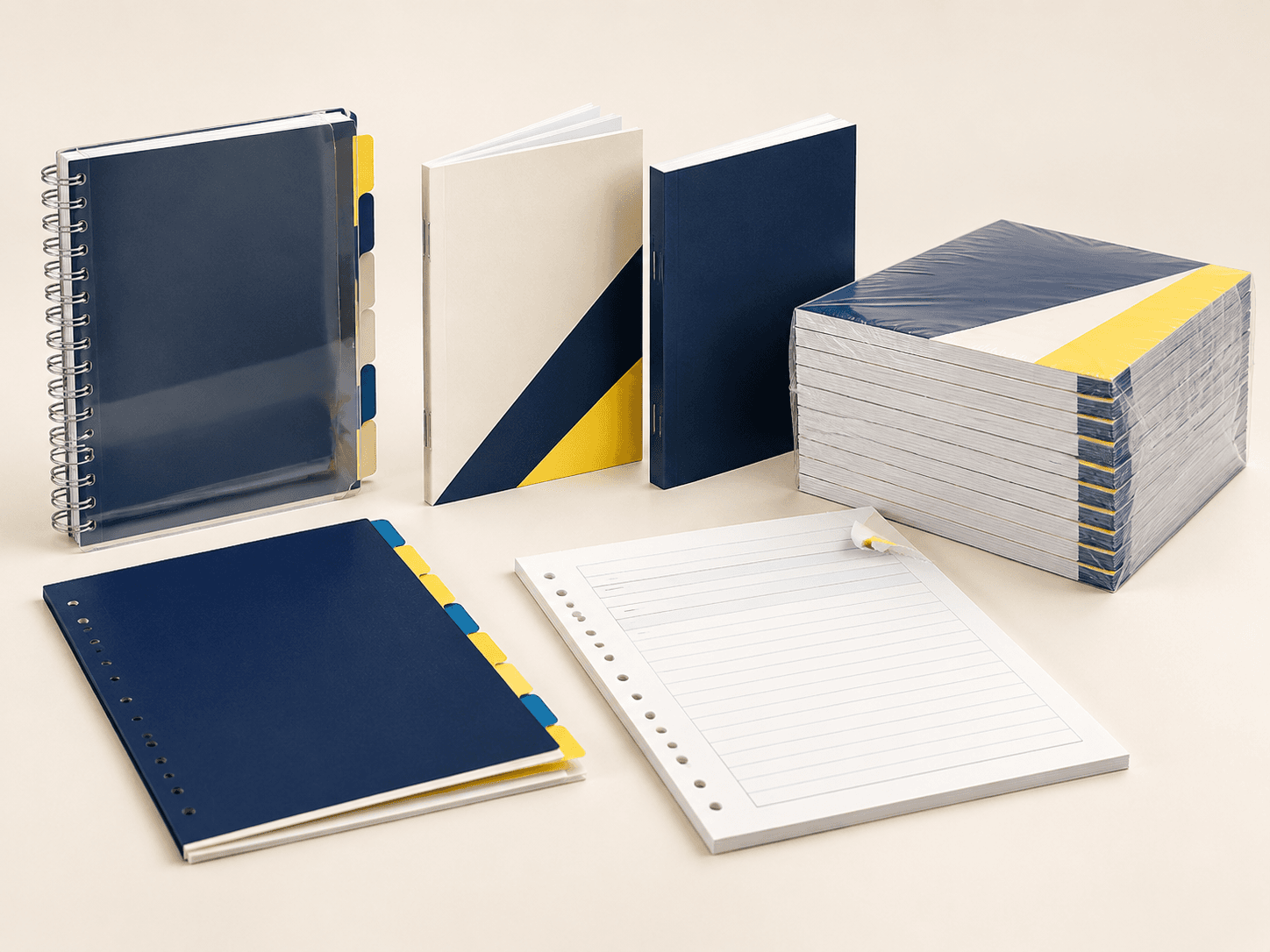
Binding and working position
Coil allows pages to rotate around the punched edge; a bound spine provides shelf identification. A replaceable ring format needs hole and tab planning. Select according to the actual maintenance workflow.
Tabs, foldouts and revisions
Dividers are collated into named sections. Foldouts must unfold without catching the binding, while tab text remains visible outside the page edge. Test the entire assembly with its largest insert.
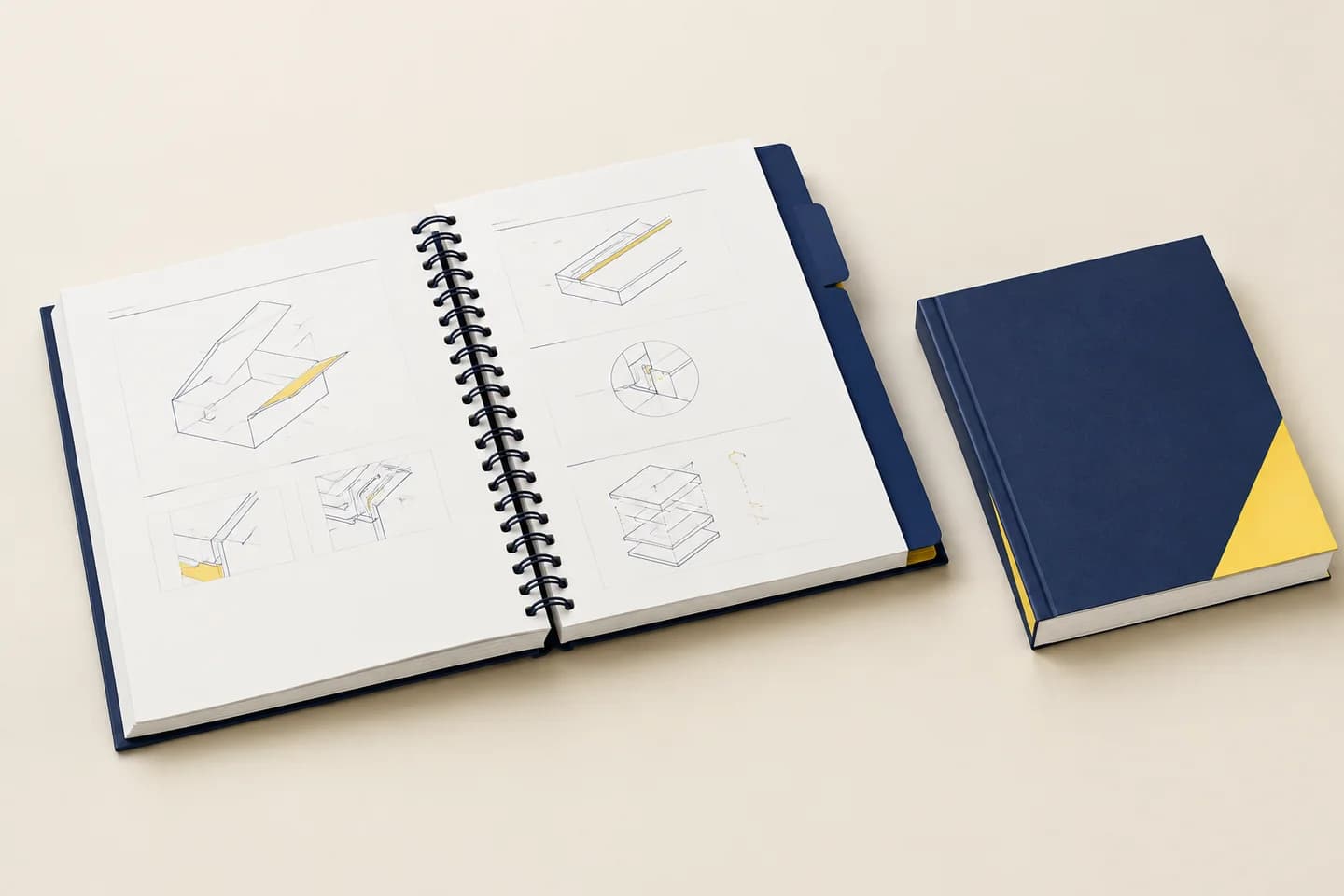
Details that change the finished book
Select the manual by how the reader uses and updates it.
An assembly technician needs hands-free access; a library reference needs a readable spine. A frequently revised service manual may need pages that can be replaced.
Test the working position
Open the manual beside the task and check whether it stays readable without holding the spine. Keep labels and response fields out of a punch or binding gutter.
Make retrieval predictable
Use repeated section labels and a final index. Include tabs in the complete sample; their projection changes the packed width.
Control the revision system
State edition IDs and how updates are issued. A permanent coil cannot be treated as reusable ring hardware for routine sheet replacement.
Match the specification to the project
Manual configurations in use.
Equipment operation
Coil or twin-loop · clear diagrams · section tabs
Select for open-page access and repeated retrieval. Physical opening cannot rescue a diagram printed too small to read.
Reference library
Adhesive-bound block · printable spine
A spine helps storage and identification. Allow the gutter to reduce access near the center.
Service updates
Ring-binder assembly · page revision IDs
Replacement sheets reduce the need to replace an entire edition, but require controlled hole pattern, hardware and index updates.
Solve the risk before production
What can go wrong, and how to check it.
A diagram is unreadable beside the equipment
Cause: Labels were reduced to fit a smaller trim or printed on a reflective surface.
Fix and check: Print the densest diagram at final size and assess it under working light.
Instructions and index refer to different revisions
Cause: Pages were updated without rebuilding references.
Fix and check: Freeze a document revision, regenerate cross-references and check the final assembly map.
A revised page contradicts the index or another section
Cause: Only the replacement sheet was reviewed, without dependent warnings, page references or diagrams.
Fix and check: Track dependent references with the page revision and approve the updated index and instructions as a complete release set.
When to choose another format
Manual or another format?
| Alternative | Structure | Use and trade-off |
|---|---|---|
| Workbook | Exercises and answer space | Use when readers actively complete activities rather than retrieve instructions. |
| Catalog | Products and structured attributes | A product reference needs SKU consistency rather than a task sequence. |
Samples & order planning
Test the physical question before the bulk run.
A sample for the actual product
Use a complete bound dummy with tabs and foldouts. A printed critical diagram and writing test establish practical legibility and surface behavior.
Actual-size technical proof
Check the smallest diagram symbols, labels, warnings and revision references.
Working-position assembly
Test opening and retrieval with all tabs and covers; include any ring hardware or replaceable components.
Order Details for Manual Printing
Quantity and quotation
Quote complete finished books per title or version. Send trim, page count, quantity per revision/language, binding, tabs, foldouts, paper, working environment and destination.
Sample scope and schedule
Free samples are available, with preparation completed within 15 days. Confirm which materials, finishes and construction the sample represents. Courier arrangements and transit time are separate. The quotation records bulk production timing and the minimum quantity for your configuration.
Packing and delivery
Protect projecting tabs and exposed binding. Label cartons with the document revision and language so obsolete manuals are not mixed with replacements.
- 01
State document ID, revision and language on the content manifest.
- 02
Check figure references, warning symbols and index pagination.
- 03
Supply single pages and separate drawings for tabs and foldouts.
- 04
Use 300ppi diagrams where raster is necessary; preserve vector labels and font embedding.
Configuration details
Choose the opening behavior around the task.
A maintenance manual used beside equipment benefits from a page that stays accessible without a hand holding it open. A pocket instruction booklet prioritizes portability instead. Binding choice should follow the working situation and the density of diagrams, rather than the cover appearance alone.
- Task sample
Densest procedure spread and smallest warning label
Review at the actual work position; scaling down a diagram can make identifiers unusable.
- Revision control
Edition code, language and replaceable sections
Keep the printed revision visible and specify whether future updates replace the full book or individual sections.
Explore the relevant formats
Product questions
Details worth settling before ordering.
Can a manual be described as waterproof with a laminated cover?
No. Cover protection does not establish the behavior of interior pages, edges or binding. An environmental requirement needs its own material choice and test.
How should foldouts be supplied?
Identify their unfolded dimensions, fold sequence, position and safe binding edge on a separate drawing. Include them in the assembly count.
Can we update a coil manual page by page?
Coil is normally a permanent assembly. Choose a ring format when routine page replacement is part of the service model.
Can covers be wipe-clean while interiors remain writable?
Those surfaces have different jobs. A cover film can support cleaning behavior on the cover, while uncoated interior pages remain suitable for notes. Assess the intended cleaning method on the actual cover; do not apply the cover claim to untreated pages.
Are punched manuals all replaceable?
No. A coil or closed wire element is normally a permanent binding. A ring-binder design provides reusable hardware and its own hole pattern; quote that assembly separately when updates are frequent.
Your manual project
Send a brief that can become a specification.
Send trim, page count, quantity per revision/language, binding, tabs, foldouts, paper, working environment and destination.
Related formats & guidance