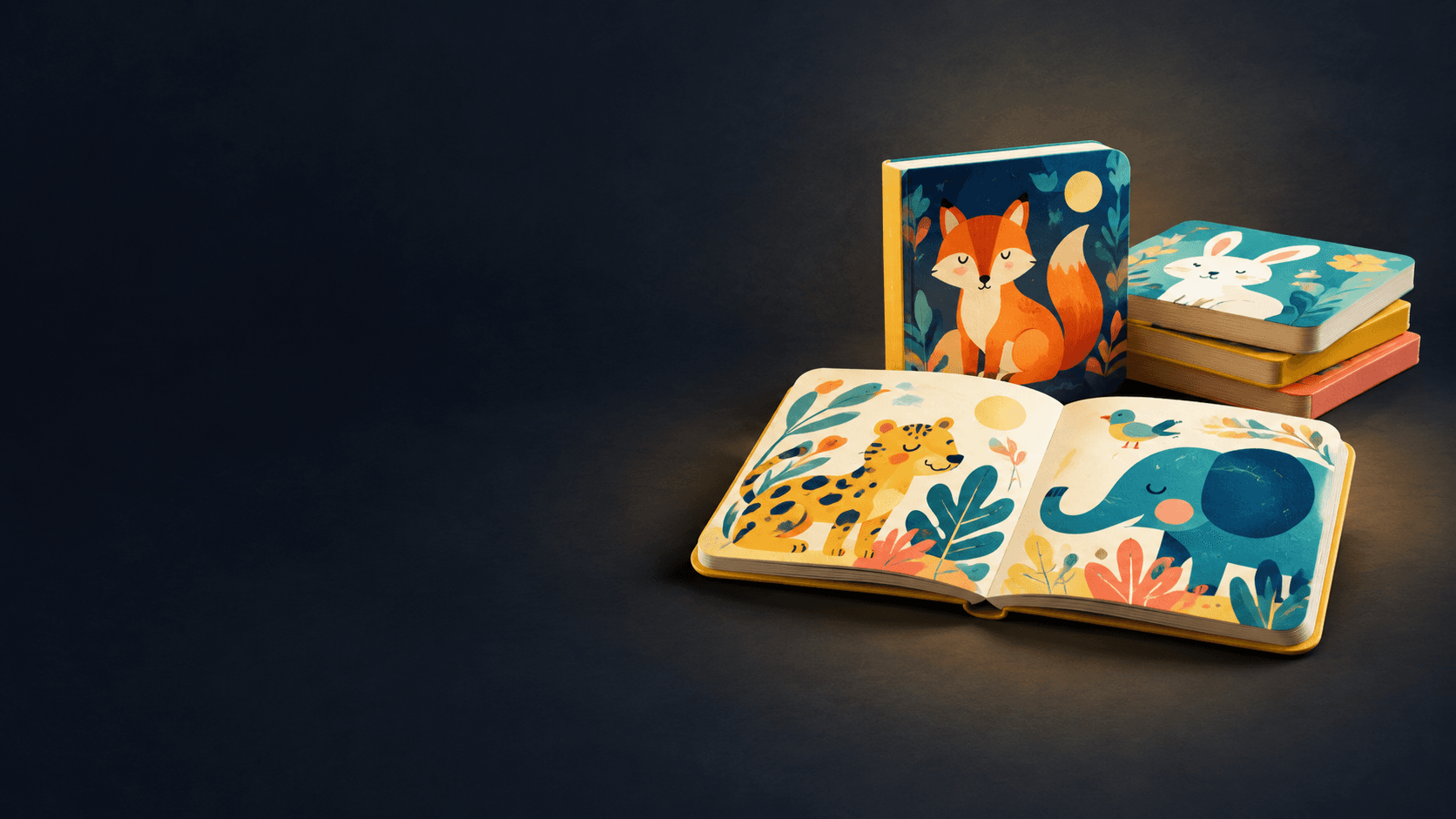
Picture-led editions designed for shared reading
Custom Children's Book Printing
Print picture stories and early-reader editions around the way children and adults share the page. Match illustration scale, paper opacity and binding to the reading setting and intended handling.
- Portrait, landscape and square layouts
- Paper opacity and illustration proofing
- Page-block or mounted-leaf formats
The product in use
Give each illustration room to tell the story.
A picture book needs room for illustration and short text to work together. Large type and clear contrast help reading, while the binding determines how much of a spread can be seen at the center. Thin paper can show a dark image through to the next scene. A conventional paper-page edition, a rigid board book and an interactive book are distinct constructions with different handling and assessment needs.
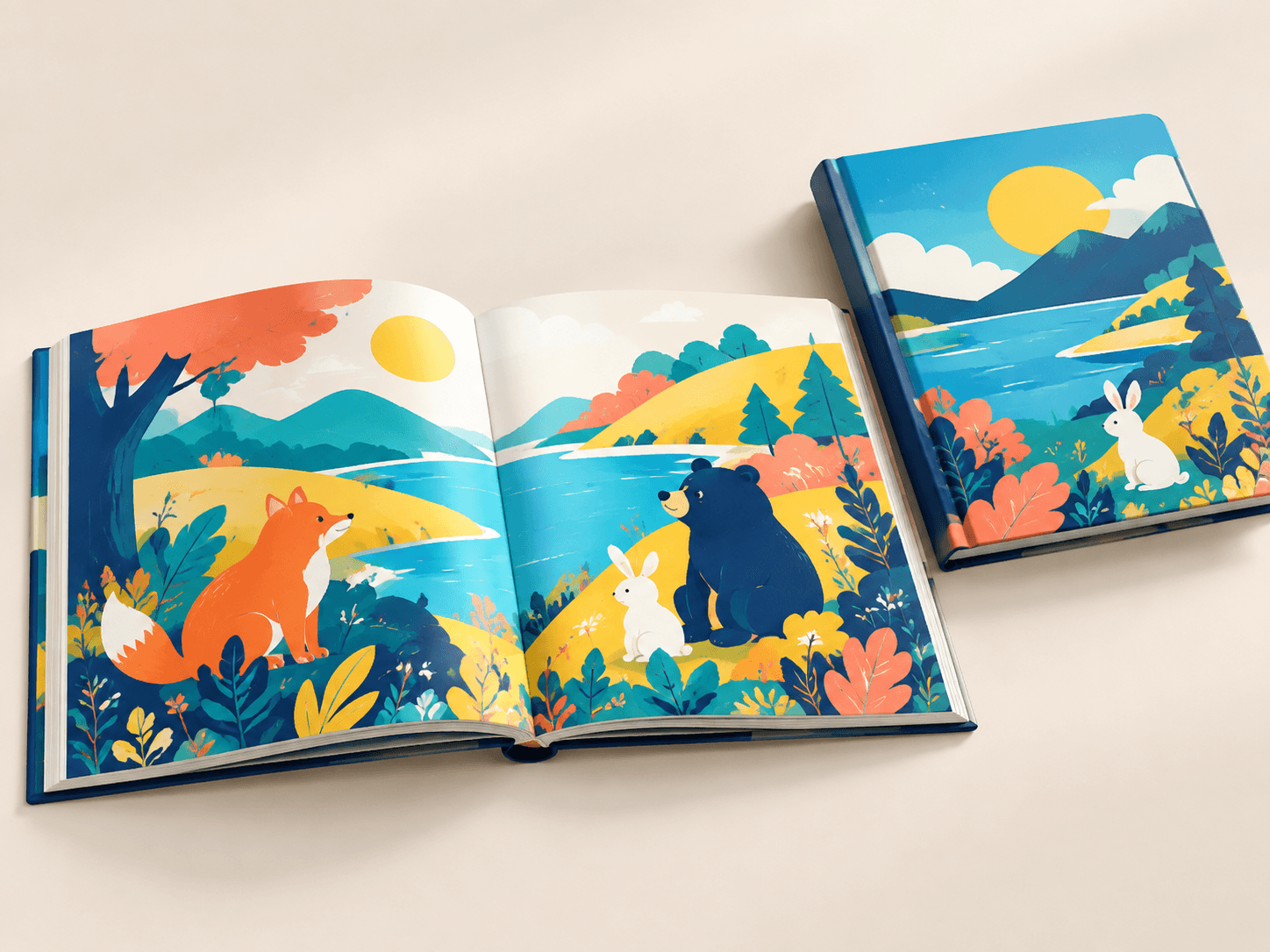
The page layout follows the reading experience.
- 01Illustration field
- Scene scale and trim proportions determine how much detail the reader can see. Important faces should remain clear of the binding gutter.
- 02Reading space
- Text, contrast and image placement work together for read-aloud use. A reduced PDF view is not an actual-size readability check.
- 03Physical page construction
- A flexible paper-page book and a rigid mounted-leaf book handle differently. Choose the construction for the intended use rather than the age label alone.
Specifications & materials
Compare the options and what they change.
Numeric dimensions and paper weights are selection references, not guaranteed Lemon production limits or a stocked-material list. The quoted specification identifies the available grade and construction.
| Engineering spec | Reference or option | Selection effect |
|---|---|---|
| Finished dimensions | 10 × 8 in (254 × 203.2 mm); 7.5 × 7.5 in (190.5 × 190.5 mm) | Interior trim references, not manufacturing limits. Landscape picture stories with wide scenes. Square picture-book reference for balanced layouts. |
| Format and component count | Complete book: interior, cover and separately identified components | Send trim, page count, quantity, reader age, intended market, binding, paper and cover preference. Include illustration files or sample spreads and delivery destination. |
| Interior paper | 115, 130 or 150gsm coated references; 100 or 120gsm uncoated references | Compare image surface and show-through with both sides printed. |
| Binding | Saddle stitch, paperback or hardcover by pagination and use | The cover choice does not establish opening; review the actual book block. |
| Spread planning | One scene across a spread or separate left/right compositions | Keep faces, key words and details clear of the binding gutter. |
| Spread composition | Separate text-safe and image-bleed areas; binding-specific gutter | Protect faces and short reading text at the center without treating a universal margin as a factory standard. |
| Print layout | Process-color illustrations; vector text; controlled page sequence | Proof actual-size type, light scenes and dense reverse-side images on the selected paper. |
Illustration-led coated stock
115/130/150gsm references for detailed printed scenes.
Use the selected grade for a two-sided proof; higher weight alone is not an opacity specification.
Uncoated story pages
100/120gsm references where a less reflective surface suits the edition.
Paper shade influences light areas and perceived color; proof on the intended stock.
A smooth coated sheet can keep illustrated detail defined; an uncoated surface changes reflection and color appearance. Compare a dark reverse image behind a light scene and inspect the actual-size reading text before choosing the grade.
A decision for this product
Plan the center as part of the illustration.
Left scene · gutter · right scene
Use background texture across the center, with faces and short reading text to either side. The safe zone comes from the chosen binding, not a universal margin.
Selection illustration · not a production template or test result
Selected direction
Landscape or square scene-led pages
Shared reading · Landscape or square scene-led pages
Allows illustration and read-aloud text to share the page.
Early reading · Separate panels and clear text hierarchy
Reduces visual crowding; compare type size on a full-size printed proof.
See the trim proportions.
These are publishing references, not required sizes. Compare the usable page shape before adapting an existing layout.
Selected: 10 × 8 in. Proportions only; not actual size.
Trim dimensions describe the cut page. Artwork bleed, cover overhang, tabs and modules are separate allowances.
Surface finish options
Printed covers and jackets
Choose the finish for the printed cover or jacket, not automatically for the interior. Check color, rub marks, hinges and compatibility with the cover stock. Cloth and synthetic wraps need a separate material trial.
 Matte lamination View effect & artwork guidance
 Gloss lamination View effect & artwork guidance
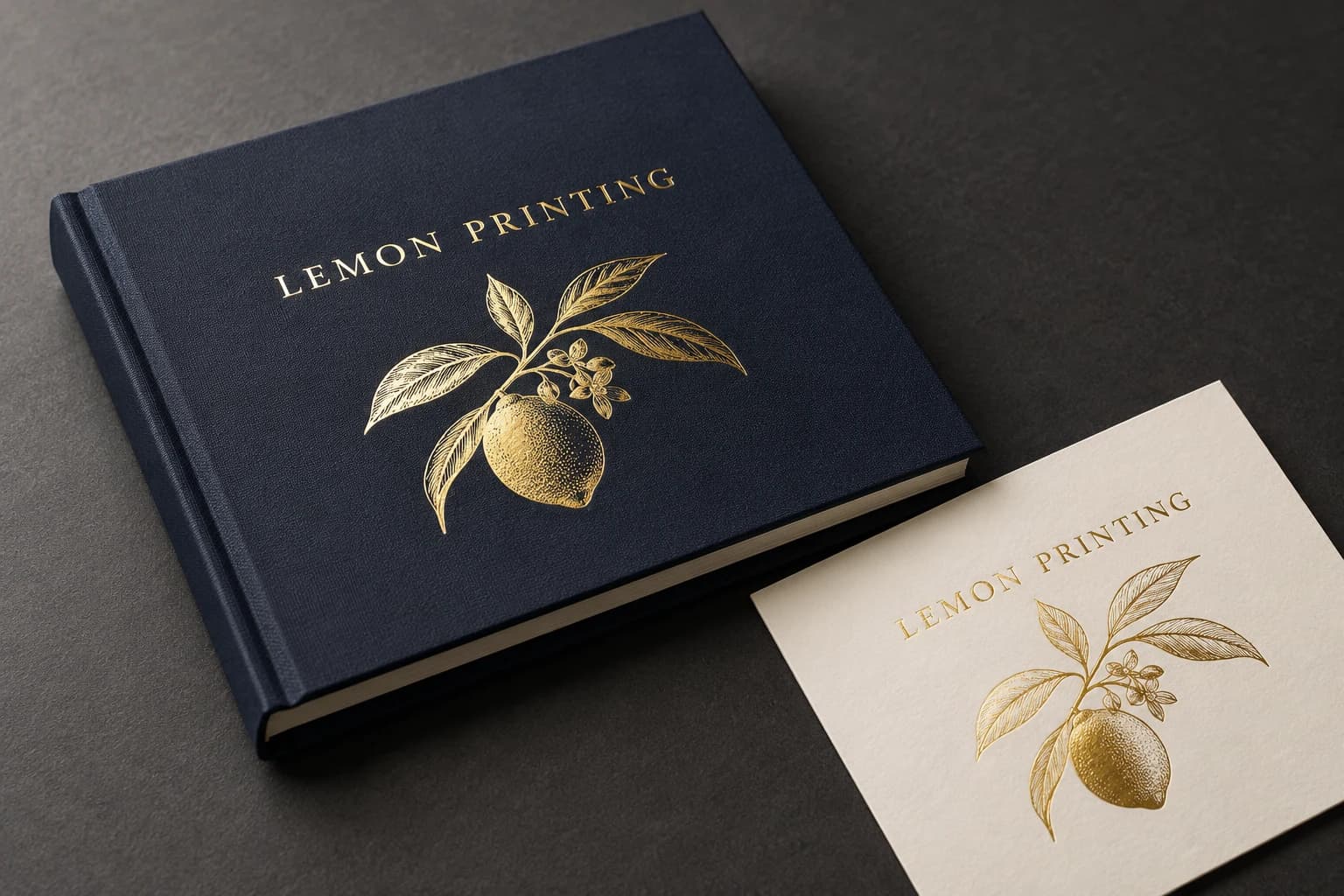 Gold foil stamping View effect & artwork guidance
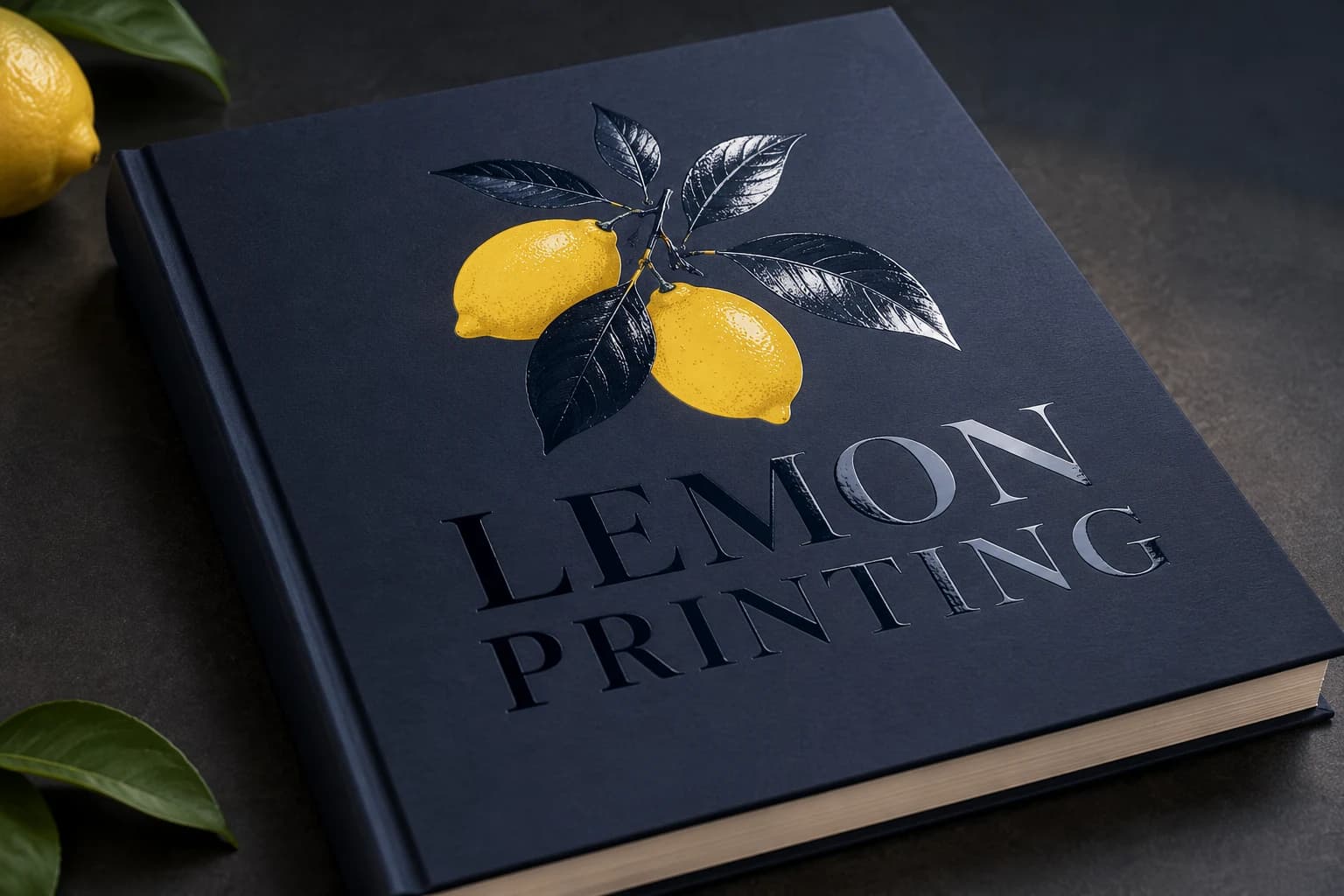 Spot UV View effect & artwork guidance
Illustrative finish samples, not photographs of this product. Final suitability follows the confirmed stock, construction and approved sample.
Compare all surface finishesHow it is made
Construction decisions with a practical effect.
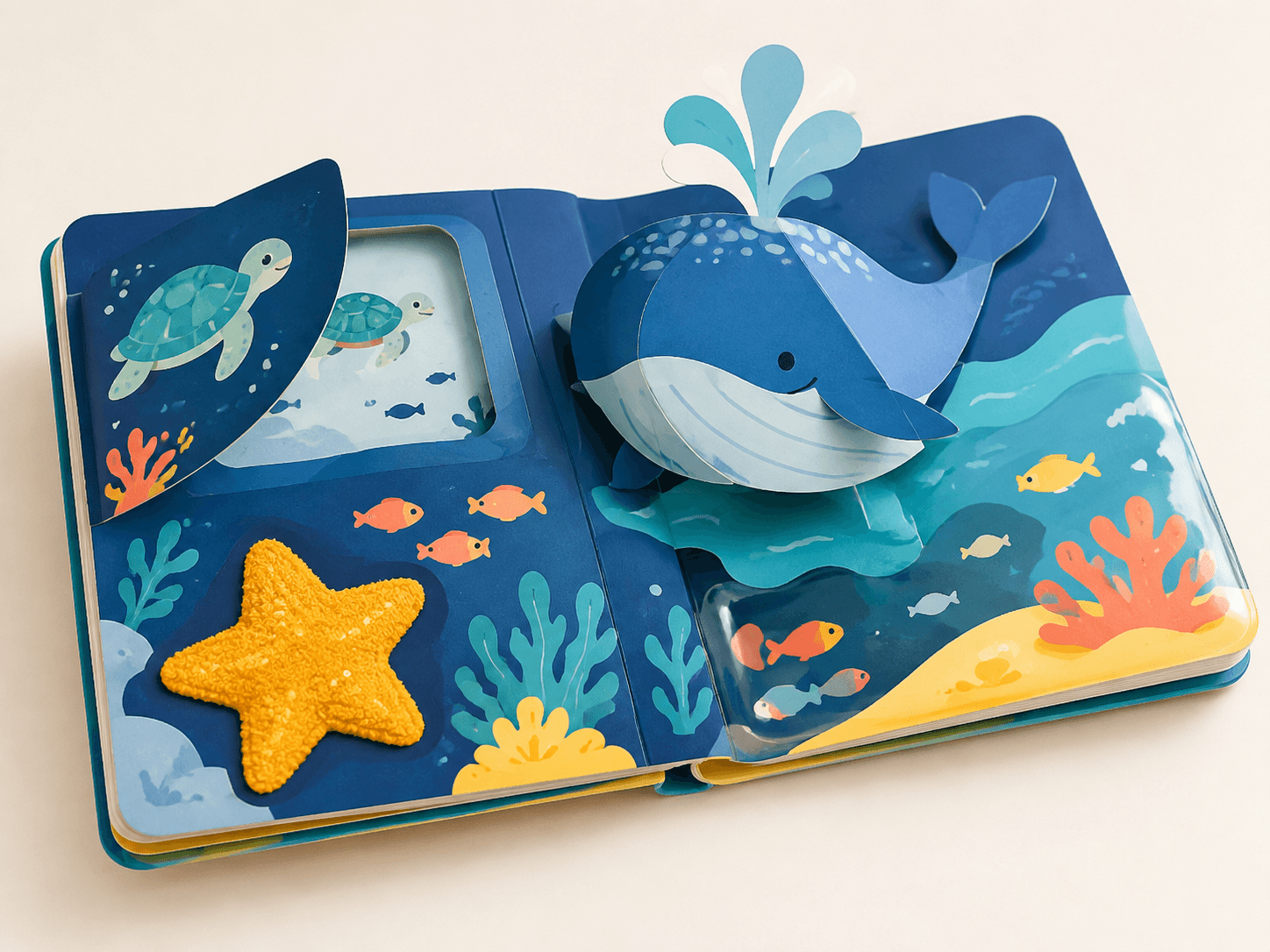
Pagination and folding
A saddle-stitched edition uses folded sheets in multiples of four pages. Count cover and interior consistently; extra blank pages can affect the story rhythm. Other bindings require their own pagination plan.
Spread and cover construction
The interior may be adhesive-bound or sewn and placed in a flexible cover or rigid case. A bound dummy shows gutter access and weight; the attractive cover does not guarantee lay-flat opening.
Details that change the finished book
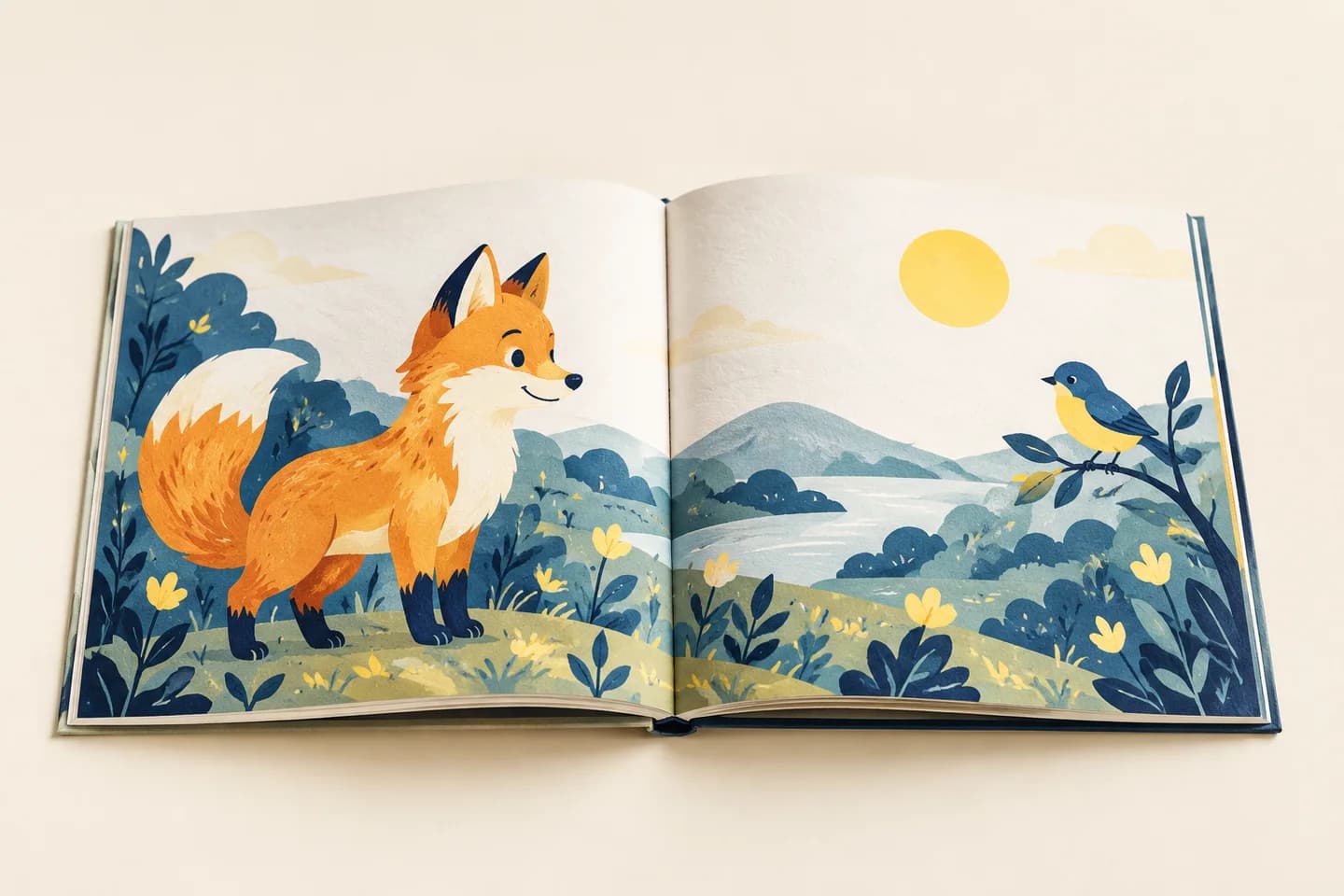
Plan illustrations as spreads, then check them as a book.
A full-bleed scene can extend across the center while its essential details stay on individual pages. The approved binding determines the gutter allowance.
Set the scene and text hierarchy
Identify the focal illustration, short reading block and page-turn cue. Leave enough space for a shared reader to find both text and picture quickly.
Protect essential center details
Keep faces, speech and small objects off the gutter. Extend background texture through the center when it helps the scene remain connected.
Proof reverse-side coverage
Use a dark illustration on the reverse of a light scene to assess show-through. Color, opacity and bound opening are different checks and need suitable samples.
Match the specification to the project
Children's Book configurations in use.
Read-aloud picture book
Landscape or square trim · scene-led spreads
The wider stage accommodates an illustration and a short reading block; assess actual-size type and holding comfort.
Early independent reading
Portrait trim · separate short text panels
Reduce visual crowding and keep a predictable reading path. Smaller artwork details should survive the finished print size.
Repeated handling
Mounted leaves or a protected cover configuration
Compare physical constructions rather than assuming that every children’s book has rigid pages. Corner and assembly choices belong in the finished specification.
Solve the risk before production
What can go wrong, and how to check it.
A face or sentence disappears into the center
Cause: Artwork treats the gutter as a fully visible flat area.
Fix and check: Move critical details away from the center and review a bound spread at normal reading distance.
The next scene shows through
Cause: Dense images and the selected paper opacity are poorly matched.
Fix and check: Proof both sides with the darkest adjacent illustrations and compare another stock if distraction remains.
The text is harder to read at final size
Cause: The layout was approved enlarged on a screen, with small type or low contrast against busy artwork.
Fix and check: Print the reading spread at 100% scale and review it in the intended reading setting. Simplify the background or reserve a quieter text panel.
When to choose another format
Children's Book or another format?
| Alternative | Structure | Use and trade-off |
|---|---|---|
| Board book | Mounted rigid leaves | Thicker pages for handling; shorter content and different page accounting. |
| Interactive pop-up | Moving components on the spread | Adds mechanism and assembly requirements beyond flat illustrated pages. |
If children will move pictures onto the page, compare peel-and-place sticker books with an illustrated reading book. Plan the activity spaces, sticker sizes and backing together rather than treating stickers as ordinary printed pages.
Samples & order planning
Test the physical question before the bulk run.
A sample for the actual product
Combine a full-size two-sided color proof with a bound dummy. For added parts, review a complete assembled sample under the agreed assessment scope.
Actual-size reading proof
Review text contrast, picture detail and the page-turn sequence with representative full spreads.
Bound opening sample
Check the center gutter, holding comfort and reverse-side show-through using the intended construction.
Order Details for Children's Book Printing
Quantity and quotation
Quote complete finished books per title or version. Send trim, page count, quantity, reader age, intended market, binding, paper and cover preference. Include illustration files or sample spreads and delivery destination.
Sample scope and schedule
Free samples are available, with preparation completed within 15 days. Confirm which materials, finishes and construction the sample represents. Courier arrangements and transit time are separate. The quotation records bulk production timing and the minimum quantity for your configuration.
Packing and delivery
Protect corners and prevent cover rubbing. Casebound and paper-cover editions need different stack support; plan carton weight for the chosen format.
- 01
Provide complete reading order, including title, copyright and intentional blanks.
- 02
Keep faces and essential words away from the gutter and trim.
- 03
Prepare 300ppi images at final size with the template bleed.
- 04
Identify intended age, destination and added components in the project brief.
Configuration details
Let the reading setting guide the page design.
A book read aloud needs pictures and text that remain visible from more than one viewing position. A child-held edition puts more emphasis on manageable size, page turning and cover handling. These uses may share artwork, but a reduced edition still needs a fresh final-size readability check.
- Viewing proof
Final trim with the smallest text and busiest illustration
Review at the actual reading distance and check important subjects near the gutter.
- Construction choice
Flexible paper pages or mounted board leaves
Choose around the intended page-turning experience; a board book is a different construction, not simply a heavier text paper.
Explore the relevant formats
Product questions
Details worth settling before ordering.
Must a children’s book be 32 pages?
No. That is a publishing convention for some picture books, not a manufacturing rule. Saddle stitch needs multiples of four; other constructions have different plans.
Can a book be described as child-safe from its paper alone?
No. Age grading, materials, construction, added parts and destination determine the assessment. A paper grade or a generic certificate does not establish finished-product compliance.
How do I compare paper for full-page illustrations?
Use the same dark spread printed on both candidates. Compare surface, color, show-through, page feel and the weight of a bound dummy.
Must a picture book contain exactly 32 pages?
No. Thirty-two pages is a familiar publishing format, not a universal requirement. The chosen binding and imposition determine workable pagination. Count title pages, blanks and any separate endpapers according to the specified construction.
Are rounded corners required for all children’s books?
No universal corner rule can be inferred from the category name. Flexible paper pages and mounted board leaves have different construction needs. Intended age, handling and destination-specific assessment determine the finished specification.
Your children's book project
Send a brief that can become a specification.
Send trim, page count, quantity, reader age, intended market, binding, paper and cover preference. Include illustration files or sample spreads and delivery destination.
Related formats & guidance